
Battle of Piercebridge
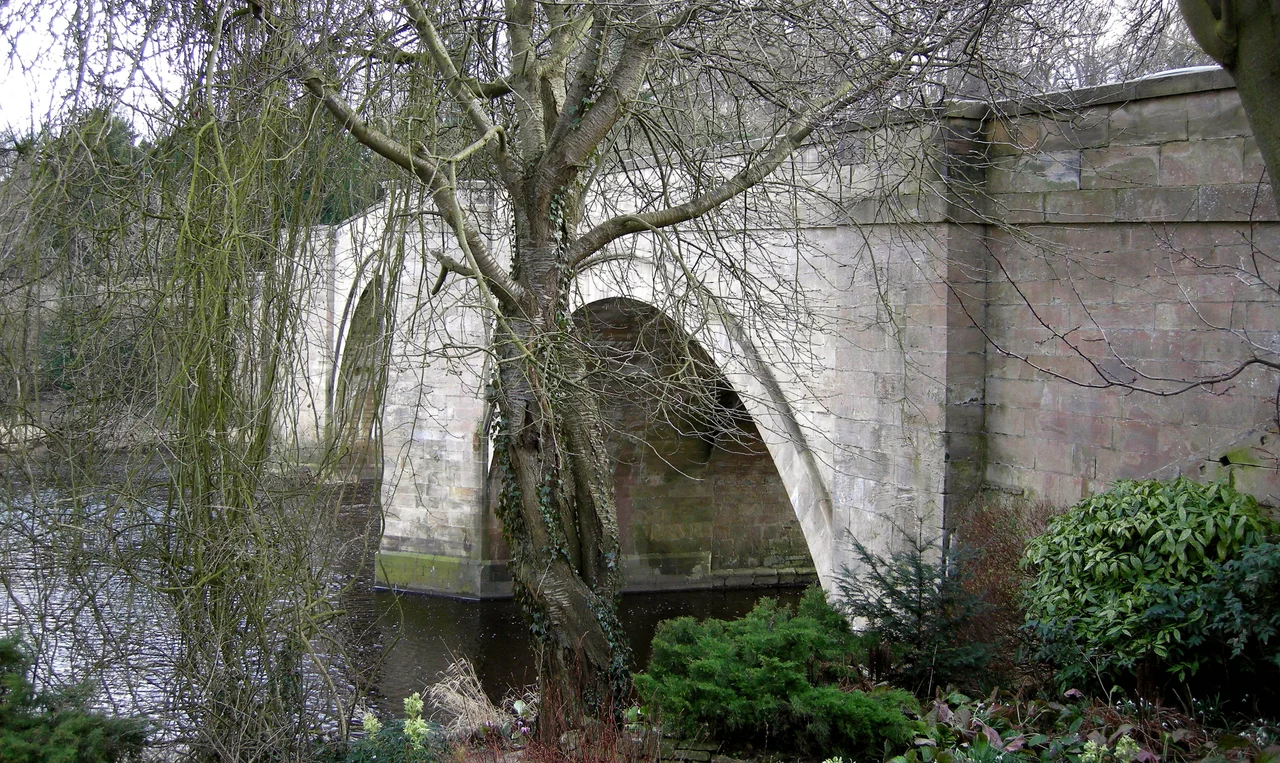
The 16th-century bridge across the River Tees at Piercebridge is still in place. It was widened in the 1700s to let more traffic through, but the stones the Earl of Newcastle's dragoons fought to cross on 1 December 1642 are the same stones cars drive over now. The 580 Parliamentarian troops Captain John Hotham placed on the southern bank that morning understood the geography exactly: this was the main crossing of the Tees on the County Durham-Yorkshire border, and with winter making the river itself impassable, Newcastle's 6,000-strong army marching from Newcastle upon Tyne to relieve York would have to come this way. Hotham barricaded the bridge and waited.
A County Divided
The First English Civil War was four months old. Charles I had raised the Royal Standard at Nottingham in August, declaring the Earl of Essex and Parliament traitors. Yorkshire had been pivotal from the start - Sir John Hotham had seized Hull for Parliament in January 1642, the King had set up court at York in March, and the gentry had spent the autumn picking sides and raising regiments. There was no unified Parliamentarian command in Yorkshire: Ferdinando Fairfax ran the West Riding, Sir John Hotham held the East Riding from Hull, and Sir Hugh Cholmeley garrisoned Scarborough. A Treaty of Neutrality signed on 29 September had tried to keep Yorkshire out of the war altogether - twelve prominent leaders signed it, hoping to make the county a model for the country - but Parliament rejected the treaty, the Hothams attacked Selby and Cawood Castle within days, and Lord Fairfax abandoned it by mid-October. North of Yorkshire, William Cavendish, Earl of Newcastle (later Duke), had been appointed Royalist commander of Cumberland, Durham, Northumberland and Westmorland, and by mid-October he had locked down all four counties for the King. Yorkshire's threatened Royalists asked him to come south.
Three Hours at the Bridge
Newcastle agreed - on conditions. His troops in Yorkshire had to be paid, provisioned and billeted by the local Royalists, and when Queen Henrietta Maria returned from the Continent with the weapons she had been buying, he would be free to withdraw from Yorkshire to escort her. In late November he marched from Newcastle upon Tyne with 4,000 infantry, 2,000 cavalry and dragoons, and ten artillery pieces. Captain John Hotham, sent north on 9 November by Fairfax to harass the Royalists, camped at Piercebridge on 23 November with three troops of cavalry of 60 men each (his own, Wray's, and Hatcher's), Sir Matthew Boynton's infantry regiment possibly split into four companies, and two light cannons - about 580 men in all. He placed the cannons either on the bridge or further south on higher ground near Cliffe, barricaded the crossing, and dispersed troops in the houses and gardens of the village on the north bank. Newcastle's vanguard - Sir William Lambton's Regiment of Foot and Sir Thomas Howard's Regiment of Dragoons - arrived on 1 December. Borrowing a tactic the Scottish Covenanters had used at the Battle of Newburn two years earlier, the Royalists placed their ten artillery pieces on Carlbury Hill northeast of the bridge to soften the defences. Howard led the dragoons in across the village, driving Hotham's hidden men back to the river. The combined assault of dragoons, infantry and cannon continued for three hours. Sir Thomas Howard was killed leading the attack. Despite claiming only minimal casualties, the Parliamentarians withdrew - lead-shot concentrations found by the Battlefields Trust suggest they kept up covering fire as they retreated.
What the Crossing Bought
The Parliamentarians fell back south through Yorkshire toward Knaresborough. Newcastle continued to York and arrived on 4 December. His arrival shifted the numerical balance in Yorkshire: the Royalists could now outmatch Fairfax in pitched battle, and Newcastle pressed his advantage at the Battle of Tadcaster on 6 December, capturing Leeds and Pontefract Castle. Then his campaign stalled. Bradford rose against the Royalists. Winter set in. Newcastle settled his army down for the season. The forced retreat at Piercebridge had given Fairfax a bitter strategic lesson, and over the next eighteen months he adopted a Fabian strategy - avoiding pitched battles, refusing to defend too much ground, wearing down the Royalists with a series of smaller actions. The historian Stanley Carpenter credits Fairfax's "far keener strategic vision" with leading directly to the decisive Parliamentarian victory at Marston Moor in July 1644. Newcastle's army was destroyed there. He fled to the Continent. The Royalist cause in the north collapsed. The bridge at Piercebridge still stands. The Battlefields Trust thinks the village of Piercebridge is probably not much larger than it was on the day of the fight, and that earthworks above Cliffe may be the remains of the Parliamentarian artillery emplacement. Five hundred and eighty men once held it for three hours, and the King's road to York.
From the Air
Coordinates 54.5348N, 1.67583W. The bridge crosses the River Tees at Piercebridge, on the County Durham-North Yorkshire border about 5 nm west of Darlington. The 16th-century stone bridge (widened in the 18th century) still carries traffic. From the air, the village sits on the north bank of the Tees with Cliffe village on the south bank - Carlbury Hill rises northeast of the bridge where the Royalist artillery was placed. Best viewed at 1000-2000 ft AGL. Nearest aerodromes: Durham Tees Valley (EGNV) about 4 nm east, Newcastle (EGNT) about 27 nm north-northeast. The A67 runs through the village.
Nearby Stories
- Gisborough Priory 4.9 km away
- Beamish Museum 6.9 km away
- Hutton-le-Hole 9 km away
- Battle of Stainmore 9.8 km away
- Jervaulx Abbey 12 km away
- Hadrian's Wall Path 21 km away
- Gordale Scar 27 km away
- German submarine U-2367 70 km away