
Battle of Stirling (1648)
Argyll had barely begun his meal when the Highlanders crested the Deer Park. It was 12 September 1648, and the Marquess of Argyll, chief of Clan Campbell, was dining in the Earl of Mar's residence at Stirling, his guards stationed across the burgh, his army of about a thousand men still digesting their march. The man hunting him was Sir George Munro of Newmore, a hard Highland soldier serving the Earl of Lanark and the Engagers. There was no time for argument, no time for plates to be cleared. Argyll mounted, kicked his horse over Stirling Bridge, and rode for his life.
Covenanters Against Covenanters
This was not English against Scot. It was Presbyterian against Presbyterian, the bitter splintering of a movement that had brought down a king and then could not agree what to do with him. The previous December, one faction of the Scottish Covenanters had signed The Engagement with the imprisoned Charles I, promising military help in exchange for a Presbyterian church on both sides of the border. They became known as the Engagers, and their army, led by the Duke of Hamilton, marched south. Oliver Cromwell smashed it at the Battle of Preston in August 1648. The Engagers came home discredited and weakened. Their rivals, the radical Kirk Party led by Argyll, seized Edinburgh in the Whiggamore Raid, and the short, vicious civil war between the two Covenanter factions began. Stirling was where it climaxed.
The Burgh Caught Mid-Bite
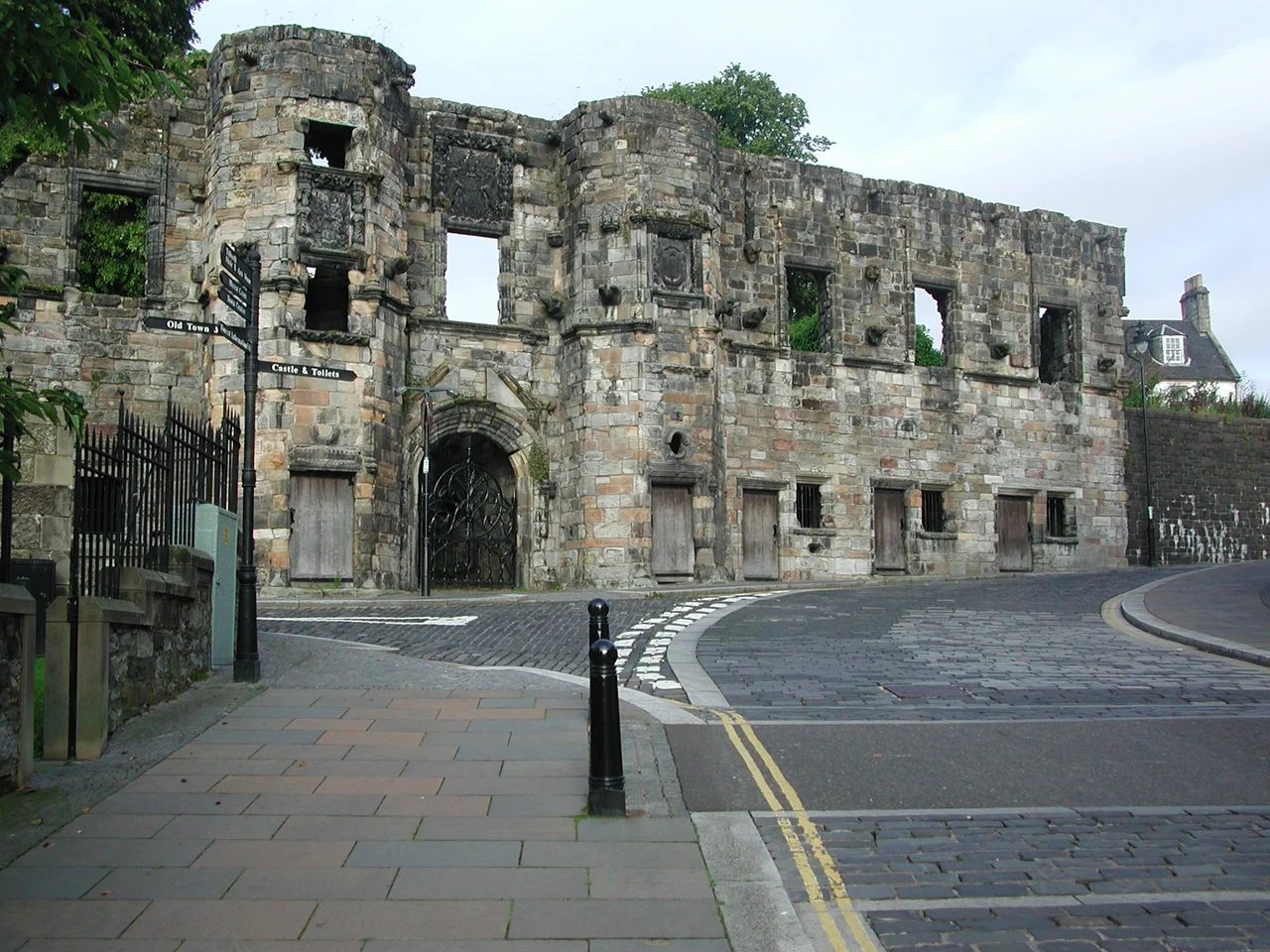
Argyll's force on the morning of 12 September was thin and scattered. About 300 men formed the nucleus, with another 400 picked up on the road north and 300 militiamen joining at Stirling itself. Most were posted to guard the town gates. The main body was sitting down with their commander in the Earl of Mar's lodging, the great Renaissance house known today as Mar's Wark, just yards from the Church of the Holy Rude. Lanark's advance guard under Munro came through the Deer Park, today's King's Park beneath the castle rock, and the Campbells broke under the sudden attack after only token resistance. About 200 of Argyll's men died on the field. Among the dead were William Campbell of Glenfalloch and Sir Colin Campbell of Ardkinglas, names that would echo for generations through the glens.
A Gesture Between Chiefs
One detail from that day reads like something out of an older world. Dougal MacTavish, younger son of the chief of Clan MacTavish, was killed in the fighting on Argyll's side. His father, John MacTavish, lost both his sword and his musket in the rout. The Marquess of Argyll, chief of Clan Campbell, personally gave the MacTavish chief new weapons to replace what he had lost. Two chiefs in defeat, the loser of a son and the loser of a war, exchanging arms with grave courtesy while their cause collapsed around them. The Engagers' victory at Stirling was brief. Cromwell entered Edinburgh within weeks and forced an accommodation with Argyll's Kirk Party. The civil war was over, but Scotland had only traded one disaster for the next. King Charles I would be executed in London four months later, in January 1649.
Walking the Battlefield Today
Nothing on the slope below the castle marks the day. The King's Park is still grass and trees, golfers walking where the Highlanders advanced. Mar's Wark stands at the head of Broad Street, roofless and quietly ruined, its carved inscriptions still readable in middle Scots. The Church of the Holy Rude next door watched the whole thing, and would watch much more. Stirling Bridge, the one Argyll galloped over, was a 15th-century stone span that had already seen four hundred years of armies; it survives downstream of the modern bridges. Of the 200 Campbells who died here, no marker, no memorial, no headstone records their names. The Battle of Stirling 1648 was the kind of battle that nations forget when bigger battles come along, and bigger battles came along very quickly.
From the Air
The battle site sits within the city of Stirling at approximately 56.12N, 3.95W, in the open ground of the King's Park immediately south of Stirling Castle and Mar's Wark. From cruising altitude the volcanic crag of the Castle is the obvious landmark, with the River Forth meandering in tight loops to the east. Best viewed from 3,000 to 6,000 feet on a clear day. Nearest airports: Edinburgh (EGPH) 30 nm east-southeast, Glasgow (EGPF) 25 nm south-southwest. Glasgow Prestwick (EGPK) is 45 nm southwest. Watch for low cloud against the Ochil Hills to the east.
Nearby Stories
- Murder of Alesha MacPhail 3.1 km away
- Ben Lomond 5 km away
- Lochleven Castle 8.8 km away
- Battle of Dunsinane 15 km away
- Pentland Hills 16 km away
- Breadalbane Hydro-Electric Scheme 17 km away
- Beith 17 km away
- Rannoch Moor 24 km away