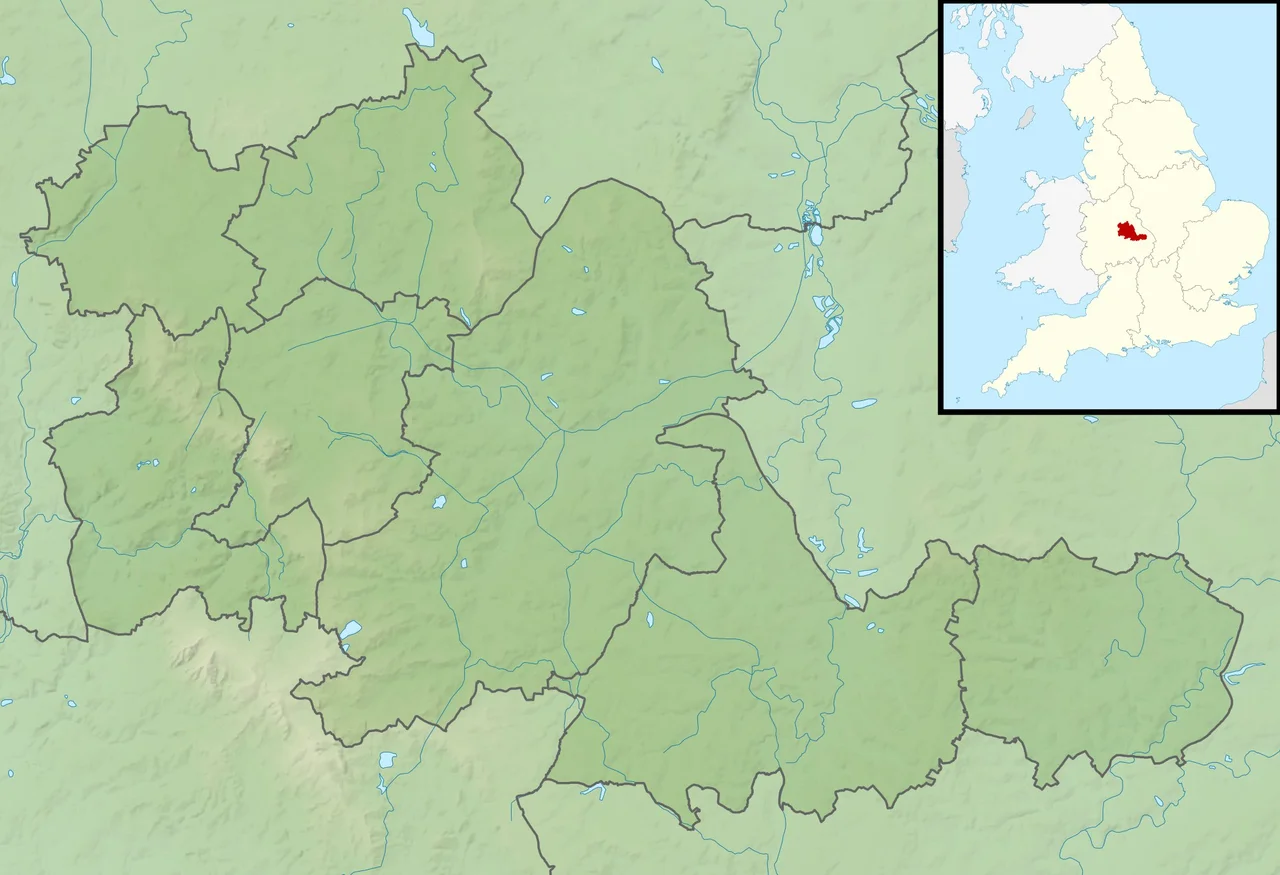

Battle of Stourbridge Heath
Colonel John Fox went by Tinker because he had been a tradesman before the war, and tradesmen, in the older snobberies of the English military mind, were not supposed to lead regiments. He led one anyway. On 26 March 1644, marching west from Edgbaston with a relief force, he was caught by a larger Royalist column on the heath south of Stourbridge. The fight was brief, the rout total, and the Royalists later boasted that Fox himself had been the first man to flee. It was the kind of small disaster the English Civil War produced by the hundred, but the consequences rippled across the Black Country.
Stourton and the Quarrel With Denbigh
Earlier in 1644 Fox had pulled off a clever raid and seized Stourton Castle, installing his brother as governor for Parliament. The achievement was real, but Fox had no field army to follow it up. When Sir Gilbert Gerard, Royalist Governor of Worcester, marched out to besiege Stourton, Fox needed help. He asked Basil Feilding, the second Earl of Denbigh and his nominal commander, for reinforcements. None came. The quarrel between Fox and Denbigh would dog the entire West Midlands campaign for Parliament. Fox was a self-made soldier with a knack for irregular war and a thin skin for slights; Denbigh was a cautious aristocrat whose own loyalties were never entirely above suspicion. Without Denbigh's troops, Fox could only patch together a relief force from Edgbaston and add 110 men sent from Coventry, then march.
Caught on the Heath
The exact site of the battle is lost. South of Stourbridge in 1644 was open heathland, much of it now buried under Victorian terraces and 20th-century streets around Mary Stevens Park. Somewhere across that ground, the two columns met. Gerard had the numbers and probably the better cavalry. Royalist accounts, written by men with reason to gloat, claim the Parliamentarians broke quickly and were chased for three miles, with many killed. Prisoners were taken; Fox would later be furious that the men captured at Stourbridge were not exchanged when the chance came for a high-ranking Royalist. The casualties on his side cannot be counted, but they were enough to end any hope of relieving Stourton. The castle surrendered shortly afterwards.
What Fox Learned
Fox never tried to fight a set-piece battle against a larger Royalist force again. He went back to what he was good at: intelligence, surprise, and small fast raids. He sacked Bewdley. He waited for the Royalist garrison to leave Dudley, then rode in hours later and looted what they had not bothered to defend. He built up an espionage network that fed him the position of every enemy column in the region. By the end of the war he had been appointed to the County Committee for Worcestershire, a senior administrative role for one of Parliament's most successful guerrilla commanders. Gerard, his opponent on the heath, kept fighting for the King and died in 1646, two years after his Stourbridge victory. He is buried in Worcester.
Reading the Ground Today
Stourbridge is now a town of Edwardian and Victorian streets, dual carriageways, and Black Country chimneys long fallen quiet. The heath where the battle was fought has been swallowed by the southern suburbs. Mary Stevens Park, opened in 1931 as a memorial to a local family, gives the closest sense of what the ground might have looked like before enclosure and building. There is no monument, no marker, no annual remembrance. The battle does not even merit a paragraph in most histories of the Civil War. But for a few hours on a March day in 1644, a few hundred soldiers from both sides came across this open ground and tried to kill each other, and for many of them this minor skirmish in the West Midlands was the most important hour of their lives. Standing in the park now, listening to schoolchildren on the football pitches, you can feel the layers of forgotten English history breathing under the grass.
From the Air
Located at 52.45 N, 2.15 W on the Worcestershire fringe of the Black Country. At 2,500 to 3,000 feet, Stourbridge appears as a dense urban patch south-west of Birmingham, with the wooded Clent Hills to the south and the Severn winding west toward Bewdley. Nearest airports: Birmingham (EGBB) about 13 nm east-north-east, Coventry (EGBE) about 27 nm east.
Nearby Stories
- White Lion Inn 3.6 km away
- National Motorcycle Museum (UK) 4.5 km away
- Siege of Worcester (1643) 4.6 km away
- Stokesay Castle 4.7 km away
- Burton Abbey 11 km away
- Stafford Castle 12 km away
- Whittington Castle 20 km away
- Hay Castle 26 km away