.jpg)
Beating of Ken Tsang
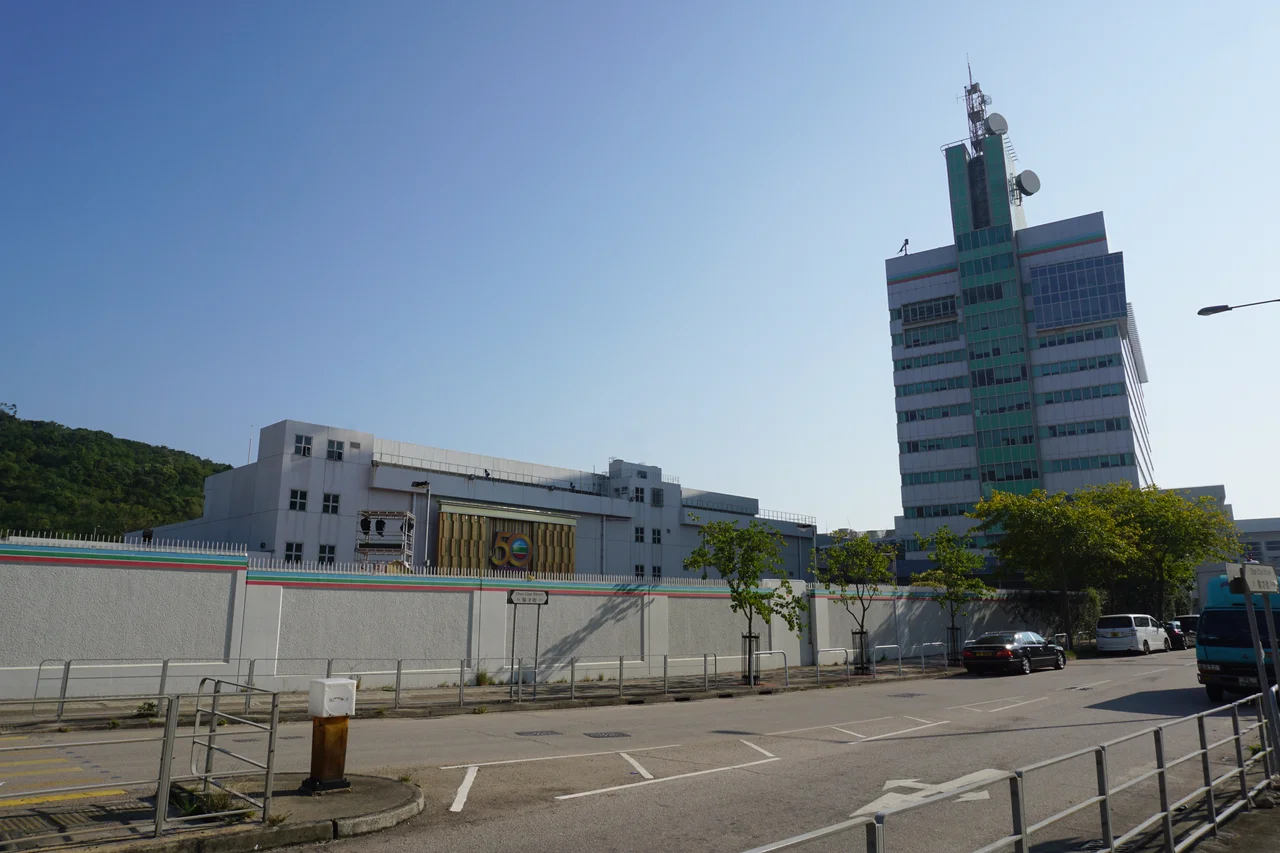
It was 2:45 in the morning when Ken Tsang was handcuffed and carried away from the crowd. Seven officers took him to the north side of a utility building — the Lung Wui Road Government Building Pump Station East Substation — where no protesters could see. What they didn't know was that a TVB news crew, filming from a distance, had the angle. The footage they captured showed Tsang, his hands bound behind his back with a zip tie, being kicked, stamped on, and beaten for the first thirty seconds of what the judge would later call a vicious assault. It broadcast to Hong Kong that night. The city watched.
A City Already Stretched Thin
The 2014 Hong Kong protests had been building since August, when Beijing's Standing Committee on the National People's Congress issued a ruling that effectively allowed the central government to pre-screen candidates for Hong Kong's Chief Executive election. Crowds occupied major roads in Admiralty, Wan Chai, Mong Kok, and Causeway Bay — the movement became known internationally as the Umbrella Revolution. By October, police were conducting clearance operations to reclaim the streets.
Ken Tsang Kin-chiu was a registered social worker and Civic Party member, born 12 July 1975, who had been travelling in South America when the protests began. He flew back to join them. On the night of 14–15 October, he was at the Admiralty site — the epicenter of the occupation — when Operation Solarpeak moved through the underpass where Lung Wo Road passes below Tamar Park.
What the Camera Recorded
Tsang was spotted in a raised planter pouring liquid onto officers below. Police descended on him. He struggled during the arrest and was pepper-sprayed before being handcuffed with a zip tie at his back. From that point, he was defenceless.
Six named officers — Wong Cho-shing, Lau Cheuk-ngai, Pak Wing-bun, Lau Hing-pui, Chan Siu-tan, and Kwan Ka-ho — along with a seventh, Wong Wai-ho, carried him to the blind side of the pump station building. The TVB crew filmed what followed from a distance. The broadcaster initially drew criticism for self-censorship in how it presented the footage, and several TVB journalists later resigned over coverage decisions. Despite this, the images of Tsang being beaten while restrained circulated widely.
The Slow Turn of Justice
A year passed before anyone was charged. On 15 October 2015 — exactly one year after the beating — Tsang himself was notified he would be arrested, on charges of assaulting police and obstructing officers. In May 2016, he was found guilty and sentenced to five weeks in jail. Principal Magistrate Peter Law noted that Tsang had not intended to cause serious harm, but the convictions stood.
The seven officers were not charged until that same year. Their trial at the District Court ran into late 2016 and early 2017. The defence argued, among other things, that the officers may have beaten a different protester — not Tsang. On 14 February 2017, all seven were convicted of assault occasioning actual bodily harm. The charge of grievous bodily harm with intent — the more serious original count — was not sustained; the court determined that Tsang's injuries, though real, fell short of that threshold.
Sentencing and Its Aftermath
On 17 February 2017, Judge David Dufton sentenced all seven officers to two years' imprisonment. He rejected their plea for suspended sentences, describing the assault as vicious and noting Tsang's complete defencelessness. He reduced the original two-and-a-half-year term by six months, citing the high-stress environment of the protests, the officers' previously clean records, and the fact that dismissal from the force meant likely loss of their pensions.
The reaction split Hong Kong publicly. The Junior Police Officers' Association, representing more than 20,000 officers, called the judgment unacceptable. A union rally on 22 February 2017 drew thousands. Several pro-Beijing politicians attended and defended the officers as having been provoked. Reporters were barred from the event. Online, attacks on Judge Dufton — a British national — escalated into threats; one social media post offered 10,000 yuan to anyone who assaulted him. The German and Israeli consulates both issued statements after some commentators made inappropriate comparisons between the convicted officers and Holocaust victims.
Appeals and the Long Record
The case continued through the courts for years. In July 2019, the Court of Appeal overturned two of the seven convictions and reduced the remaining five sentences by six to nine months. The five remaining convicted officers then sought to appeal to Hong Kong's Court of Final Appeal. That request was denied on 7 April 2020.
The beating of Ken Tsang did not occur in isolation — other allegations of police misconduct surfaced during the 2014 protests — but it became the defining incident of the period because it was documented. The "dark corner" at Tamar Park, as it was called in the press, became a recurring reference point in Hong Kong's ongoing debates about accountability, judicial independence, and the rule of law. One hundred people gathered there on the first anniversary of the beating.
From the Air
Tamar Park and the Admiralty district lie at approximately 22.28°N, 114.16°E on the northern shore of Hong Kong Island, along Victoria Harbour. Approaching from the west at 3,000–4,000 feet, the government complex and waterfront parkland are visible just east of the tall towers of Central. Hong Kong International Airport (VHHH) is roughly 30 km to the northwest on Lantau Island. The area sits directly beneath the final approach corridor for runway 07L/07R.
Nearby Stories
- Lok Ma Chau Loop 2.3 km away
- Portas do Cerco 2.3 km away
- Kweilin Incident 17 km away
- Wanshan Archipelago Campaign 34 km away
- Nanxiong Formation 115 km away
- Battle of Nanpeng Island 148 km away
- Heyuan 169 km away
- Cape Maobitou 632 km away
Sources
- Beating of Ken Tsang - Wikipedia
- 7 policemen convicted of assault against pro-democracy activist Ken Tsang – Hong Kong Free Press
- Police officers jailed for 2 years for assault against Occupy activist Ken Tsang – Hong Kong Free Press
- Two Hong Kong cops freed over activist Ken Tsang assault case, five others have jail terms reduced – Hong Kong Free Press
- Justice delayed is justice denied — top court denies appeal bid by cops who assaulted Ken Tsang – Hong Kong Free Press