
Beidou, Changhua
Long before it was a quiet township on the alluvial plain of central Taiwan, Beidou was Po-tau — a busy harbor where junks loaded goods for the crossing to mainland China. The name has changed, the harbor silted away, and the fences and defensive walls that once ringed the town have long since crumbled. But Beidou still carries the memory of those trading days in its old streets and temples, and it has added something newer to its story: the invention of one of Taiwan's most iconic street foods, and an unexpected connection to American basketball.
Harbor Town, Walled and Embattled
In the late Qing dynasty, Beidou — then known as Po-tau — sat on a branch of the Zhuoshui River and functioned as a genuine commercial hub for southern Changhua County. Trade with the Chinese mainland gave it enough importance that the town built defensive walls and fences, the kind of infrastructure that marks a settlement worth protecting. In 1738, the first formal downtown street, Shezi Village, rose on the southern bank of the Dongluo River. Prosperity, however, invited conflict. In 1806, fighting broke out between immigrant communities from Zhangzhou and Quanzhou — two rival regions of Fujian Province — and the clash was devastating enough to destroy houses and fields throughout the downtown. Shezi Village was gone. Fifteen years later, in 1821, the community rebuilt, this time at the riverside in Baodou Village, and the town began its long, quieter life as a market settlement on the plain.
Small Town, Lasting Flavor
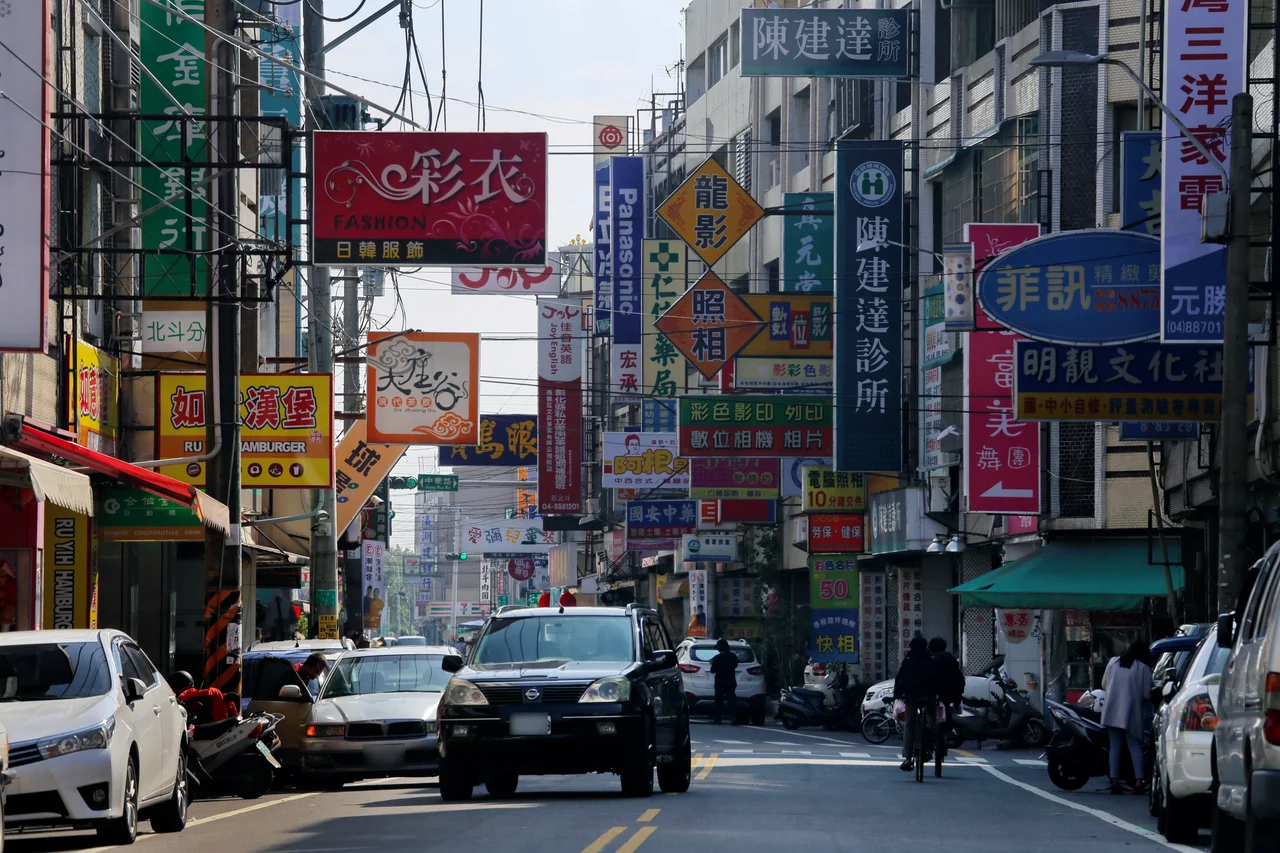
Today Beidou is the second-smallest township in Changhua County by area, covering just 19.25 square kilometers. Its population of about 33,000 is modest. But what the town lacks in size, it claims in culinary legacy. Ba-wan — those plump, translucent dumplings stuffed with pork and bamboo shoots, blanketed in a sweet-savory sauce — are one of the most beloved street foods in Taiwan, found in night markets from Taipei to Kaohsiung. Beidou is credited as their birthplace: the dish was invented here, and local vendors take that heritage seriously. Walking Beidou Old Street, the smell of ba-wan cooking in their starchy skins is as much a part of the atmosphere as the shophouse facades and the sound of temple bells drifting from Dian'an Temple nearby.
Layers Beneath the Quiet Streets
Dian'an Temple anchors the old town, a place of local devotion where incense smoke rises through elaborately carved eaves. Beidou Old Street preserves the physical texture of a market town that traded across the Taiwan Strait — the kind of street that rewards slow walking, where the architecture hints at merchant ambitions that once reached far beyond this small plain. The Beidou Riverside Park follows the waterway that once made this place matter, now a green corridor where families stroll in the evenings. There is something characteristic of many Taiwanese townships here: history layered quietly beneath daily life, visible to those who look, unremarkable to those who don't.
A Connection to the NBA
Beidou's most unlikely link to the wider world runs through basketball. Gie-Ming Lin, the father of Jeremy Lin — the Harvard-educated NBA player whose breakout 2012 season with the New York Knicks sparked the global phenomenon known as Linsanity — grew up in Beidou. Gie-Ming learned the game here before moving to the United States, and his love of basketball eventually shaped his son's athletic path. It is the kind of detail that catches you off guard in a small agricultural township: a thread that runs from a harbor town on the Zhuoshui plain all the way to Madison Square Garden.
From the Air
Beidou sits at approximately 23.87°N, 120.52°E on the alluvial plain of central Taiwan's Changhua County, roughly 15 kilometers southeast of Changhua City. From the air at 3,000 to 5,000 feet, the flat plain of the Zhuoshui River basin stretches in all directions, with the river itself visible to the south forming the county boundary. The nearest major airport is RCMQ (Taichung International Airport), approximately 30 kilometers to the north. RCKU (Chiayi Airport) lies roughly 40 kilometers to the south. The township's grid of farmland and low-density urban development is typical of the Changhua plain at mid-altitude; in clear weather the central mountain range is visible to the east.
Nearby Stories
- Formosan Aboriginal Culture Village 5.6 km away
- Yushan Weather Station 7.8 km away
- Museum of Old Taiwan Tiles 8.7 km away
- Daodong Tutorial Academy 9.1 km away
- China Airlines Flight 611 28 km away
- Wude Airfield 31 km away
- Hehuanshan 37 km away
- Battle of Xiapi 1155 km away