
Bentley Priory
On a ridge in Stanmore north of London, Sir John Soane designed a stately home in 1775 for an Army contractor named James Duberley. He returned in 1788 to enlarge it for John Hamilton, who had just become the Marquess of Abercorn. From that point on Bentley Priory began collecting famous guests at an absurd rate: Pitt, Wellington, Canning, Sir William and Lady Emma Hamilton, the actress Sarah Siddons, the poets Thomas Campbell and Thomas Moore. Walter Scott spent the summer of 1807 in the summerhouse on the lake writing parts of Marmion. Then in 1848 a dying queen moved in, and in 1939 the building became the place from which a war was directed.
From Augustinian Canons to a Soane Mansion
Long before the stately home, there was a small medieval priory. A cell of Augustinian Canons - Bentley Priory in the strict sense - was said to have been founded around 1171 by Ranulf de Glanvill, Justiciar to Henry II from 1180 to 1189. It was dedicated to Saint Mary Magdalene and run as a cell of St Gregory's Priory in Canterbury. By 1535 the cell had already been gone for many years. The site sat quietly until the late eighteenth century when Duberley bought it as a speculative development and commissioned Sir John Soane, then one of England's most prominent architects, to build something to advertise his new wealth. Duberley is thought to have demolished the surviving medieval Priory buildings and chosen a higher point on the ridge for the new house: a deliberate move, his eighteenth-century critics said, to make sure everyone could see it.
The Tory Party in a Country House
The first Marquess of Abercorn was the only man in his era to hold peerage titles in all three kingdoms of England, Scotland, and Ireland, and he used Bentley Priory as a political salon. Through the Napoleonic Wars and beyond it became a rendezvous for the leading Tories of the day. When the second Marquess inherited as a child of seven, he came to live at the Priory under his guardian Lord Aberdeen - later Prime Minister - and through his minority the house remained the principal country meeting place of the Tory Party. But after the second Marquess came of age in 1832 the visitors became overwhelming. His son later remembered that his father was 'compelled to leave Stanmore in self-preservation' because the house was so accessible to London that friends arrived and would not leave.
Queen Adelaide's Last Rooms
In 1846 Dowager Queen Adelaide, widow of William IV and aunt of the young Queen Victoria, leased Bentley Priory but did not move in until 1848. By then she was seriously ill with dropsy and found the staircase too much for her. A suite of ground-floor rooms was prepared. It was here that Queen Victoria and Prince Albert visited her. The ceiling of what is now called the Adelaide Room was painted with frescoes of the Arts and the Four Seasons, long believed to have been done to give her something to look at while bedridden, though evidence from the Royal Library at Windsor now suggests her actual bedroom was in what is the VIP suite. She died at Bentley Priory on 2 December 1849 at the age of 57. A queen consort of the United Kingdom, the German princess who had given her name to the capital of South Australia, ended her life in a Stanmore country house she had only just settled into.
Gordon Hotels and a Railway Built for Guests
After Adelaide's death the house was scarcely used until Sir John Kelk - eminent Victorian engineer and contractor for the Albert Memorial - bought it in 1863 and spent £9,000 on the conservatories alone. He added a picture gallery, library, clock tower, orangery, cedar garden, and a deer park. The estate eventually employed twenty gardeners. In 1882 Frederick Gordon of Gordon Hotels bought the Priory and converted it into a residential hotel. Access from London was poor, so Gordon paid £48,000 to extend the railway from Harrow up to Stanmore via what became the Stanmore branch line, simply to bring guests to his hotel. The hotel never made money and Gordon's family ended up living in the Priory itself with their eleven children until his death in 1908. A girls' boarding school took over next, with seventy boarders and pianos in soundproof rooms, until the school closed for good in December 1924.
The Filter Room That Saved a Country
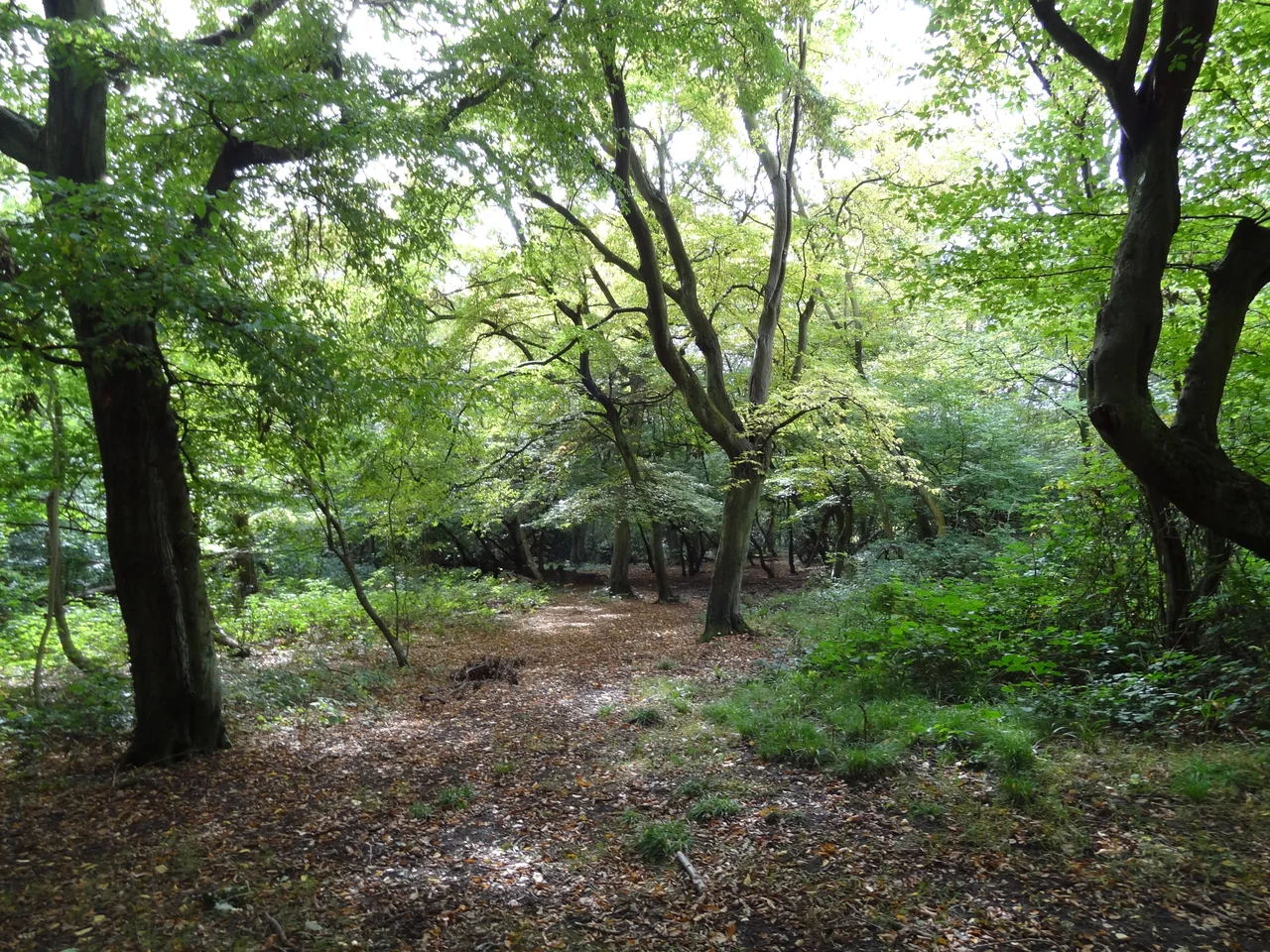
In 1926 the Air Ministry bought Bentley Priory. In the Second World War it became the headquarters of RAF Fighter Command. From the Filter Room beneath the house, Sir Hugh Dowding directed the air defence of Britain during the Battle of Britain in the summer of 1940, watching radar plots fed in from coastal stations and dispatching squadrons to intercept incoming Luftwaffe formations. The fight that decided whether the German invasion of England would happen was conducted from a converted Stanmore drawing room. Dowding was honoured in 1943 with the title Baron Dowding of Bentley Priory. The RAF stayed until 30 May 2008. The site was sold for development in 2011, but in 2013 the Bentley Priory Battle of Britain Trust opened a museum in part of the house, dedicated by the then-Prince of Wales now King Charles III. The grounds are now a nature reserve and a Site of Special Scientific Interest.
From the Air
Bentley Priory sits at 51.62 degrees N, 0.33 degrees W (note: northwest of central London) on the high ground of Stanmore. The coordinates in the source record place it in the Brentwood area which is inconsistent with the actual Stanmore location; pilots should rely on Stanmore as the real reference point. RAF Northolt (EGWU) lies about 8 km southwest. Heathrow (EGLL) is roughly 15 km south.
Nearby Stories
- Waytemore Castle 2 km away
- Prittlewell Royal Anglo-Saxon Burial 4.2 km away
- Sevenoaks 5.6 km away
- Central line (London Underground) 6.4 km away
- River Lea 9.7 km away
- Surrey 11 km away
- Mercury Theatre, Colchester 14 km away
- Faversham Munitions Explosion Memorial 14 km away