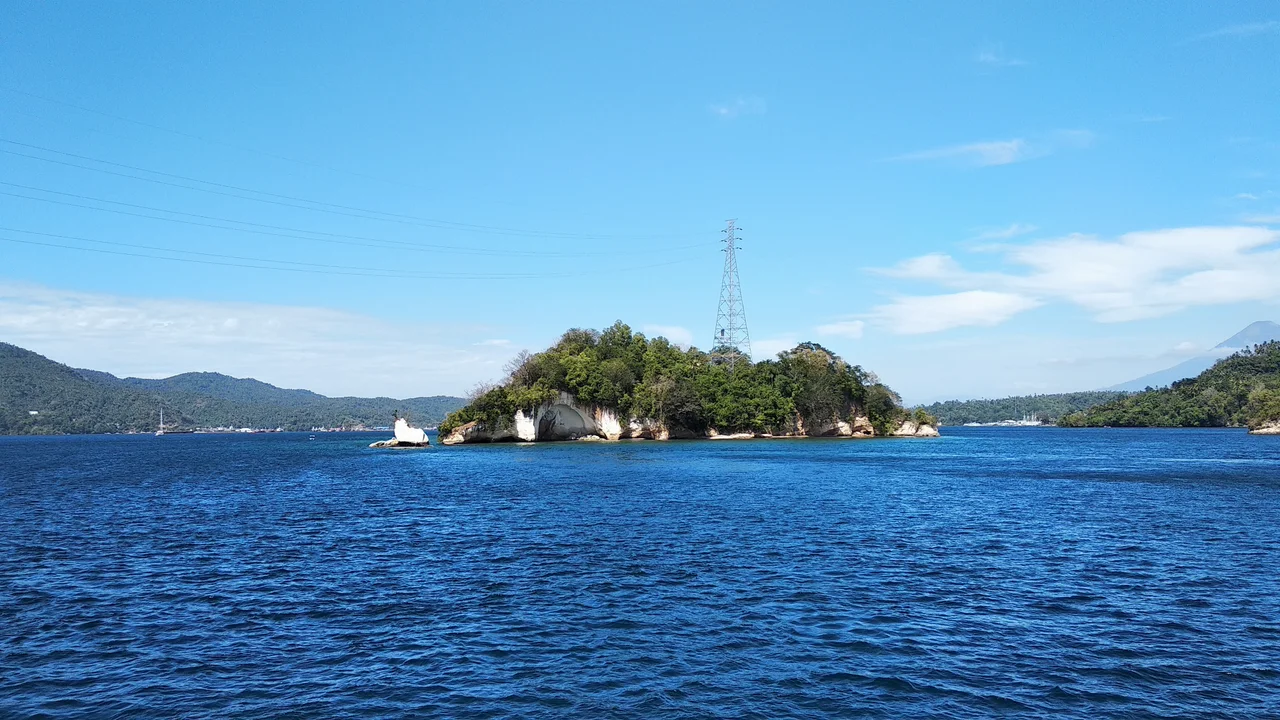

Bitung
Bitung calls itself a gateway to the Pacific, and the description is not metaphorical. This coastal city of roughly 232,000 sits at the northeastern edge of Sulawesi, facing Lembeh Island across a strait that has become one of the world's premier destinations for a very specific kind of obsession: underwater macro photography of sea slugs. Nudibranchs, the impossibly colorful marine gastropods that carpet the Lembeh Strait's muck-diving sites, have done more for Bitung's international reputation than any port expansion or economic zone ever could.
The Lembeh Strait Effect
What makes Bitung unusual among Indonesian port cities is that its most valuable asset lives in the mud. The Lembeh Strait, the narrow channel separating the city from Lembeh Island, is not a coral reef paradise. It is a muck-diving mecca. The dark, silty bottom teems with creatures that look like they were designed by a committee of surrealists: hairy frogfish, mimic octopuses, flamboyant cuttlefish, and hundreds of nudibranch species in electric blues, warning oranges, and patterns that defy description. Underwater photographers travel from Europe, Japan, and North America specifically for these creatures, spending thousands of dollars to photograph animals smaller than a thumbnail. The strait has put Bitung on maps that have nothing to do with shipping.
Port City, Coconut City
But shipping is what pays most of the bills. Bitung has been a port town since the colonial era, and its modern ambitions center on the Special Economic Zone designated in 2014. The SEZ covers 534 hectares and focuses on logistics, fish processing, coconut processing, and herbal pharmaceuticals. Coconut is central to North Sulawesi's economy, and Bitung processes much of the regional harvest. The Manado-Bitung Toll Road, a 39.9-kilometer highway completed in February 2022 at a cost of 6.7 trillion rupiah, has tightened the connection between the provincial capital and its port, cutting what was once a winding two-hour drive through highland villages to a swift expressway transit.
The Ferry That Came and Went
On 28 April 2017, Presidents Rodrigo Duterte and Joko Widodo jointly inaugurated the Davao-Bitung Roll-on Roll-off Ferry Service, promising to slash shipping time between Mindanao and Sulawesi from five weeks to three days. The old route required ships to sail north to Manila, cross the South China Sea, pass Malaysia, and then thread through the Indonesian archipelago. The new ferry was supposed to change everything: direct trade in copra, coffee, fertilizer, halal poultry, fresh fruit, ice cream, and dozens of other commodities. It was a geopolitical gesture as much as a commercial one. By 2019, the route had ceased operations. The problem was simple and unsolvable: Davao and Bitung produce essentially the same goods. There was not enough demand for what amounted to trading coconuts for coconuts.
Tarsiers in the Backyard
An hour's drive from Bitung, the Tangkoko Batuangus Nature Reserve protects one of the most accessible populations of spectral tarsiers in Indonesia. These tiny nocturnal primates, with eyes proportionally larger than any other mammal's, cling to tree branches and hunt insects in the reserve's lowland rainforest. Bitung serves as the practical base for visiting Tangkoko, and the city's proximity to one of Sulawesi's most important wildlife reserves adds another dimension to its unlikely tourism portfolio. Between the tarsiers in the forest and the nudibranchs in the strait, Bitung has cornered the market on creatures that are small, strange, and utterly captivating.
From the Air
Located at 1.447N, 125.198E on the northeast coast of Sulawesi, facing Lembeh Island across the Lembeh Strait. Sam Ratulangi International Airport (ICAO: WAMM) in Manado is approximately 40 km to the west via the new toll road. The city is visible as an urban strip along the coast with Lembeh Island clearly separated by the narrow strait. Tangkoko Nature Reserve and Mount Tongkoko are visible to the north. Tropical rainforest climate with heavy year-round rainfall.
Nearby Stories
- Maesa Tompaso Racecourse 5.5 km away
- Bunaken 15 km away
- Bangka Island (North Sulawesi) 21 km away
- Battle of Kendari 53 km away
- USS Shark (SS-174) 157 km away
- Fort Kastela 170 km away
- Japanese Minelayer Tsugaru 241 km away
- Indonesia-Malaysia Border 614 km away