
Bangka Island (North Sulawesi)
Bangka Island is 48 square kilometers of coconut groves, mangroves, and coral reef, floating between the Celebes Sea and the Molucca Sea off the northeastern tip of Sulawesi. It has three villages, about 2,400 residents, five dive resorts, and a legal history that would make a courtroom drama envious. For over a decade, the people of Bangka fought a Hong Kong-backed mining company through Indonesian courts and won repeatedly, establishing a precedent for small-island environmental protection that resonated far beyond North Sulawesi.
Reef and Forest
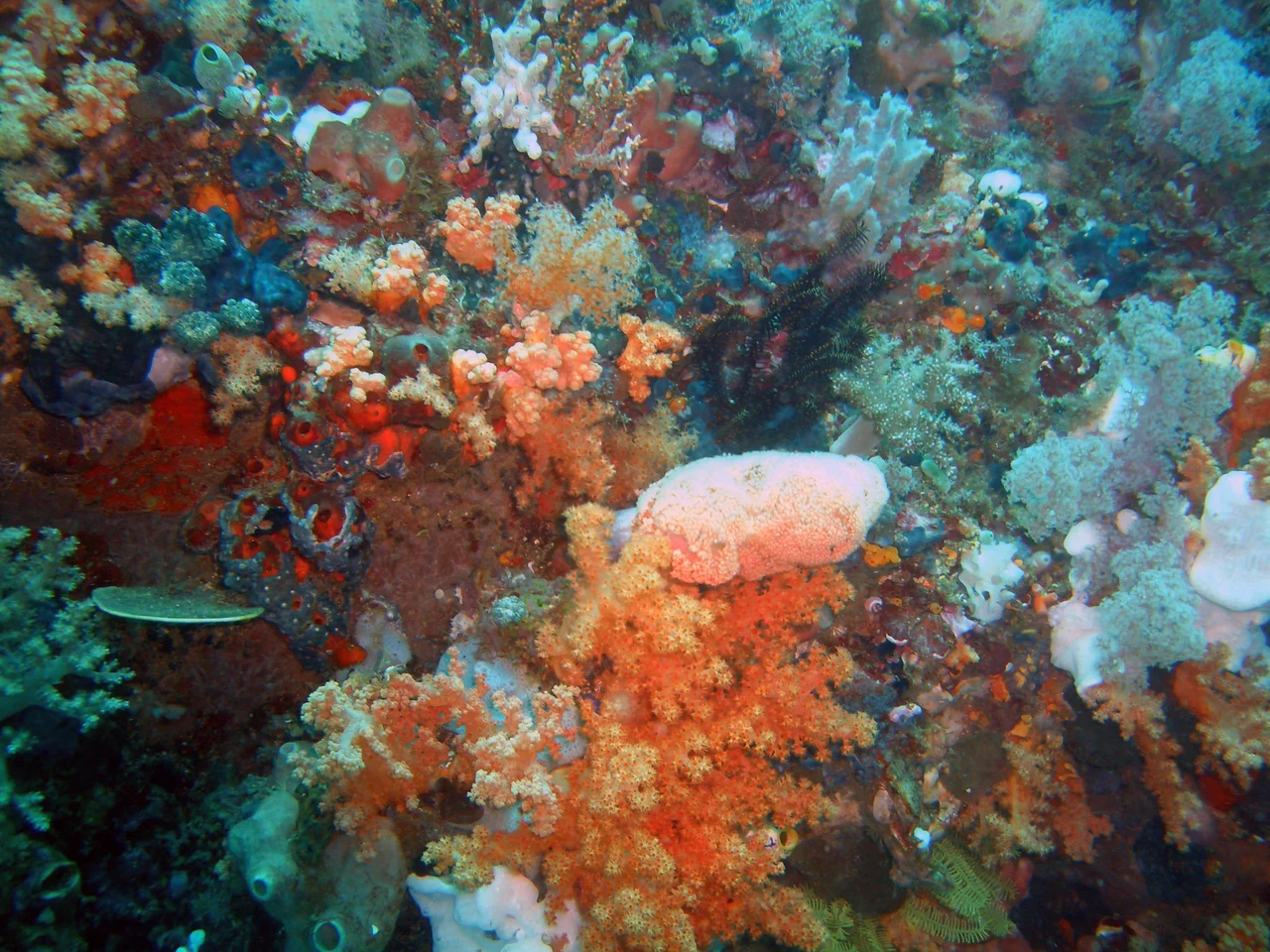
The island's southwest coast is where beauty concentrates. Sandy beaches give way to coral walls frequented by Napoleon wrasse, frogfish, pygmy seahorses, and nudibranchs in colors that seem designed to sell dive vacations. Dugongs, the gentle marine mammals that inspired mermaid legends across Southeast Asia, feed in the seagrass beds offshore. On land, the 4,778-hectare island supports Javan deer, tarsiers, common cuscus, Asian water monitors, and wild boar. The northern coastline is rockier and less touristic, its waters thick with seagrass rather than spectacular coral, but ecologically just as vital. Bangka sits near Bunaken Marine National Park, and the surrounding waters lie on a whale migration path.
Three Villages, Two Livelihoods
Lihunu is the largest village with roughly 1,000 residents, followed by Kahuku and the smaller Libas. Most islanders belong to the Sangihe-Siao ethnic group, and their economy divides along a familiar island axis: fishermen and farmers. Coconuts, copra, cloves, maize, and vegetables sustain the agricultural side. Fishing sustains the rest. Since the first dive resort opened in 1987, tourism has added a third pillar, employing locals at five eco-tourism ventures that specialize in diving and snorkeling. The population has actually declined slightly, from 2,649 in the 2000 census to 2,397 in 2010, a common pattern on small Indonesian islands where young people leave for education and opportunity in cities like Manado.
The Fight for Bangka
In 2008, the Regent of North Minahasa issued a permit to PT Mikgro Metal Perdana, a subsidiary of Hong Kong-based Aempire Resource Group, to explore for iron ore on Bangka. The concession covered 2,000 hectares, nearly half the island. Residents and dive operators saw the threat immediately: an open-pit mine would devastate the reefs, poison the fisheries, and destroy the eco-tourism that had become the island's economic future. They sued. Indonesian law was on their side. Law No. 27/2007 explicitly prohibits mining on islands smaller than 2,000 square kilometers. Bangka is 48. The Manado court initially rejected the lawsuit in 2012, but the High Administrative Court of Makassar overturned that ruling in March 2013, revoking the permits. The Supreme Court dismissed the mining company's appeal in September 2013.
A Rock Band and a Corrupt Minister
The campaign to save Bangka drew unlikely allies. Slank, one of Indonesia's most popular rock bands, publicly supported the islanders, bringing national media attention to a dispute that might otherwise have remained a provincial story. Divers circulated underwater footage showing what mining runoff would destroy. The company pressed on regardless, obtaining a production permit in July 2014 from Energy and Mineral Resources Minister Jero Wacik, who was later jailed for corruption in 2016. The Supreme Court accepted yet another lawsuit from Bangka residents in August 2016, canceling the production permit. Formal revocation came in March 2017 when the new minister issued the decree. PT MMP had invested $105 million. It demanded sanctions against the officials who blocked its re-entry. The government refused.
What Was Saved
The December 2018 meeting between multiple government ministries formally rejected the company's final attempt to reactivate its permits. Bangka's reefs remain. Its mangroves, reduced to 1.98 percent of the island's surface even before the mining threat, remain fragile but intact. The island still has no protected marine park status, a vulnerability that environmental groups continue to highlight. But the legal victories established that Indonesian small-island protections have teeth, that communities of 2,400 people can prevail against corporations backed by $105 million, and that some places are worth more alive than mined.
From the Air
Located at 1.793N, 125.150E off the northeast tip of Sulawesi, between the Celebes Sea and Molucca Sea. The island is visible as a small green landmass southwest of Biaro Island. Nearby islands include Talisei, Gangga, and Kinabohutan. Sam Ratulangi International Airport (ICAO: WAMM) in Manado is approximately 55 km to the southwest. Bunaken Marine National Park lies to the west. Best viewed at 3,000-5,000 ft for reef color contrast. Tropical maritime weather with frequent convective clouds.
Nearby Stories
- Ban Hin Kiong Temple 18 km away
- Mount Ruang 48 km away
- Gorontalo 191 km away
- USS Shark (SS-174) 194 km away
- Otanaha Fortress 216 km away
- Fort Kastela 220 km away
- Japanese Minelayer Tsugaru 272 km away
- Basilan 564 km away