
BNI City: The Station That Sold Its Name
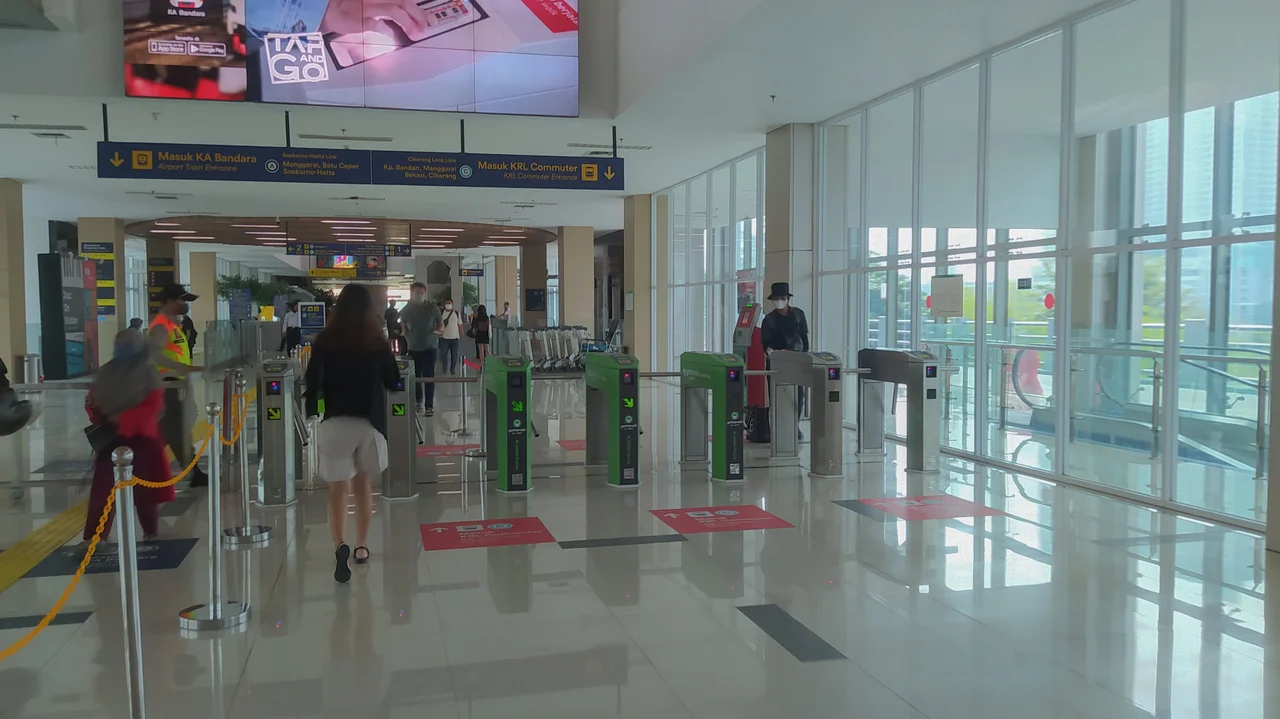
It is the first railway station in Indonesia to carry a corporate name, and the transaction tells you something about modern Jakarta. When Bank Negara Indonesia purchased the naming rights to a brand-new airport rail link station on Jalan Jenderal Sudirman, the country's most important business corridor, the deal was framed not as advertising but as "synergy between state-owned enterprises." BNI would help manage the station. The state railway company would get investment. Commuters would get ATMs and ticket machines. Everyone would call it BNI City, and the name Sudirman Baru -- New Sudirman, as it was known during construction -- would be forgotten. That was 2017. In the years since, BNI City has become far more than a branded station. It sits at the heart of Dukuh Atas, Jakarta's most interconnected transit node, where five different public transportation systems meet within walking distance of each other.
Where Five Systems Meet
Stand at Dukuh Atas and you can reach almost anywhere in greater Jakarta without hailing a car. The BNI City station itself handles two services: the Soekarno-Hatta Airport Rail Link, which whisks passengers 25 kilometers to the international airport, and the KAI Commuter Cikarang Loop Line, which began stopping here in July 2022 to relieve crowding at the nearby Sudirman Station. A hundred meters away, across the north bank of the West Flood Canal, sits the older Sudirman commuter rail station. Underground, the Dukuh Atas BNI MRT station connects to Jakarta's north-south metro line. Above, the Dukuh Atas BNI LRT station links to the Jabodebek light rail via a multi-purpose pedestrian bridge. And at street level, Transjakarta's bus rapid transit system runs multiple corridors through the area, with regular fares of 3,500 rupiah -- about 25 US cents. The integration is not seamless. Passengers transferring between modes sometimes navigate separate paid zones and long corridors. But the density of options is unmatched in Indonesia.
Half a Kilometer of Station
BNI City is not a modest structure. The station stretches roughly 500 meters in length and rises three floors. The ground level houses the machinery of modern transit: escalators, tap-in and tap-out gates, ticket vending machines, food outlets, minimarkets, a mosque, a clinic, and self-service flight check-in kiosks where airport-bound passengers can drop their bags before boarding the train. The upper floor serves as the platform, 240 meters long and 32 meters wide, with two straight tracks running through it. Four escalators connect the levels. On December 26, 2017, the station began serving its first passengers, and on January 2, 2018, it was officially inaugurated. Within weeks, President Joko Widodo had ridden the airport train from here, a photo opportunity that underlined the government's investment in rail as Jakarta's answer to its legendary traffic congestion.
Swallowing Karet
Transit planning in Jakarta tends toward consolidation, and BNI City has been the beneficiary. On January 1, 2025, Minister of State-Owned Enterprises Erick Thohir announced the closure of Karet Station, a small commuter stop located between Sudirman and BNI City. The rationale was straightforward: Karet did not appear on the 2025 national train schedule, and its functions could be absorbed. To soften the loss, authorities added a riverwalk footpath along the banks of the Ciliwung River connecting the former Karet catchment to BNI City. The merger was expected to improve the railway ecosystem -- the official phrasing -- and optimize services. But the closure also meant the end of a station that, however small, had served its neighborhood for years. In April 2025, airport train services were transferred from BNI City to the nearby Sudirman Station, a move designed to improve occupancy by connecting airport-bound passengers directly to the LRT without requiring the walk to BNI City.
The Naming Rights Experiment
Corporate naming of transit infrastructure is common in some countries -- London's Emirates Air Line cable car, New York's Citi Field subway stop -- but BNI City was a first for Indonesia. The arrangement between Bank Negara Indonesia, state railway operator Kereta Api Indonesia, and the airport rail link company Railink created a template that Jakarta could replicate elsewhere. BNI did not simply slap its logo on a wall. The bank invested in station facilities, providing ATMs and ticket machines, and took a stake in the station's management. Whether this model will spread to other Indonesian stations remains to be seen, but BNI City proved that corporate sponsorship of public infrastructure could work without making the public space feel overtly commercial. The station still looks like a station. It just happens to carry a bank's name, prominently, on every sign and every map.
From the Air
Located at 6.20S, 106.82E in Central Jakarta, on the north bank of the West Flood Canal adjacent to Jalan Jenderal Sudirman. From the air, the station is identifiable by its long linear structure running parallel to the elevated Sudirman corridor, near the junction of the canal and the MRT viaduct. The large green expanse of Merdeka Square with the National Monument (Monas) lies approximately 2 km to the north. Nearest major airport is Soekarno-Hatta International (WIII), approximately 25 km northwest, connected by the airport rail link that serves this station. Halim Perdanakusuma Airport (WIHH) is about 12 km southeast.
Nearby Stories
- The King's Footprints in the River 2.8 km away
- Rawagede Massacre 6.4 km away
- The Cruiser That Wouldn't Stop Fighting 14 km away
- Four Minutes Over the Java Sea 14 km away
- The Scholar's Mosque 21 km away
- Through the Cidepong Hills 37 km away
- Ujung Kulon National Park 97 km away
- The Islands That Vanished from Sight 352 km away