
Where the Komodo Dragon Got Its Name
In 1912, a Dutch zoologist named Peter Ouwens sat down in a laboratory at the corner of the Bogor Botanical Gardens and wrote the first scientific description of a giant lizard from a remote island in the Lesser Sundas. The creature would become the most famous reptile on Earth: the Komodo dragon. The museum where Ouwens worked had been open for barely a decade, a small institution founded to study insect pests on colonial plantations. More than a century later, the Bogor Zoology Museum holds over 2.6 million specimens across thousands of species -- one of the largest collections of preserved fauna in Southeast Asia -- and it all started with bugs eating crops.
A Laboratory in the Garden
Dr. Jacob Christiaan Koningsberger founded the museum in August 1894 as a modest laboratory tucked into a corner of the Bogor Botanical Gardens, then known by its Dutch name 's Lands Plantentuin. The original institution was called the Landbouw-zoologisch Laboratorium -- the Agriculture and Zoological Laboratory -- and its purpose was practical rather than grand: identify and study the insect pests that were damaging colonial plantations. But Koningsberger had broader ambitions. After visiting Sri Lanka in 1898, he began collecting animal specimens for research, assisted by the botanist Melchior Treub. By August 1901, a purpose-built museum was completed, christened the Zoologisch Museum en Werkplaats. Five years later, in 1906, the museum and laboratory merged under the name Zoologisch Museum en Laboratorium. What had begun as pest control was becoming something larger: a systematic effort to catalog the extraordinary biodiversity of the Indonesian archipelago.
The Dragon's Debut
Peter Ouwens' 1912 description of the Komodo dragon was not the museum's only contribution to science, but it was the one that captured the world's imagination. The giant monitor lizard, reaching lengths of three meters and weights exceeding 70 kilograms, had been known to the people of Komodo and neighboring islands for as long as anyone could remember. But to Western science it was new, and Ouwens' paper transformed it from local knowledge into global sensation. The museum continued its taxonomic work through decades of political upheaval. When Indonesia gained independence in 1950, the institution took its current name, the Museum Zoologi Bogor. In 1987, it was reorganized as the Balai Penelitian dan Pengembangan Zoologi -- the Zoological Research and Development Centre -- under the Indonesian Institute of Sciences, expanding its mission from pure taxonomy into ecology and fauna physiology.
The Weight of Numbers
The scale of the museum's collection is staggering when itemized. There are 2,580,000 insect specimens representing 12,000 species -- a testament to the institution's origins in agricultural pest research. The bird collection holds 30,762 specimens across 1,000 species. Mammals account for 30,000 specimens and 650 species, including a rare mounted specimen of the Javan rhinoceros, one of the most critically endangered large mammals on Earth. Reptiles and amphibians number 19,937 specimens from 763 species. Molluscs add 13,146 specimens from 959 species, and other invertebrates contribute another 15,558 specimens from 700 species. Dominating the exhibition space is the skeleton of a blue whale, the largest of its kind in Indonesia. The collection was significantly enhanced in 1997 through grants from the World Bank and the Japanese government, expanding both the depth and breadth of the museum's holdings.
Colonial Architecture, National Heritage
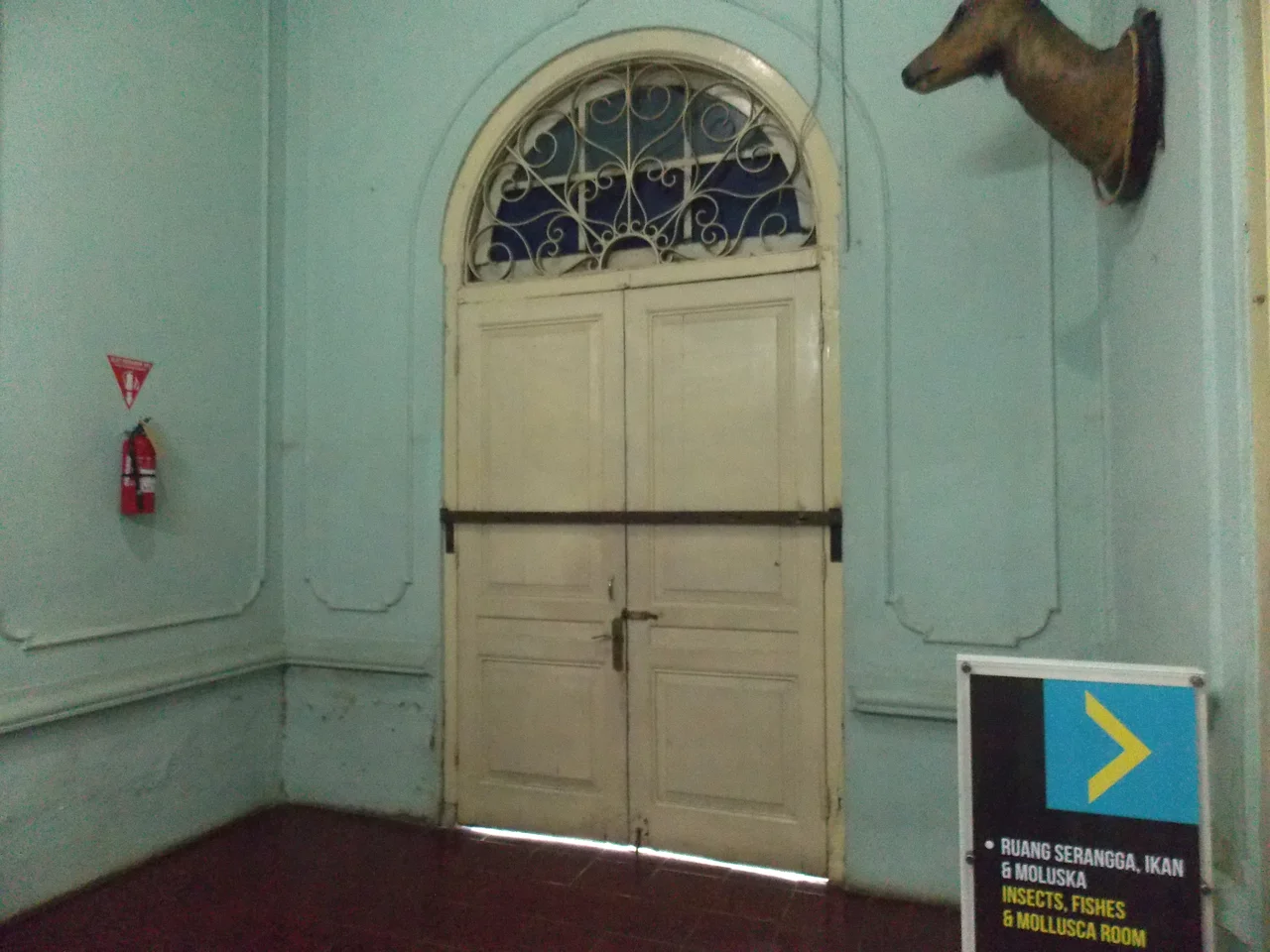
The museum building itself is a relic of the Indies Empire architectural style, its original facade now barred to the public but preserved as part of the structure. Situated next to the main entrance of the Bogor Botanical Gardens, the museum occupies a position that reflects its historical relationship with the garden: both institutions were products of the same Dutch colonial impulse to understand and exploit the natural resources of the East Indies. That relationship has outlasted the empire that created it. Today, visitors entering the botanical gardens through the main gate pass the museum on their way to the garden's 87 hectares of tropical plantings. Inside, the collections span the full range of Indonesian fauna -- from the insects that first justified the laboratory's existence to the whale skeleton that now serves as the museum's most dramatic exhibit. The building stands as a reminder that the scientific infrastructure of colonialism did not vanish with colonial rule. It was inherited, renamed, and put to work in service of a different country.
From the Air
The Bogor Zoology Museum is located at 6.604S, 106.797E, adjacent to the main entrance of the Bogor Botanical Gardens in the city of Bogor, West Java, approximately 60km south of Jakarta. The museum is not individually distinguishable from altitude but sits within the clearly visible green rectangle of the botanical gardens, near the southern entrance. Mount Salak (2,211m) rises to the south. Nearest major airports include Soekarno-Hatta International (WIII) approximately 70km northwest and Halim Perdanakusuma (WIHH) approximately 50km north. Best viewed from 3,000-5,000 feet; look for the botanical gardens' distinctive canopy and the palace compound at the northern edge.
Nearby Stories
- Japanese Migration to Indonesia 4.8 km away
- Rawagede Massacre 11 km away
- Through the Cidepong Hills 30 km away
- The Scholar's Mosque 31 km away
- Kawah Putih 40 km away
- Gunung Padang: Java's Stairway to the Ancient World 42 km away
- The Pepper Kingdom's Ghost 61 km away
- 2010 Christmas Island Boat Disaster 400 km away