
Bristol Zoo
There is a YouTuber called CGP Grey who makes nerdy explainer videos watched by millions, and somewhere in Bristol Zoo's African penguin colony there was, until 2017, a small black-and-white bird named after him. He was a real penguin. He had been adopted by Grey's listeners. When he died, the news made it onto the podcast he was named for. This is the kind of zoo Bristol was: a Victorian walled garden in Clifton, sandwiched between Brunel's Suspension Bridge and one of England's grandest public schools, that took itself seriously enough to fight for the survival of Madeiran land snails and unseriously enough to name a penguin after an internet pseudonym.
Opened by Subscription, 1836
When the Bristol, Clifton and West of England Zoological Society opened its gates in 1836, the institution was just twelve years younger than London Zoo and ahead of every other provincial city in Britain. The site was a deliberate choice: a sloping plot on Clifton Down, between the city's gentry suburb and the dramatic gash of the Avon Gorge, near enough to Brunel's then half-finished Suspension Bridge to share its drama. The Victorian buildings were beautiful and impractical. The Giraffe House, the entrance lodge, and the south gates on Guthrie Road all became Grade II listed. The old Monkey Temple, modelled on a South Asian temple, was so unsuited to monkeys that it was eventually repurposed as a botanical exhibit on how plants manipulate animals. The architecture was praised. The animals, it was quietly admitted, deserved better.
Breeding Firsts
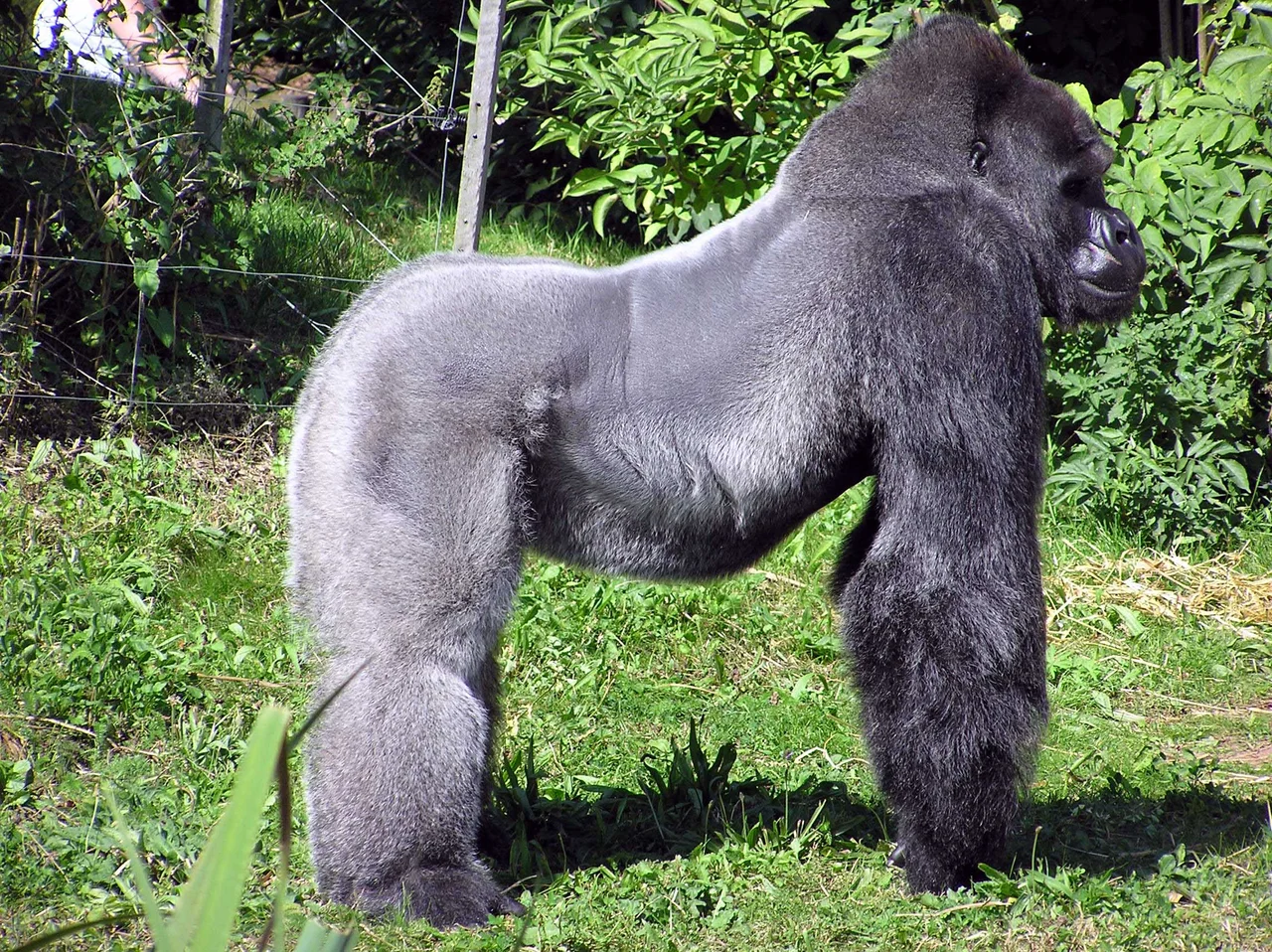
Bristol's small footprint forced ingenuity. In 1934 the zoo recorded the first chimpanzee born in Europe. In 1953 it managed the first squirrel monkey born in captivity anywhere. In 1958 came the first black rhino born in Britain. These were not stunts. They were the leading edge of a slow, often painful learning curve about what captive animals needed to thrive. A family of western lowland gorillas occupied a small island: a silverback named Jock and three females, Kera, Kala, and Touni. Kera's first baby Afia was delivered by emergency caesarean in February 2016. Touni gave birth twice. Kala once. Keepers never entered the same space, partly because gorillas are powerful enough to injure you reflexively, partly because the apes deserved time without humans watching.
The Quiet Conservationists
Behind the family attraction was a serious institution. The Bristol Zoological Society partnered with Ape Action Africa to rescue primates in Cameroon. It helped reintroduce water voles and white-clawed crayfish to southern English rivers. In 2021 it joined a captive-breeding programme for two species of Madeiran land snail, Discula lyelliana and Geomitra grabhami, both believed extinct since the early twentieth century until tiny remnant populations turned up in 2013. The Critically Endangered Desertas Wolf Spider, native to a single Portuguese cliff, lived in Bug World between glasswing butterflies and leaf-cutter ants. None of this fit easily into a Victorian footprint. The zoo had less than twelve acres, and the animals were running out of room.
Closing the Gates
On 27 November 2020 the society announced what staff had quietly known for years: after 186 years in Clifton, the zoo would close. Land prices in central Bristol had become absurd. The Wild Place Project, a larger sister site near the M5 motorway opened in 2013, would absorb the animals and become the new Bristol Zoo by early 2024. On 3 September 2022 the Clifton gates shut for the last time. Locals listed the site as an asset of community value in 2021, an effort to protect it from total redevelopment. Housing is now planned for the walled enclosure where generations of Bristol children first saw a gorilla. The Wild Place Project has room for okapi, mandrill, eastern black rhino, and a herd of reticulated giraffe wandering paddocks Brunel's hill could never have held.
Flight Context
The former Bristol Zoo site sits at 51.4633°N, 2.6222°W on Clifton Down, on the eastern edge of the Avon Gorge in the affluent Clifton district. From the air, look for the walled green rectangle between the wider expanse of the Downs to the north and the dense Georgian terraces of Clifton Village to the south. The Clifton Suspension Bridge is half a mile west. Recommended viewing altitude 2,000-3,500 feet. Bristol Airport (EGGD/BRS) lies 7 nautical miles south. The new Wild Place Project site lies near junction 17 of the M5, about 6 nautical miles north of the old zoo.
From the Air
Located at 51.4633°N, 2.6222°W on Clifton Down, in the affluent Clifton district of Bristol. Recommended viewing altitude 2,000-3,500 feet. Look for the walled green rectangle between the wider Downs (north) and the Georgian terraces of Clifton Village (south); Clifton Suspension Bridge half a mile west. Nearest airport: Bristol Airport (EGGD/BRS) 7 nm S. The successor Wild Place Project is 6 nm N near M5 junction 17.
Nearby Stories
- Cosmeston Medieval Village 1.4 km away
- Glastonbury Festival 3.5 km away
- Tintern Abbey 3.6 km away
- Quantock Hills 4.8 km away
- Ebbw Vale Steelworks 10 km away
- New Wardour Castle 12 km away
- Windmill Hill, Avebury 16 km away
- Cotswolds 18 km away