
British Hong Kong
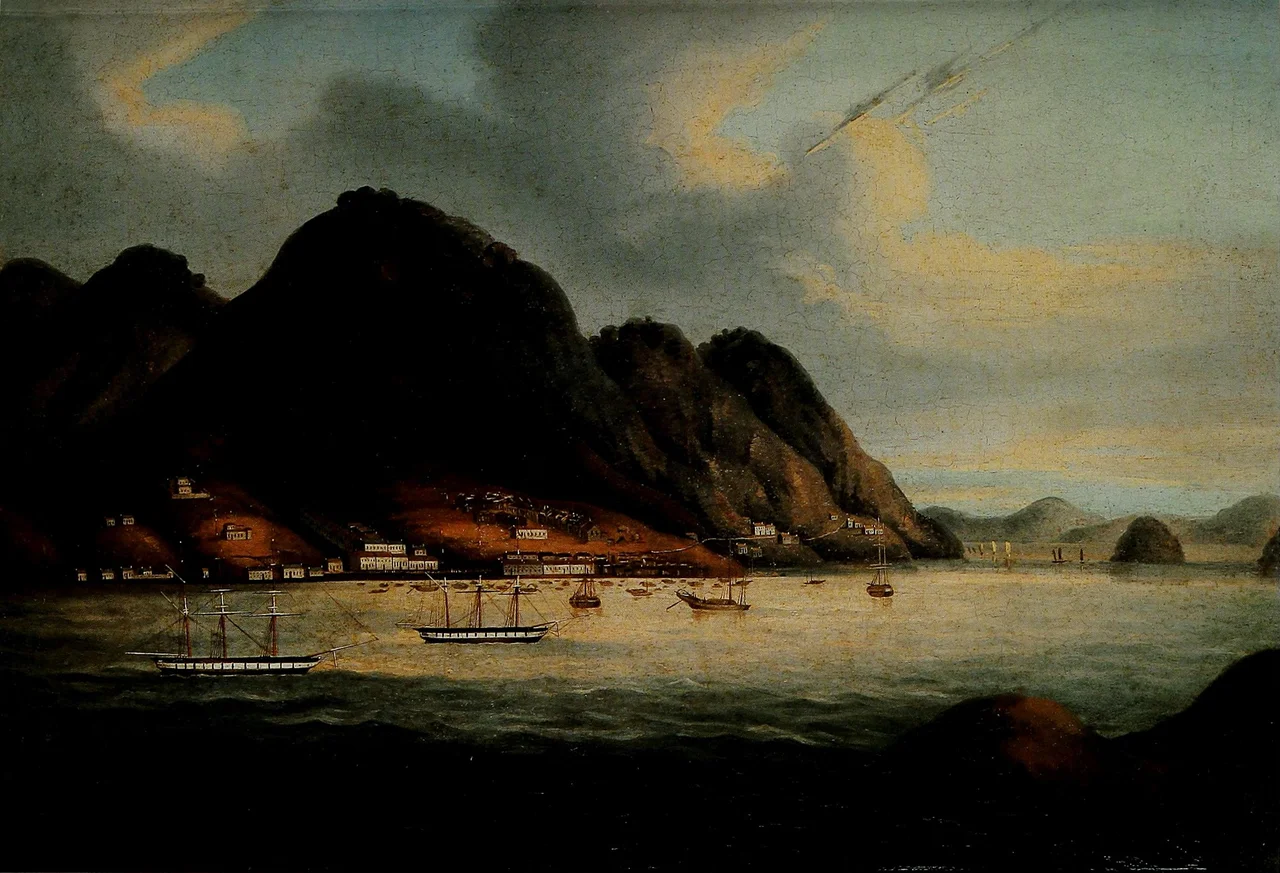
The Cantonese called it Heung Gong — Fragrant Harbour — and it was, in 1841, not much else. Commodore Gordon Bremer raised the Union Jack at Possession Point on 26 January over a settlement the British themselves dismissed as unpromising. Charles Elliot, the negotiator who chose this rocky island over more strategically appealing options, was censured back in London for his trouble. Nobody quite foresaw that the 'barren island with hardly a house upon it' would become one of the most consequential pieces of real estate in modern history. What happened here between 1841 and 1997 was not a simple story of colonial dominance. It was something stranger and more complicated: a port city where Chinese and British cultures collided, compromised, and eventually fused into something neither culture had produced alone.
Opium, Treaties, and the Island Nobody Wanted
The colony was born from a trade dispute that escalated into war. Viceroy Lin Zexu, appointed Special Imperial Commissioner in Canton in March 1839, ordered foreign merchants to surrender their opium stocks, confined the British to their factories, and cut off their supplies. When the merchants complied and surrendered 20,283 chests of opium for public destruction, Britain decided the Chinese should pay — by force if necessary. The First Opium War ended with the Treaty of Nanking in 1842, which ceded Hong Kong Island in perpetuity to the Crown. Seventeen years later, the Second Opium War added the Kowloon Peninsula. In 1898, the 99-year lease of the New Territories brought 230 islands and the bulk of what would become modern Hong Kong. The leased New Territories ultimately comprised 86.2 percent of the colony's total area and more than half its population — which is precisely why, a century later, the entire question of sovereignty would become impossible to disentangle. You cannot give back a lease and keep the purchase.
The City Built by the People the Colony Exploited
British merchants held the colony's commanding heights in its early decades, but Chinese workers built it. The port city that rose from a fishing settlement into a regional trading hub was erected on Chinese labour, maintained by Chinese enterprise, and populated overwhelmingly by Chinese people who never lost their sense of being Chinese. The colonial administration was structured to keep power in British hands: the Governor, appointed by the Crown, held concentrated executive authority and controlled both the Legislative and Executive Councils. Yet the civil service — through the Hong Kong Cadetship introduced in 1861, which recruited young British graduates to learn Cantonese and written Chinese — gradually acknowledged what the demography made obvious. After the Second World War, ethnic Chinese were admitted to the civil service, then women. By the late 1980s, figures like Li Ka-shing had become among the colony's wealthiest. The Chinese majority had never left. They simply waited, worked, and eventually transformed the economy around them.
Black Christmas and the Occupation That Changed Everything
On 8 December 1941 — the same day as Pearl Harbor — Japanese bombers destroyed British air power in Hong Kong in a single attack. The Battle of Hong Kong lasted 17 days. By Christmas Day, which Hongkongers would long call Black Christmas, organised British resistance had collapsed into pockets. Major-General Christopher Maltby recommended surrender to Governor Sir Mark Young to prevent further losses. The British and Allied casualties were 2,278 killed or missing, 2,300 wounded. Japanese soldiers committed atrocities against the civilian population, including rape. The population fell from 1.6 million in 1941 to 600,000 by the war's end as refugees fled. What the occupation accomplished, paradoxically, was the weakening of British prestige and the strengthening of the Chinese business community's cohesion — by eliminating certain internal conflicts and sidelining British competition, the Japanese occupation inadvertently consolidated Chinese economic power in Hong Kong. When Britain returned in August 1945, it returned to a city that had changed.
East Meets West — and Neither Fully Wins
The culture that emerged from 156 years of colonial rule defied easy categories. Hong Kong developed a hybrid identity: traditional Chinese values of family honour and filial piety persisted alongside Western ideals of economic liberty and rule of law. English was the colony's sole official language until 1974, when Cantonese Chinese received co-official status — a recognition that was a century overdue. Roads bore the names of British royals and governors; subway lines were named after places, not numbers, in deliberate contrast to mainland practice. Christmas became the second most important festival after Chinese New Year. Feng shui consultants advised on building layouts for major construction projects. Cantopop, the Cantonese popular music that emerged in the 1970s from Shanghai ballad traditions and Western pop, became a cultural export that swept across Asia. By the time the handover approached, 52 percent of the population identified as 'Hongkongers' — neither Chinese nor British but a third thing that the colony itself had created.
The Handover and the Fifty-Year Wager
The Sino-British Joint Declaration of 1984 — signed by both governments, registered at the United Nations — committed Britain to returning the entire territory on 1 July 1997, and committed China to leaving Hong Kong's capitalist system and way of life unchanged for 50 years. The ceremony in the new wing of the Hong Kong Convention and Exhibition Centre on 30 June 1997 was watched by television audiences around the world. Charles, Prince of Wales, read a farewell speech on behalf of Queen Elizabeth II. Governor Chris Patten, who had spent his tenure pressing for democratic reform that Britain had never previously prioritised, departed on the royal yacht. The flag came down. The question embedded in that moment — whether the 'One Country, Two Systems' guarantee would hold — remained open. The fifty years run until 2047.
From the Air
Hong Kong Island lies at approximately 22.28°N, 114.16°E, southeast of the Pearl River Delta. At 3,000–5,000 feet, the geometry of Victoria Harbour becomes visible — the narrow strait between Hong Kong Island's north shore and the Kowloon Peninsula that made this location strategically invaluable. The skyscraper canyons of Central and Wan Chai are visible on the island's north side; the New Territories extend north beyond Kowloon toward the mainland. Primary airport is VHHH (Hong Kong International Airport) on Lantau Island to the west, one of the busiest cargo airports in the world. Approach from the east allows views across Tathong Channel and the island's rugged southeastern hills. Weather is subtropical; typhoon season runs June through October.
Nearby Stories
- Lok Ma Chau Loop 2.3 km away
- Portas do Cerco 2.3 km away
- Kweilin Incident 17 km away
- Wanshan Archipelago Campaign 34 km away
- Nanxiong Formation 115 km away
- Battle of Nanpeng Island 148 km away
- Heyuan 169 km away
- Cape Maobitou 632 km away