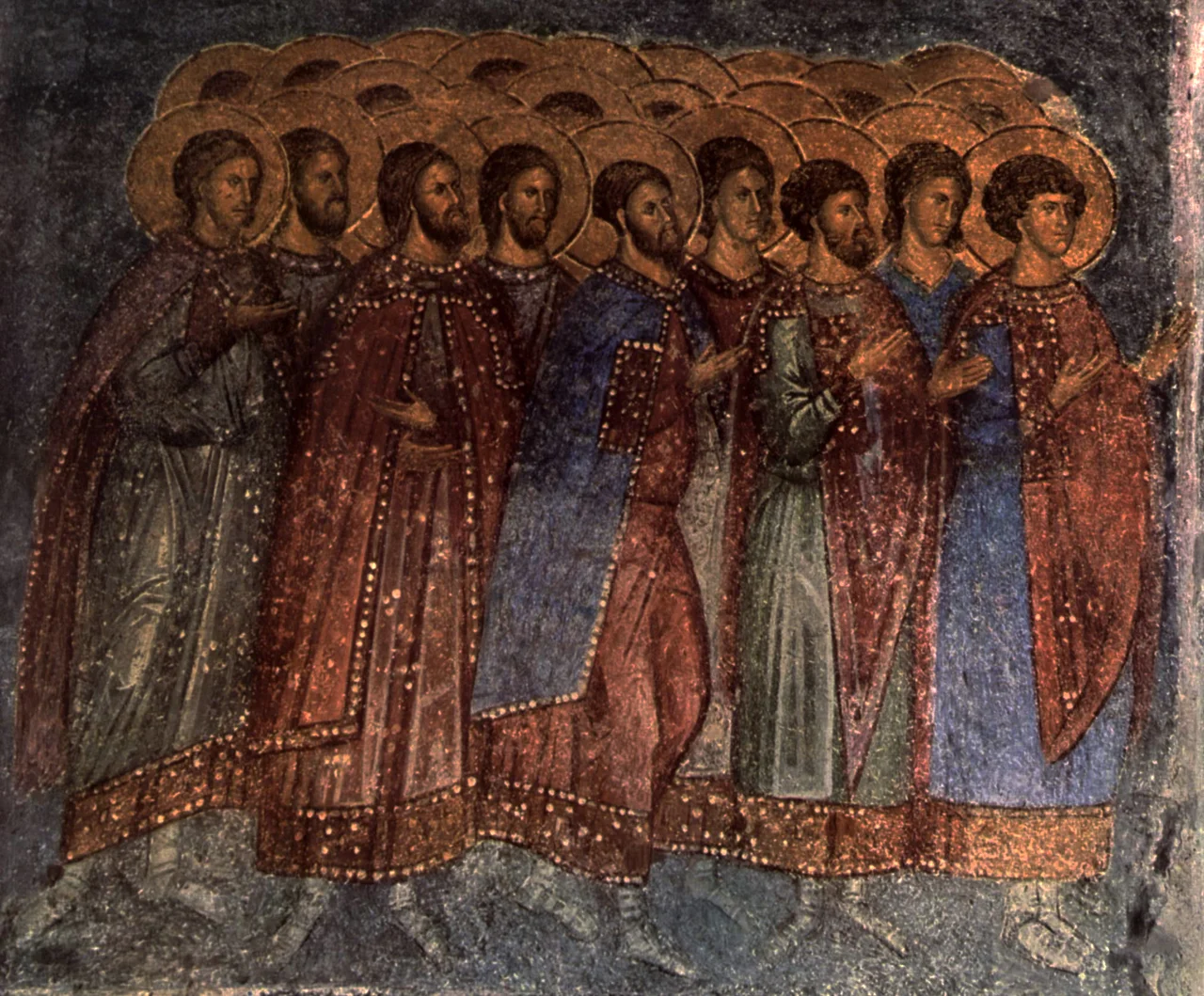

Brontochion Monastery
When the abbot Pachomius rebuilt the small church of the Hodegetria at Brontochion Monastery around 1310, he was not just expanding a building — he was creating a prototype. The resulting church, completed somewhere between 1308 and 1322 depending on which scholars you follow, became the founding example of what art historians now call the 'Mystras type': a hybrid architectural form that married the traditions of Byzantine Constantinople with the practical constraints of a mountain city, producing something entirely new in the last creative century of a civilization about to end.
The Church the Monks Called Aphendiko
The Hodegetria church — known locally as the Aphendiko, roughly 'the master's' — served as the monastery's katholikon, its principal church. Brontochion Monastery itself was one of the most important religious institutions in the Despotate of the Morea, the Byzantine principality that governed the Peloponnese during the 14th and 15th centuries. The monastery complex formed a significant center of monastic life and learning in a city that was, by this period, one of the most culturally active places in the Greek-speaking world. The church's dual identity — known by two names, serving multiple purposes — reflects the layered, cosmopolitan character of Mystras itself.
An Architecture of Two Traditions
The Mystras type that the Hodegetria pioneered is distinguished by its synthesis of two architectural vocabularies. From the Helladic local tradition it drew its general massing and certain structural approaches suited to the steep, rocky terrain. From Constantinople it borrowed the use of blind arches — decorative arched recesses set into walls without openings — a sophisticated ornamental technique more commonly found in the imperial capital. This combination was not merely aesthetic. It was a statement: Mystras looked to Constantinople as its cultural model even as it developed its own visual identity, and the Hodegetria made that aspiration visible in stone.
Marble, Fresco, and the Royal Door
Step inside the lower level of the Hodegetria and the first thing you notice is the marble revetment covering the walls — panels of marble slabs fitted together as a facing, a luxury material and a luxurious technique that speaks to the considerable resources Brontochion could command in its prime. Above one of the doorways, in a lunette — the half-moon shaped space above an arch — a fresco of the Virgin Mary as Zoodochos Pege survives. The title translates as 'Life-containing Source,' and it is one of the more theologically resonant epithets in Orthodox iconography, depicting Mary as the fountain from which divine life flows. That this fresco is above what the sources call the 'royal door' — the principal entrance through which honored visitors would pass — was no accident.
Where the Despots Rest
Theodore I Palaiologos, who ruled the Despotate of the Morea and died in 1407, is buried in the Hodegetria church. His presence here is significant: rulers are buried where they chose to be remembered, and Theodore chose Brontochion. In the context of a city where Byzantine imperial culture was undergoing its final, remarkable flowering, the church served not only as a place of worship but as a dynastic monument — a statement about continuity, legitimacy, and the enduring connection between the Palaeologan dynasty and the Orthodox faith. The monastery was later converted to use as a mosque during the Ottoman period, a fate common to many Mystras churches, but the stone and fresco that survived that era speak to the depth of what was built here.
From the Air
Brontochion Monastery sits within the UNESCO World Heritage archaeological site of Mystras at approximately 37.076°N, 22.367°E, on the lower slopes of the city below the Despot's Palace. From the air, the cluster of Byzantine churches and monastic buildings is visible as tiled rooftops and masonry terraces on the steep western face of the Taygetus spur, with the Frankish castle crowning the ridge above. Nearest major airport: LGKL (Kalamata International), approximately 55 km to the west-southwest. Afternoon thermals above the Taygetus ridge can affect approach at lower altitudes.
Nearby Stories
- Iklaina 6.6 km away
- Kalamakia Cave Site 7.8 km away
- Cleomenean War 9.7 km away
- Epidaurus Limera 16 km away
- Leonidio 18 km away
- Lepreum 20 km away
- Franchthi Cave 30 km away
- El-Kouf National Park 448 km away