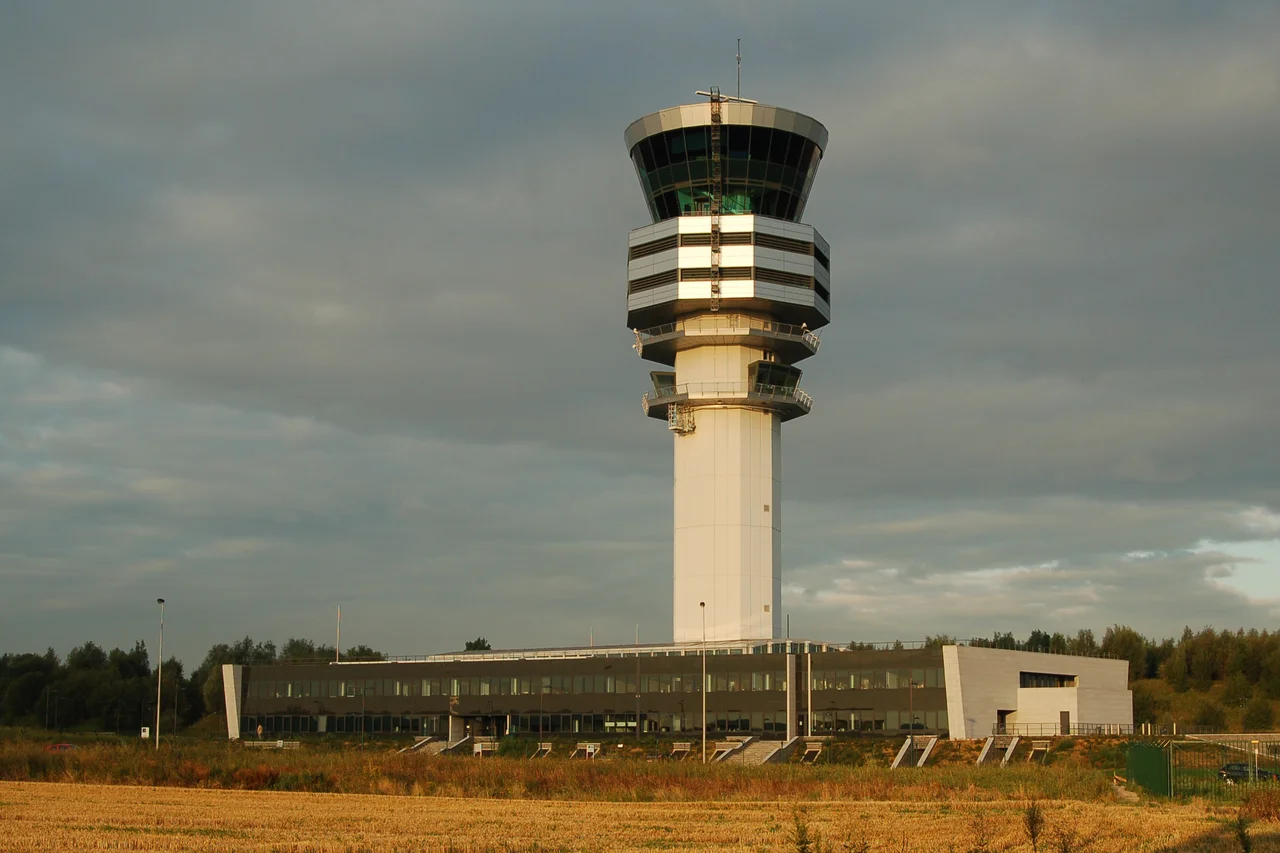

Brussels Airport
On 22 March 2016 at 07:58 local time, two bombs went off in the departures hall at Brussels Airport. One near the American Airlines and Brussels Airlines check-in desks. One next to a Starbucks. Sixteen people died there that morning - travelers in the queue with their bags at their feet, ground staff at the counters. Sixteen more would die seventy-three minutes later in a coordinated attack at Maalbeek metro station, a few stops away in the European Quarter. The airport was closed for eleven days. It reopened with temporary tents, at less than twenty percent of its previous capacity. Within four months it was hosting record loads of ninety thousand passengers a day. Belgium had been hit, and Belgium continued.
Brussels Airport - 'EBBR' to pilots, 'Zaventem' to almost everyone in Belgium - is the country's main gateway and the largest single employer in the city's hinterland. Its history is stranger than that of most national airports: it was begun by the German occupation force in 1940, named after the wrong village by accident, almost killed by the bankruptcy of Belgium's national airline, and rebuilt around a glass 'Connector' that became one of Europe's largest security platforms. Most days, the only drama is whether your gate is in Pier A or Pier B.
Built by the Luftwaffe in the Fog
The airport's first runways were laid down by the German occupying force in 1940. The Luftwaffe needed a back-up airfield east of Brussels, requisitioned 600 hectares of farmland in the parish of Steenokkerzeel, and built three runways in a triangle pattern: 02/20, 07L/25R, and 12/30. Two of those runways are still in use today, more than eighty years later. There is an urban legend that the Germans asked locals where to put their airfield and were directed to this particular spot because it was notoriously foggy. Whether or not the locals were trolling, the location stuck. The Germans called the base Fliegerhorst Melsbroek, because the original buildings were in the village of Melsbroek rather than Zaventem - which is why the airport is sometimes still called Melsbroek to this day, and why the Belgian Air Force's 15th Air Transport Wing, which shares the runways, operates from 'Melsbroek Air Base.'
After liberation in September 1944 the infrastructure passed to the British, then to the new Belgian state. By 1948 a proper terminal had replaced the wooden military buildings, and Prince Charles, Count of Flanders, opened the civilian aerodrome on 20 July. The old runway 12/30 was sacrificed in 1957 to make room for a brand new passenger terminal built for the 1958 World's Fair in Brussels - Expo 58. The new terminal opened on 5 July 1958, two months before the Atomium was unveiled across town. Most Belgians under sixty have flown out of some descendant of that 1958 building.
Sabena, and What Came After
For half a century, Brussels Airport meant Sabena. The Belgian national carrier had been founded in 1923 and flew under the yellow 'S' tail from Zaventem to destinations across Africa, the Americas, and Asia. In November 2001, with global aviation reeling from the September 11 attacks two months earlier, Sabena collapsed into bankruptcy. The airport's passenger numbers cratered for years. The successor airline that emerged - first SN Brussels Airlines, then today's Brussels Airlines - took over the old African network out of Pier A.
The airport itself kept rebuilding. A new Pier A opened in 2002, originally for Schengen-area flights. Until 2015, it was reached through a 400-meter tunnel under the apron, which made transferring between piers slow and security-heavy. That tunnel was replaced by the 'Connector,' a building that links the two piers above ground and houses a 25-lane security screening platform - one of the largest in Europe. The architectural shift was practical and accidentally symbolic: rather than two separate terminals stitched by an underground hallway, Brussels became one airport with two arms. Pier B, the older sibling, still handles all flights outside the Schengen Area, including the Brussels Airlines daily to New York for years before that route moved to A.
Sixteen at the Departures Desks
On the morning of 22 March 2016, three members of an Islamic State cell entered the main departures hall pushing luggage carts. Two of the bombs detonated. The third was located by police and destroyed in a controlled explosion. Sixteen travelers and ground staff were killed at the airport; the survivors fled across the apron in scenes that became some of the defining news images of European terrorism in that decade. About seventy-three minutes later, the same cell struck Maalbeek metro station, killing another sixteen.
The people who died at Zaventem that morning included Belgian, American, Chinese, Dutch, French, German, Indian, Italian, Peruvian, Polish, and British nationals - a cross-section of the kind of city the airport serves. The departures hall was structurally devastated. The airport closed for eleven days. When it reopened on 3 April it was operating from temporary tents on the apron, accepting passengers only after a perimeter security check. A new permanent screening regime was built into the eventual reconstruction. The Connector - already conceived before the attack - became, in retrospect, the architectural answer to how a one-roof airport survives an event like this and keeps running.
Trains, Trams and Diabolo
Brussels Airport sits twelve kilometers northeast of the city center, and it is one of the most rail-connected airports in Europe. The station is on Level minus-one, directly under the terminal. Four or more trains per hour run to Brussels-South, where Eurostar trains continue to London, Paris, Amsterdam, Cologne, Marseille and beyond. A direct line to Leuven opened in 2005. The Diabolo project, opened in 2012, gave the airport direct trains to Antwerp and Mechelen, financed by a small per-ticket supplement that every passenger still pays. Since the Schuman-Josaphat tunnel finished, trains reach the European Quarter - Brussels-Schuman and Brussels-Luxembourg - in fifteen minutes flat.
The airport's transit future is mostly tram and bus. De Lijn's Brabantnet project plans new light rail lines including an Airport Tram and a Ring Tram. A double-articulated 24-meter Ringtrambus started running between the airport and the Brussels University Hospital in Jette in 2020 as an interim measure. The rail extension is currently expected around 2031. For low-cost carriers - Ryanair, Wizz Air - many travelers actually use Brussels-South Charleroi Airport, forty kilometers south, despite the name.
Diamond Heists and Drones
Brussels Airport has accumulated stories well beyond the everyday ones. On 18 February 2013, eight men in police uniforms cut a hole in the airport perimeter fence, drove two vehicles onto the apron, and in five minutes removed 120 small parcels - roughly fifty million U.S. dollars in rough diamonds - from a Helvetic Airways Fokker 100 about to depart for Zurich. They fired no shots and injured no one. The diamonds came from a Brink's armored van out of Antwerp. The 2013 Belgium diamond heist remains one of the cleanest large-scale robberies in modern European memory.
Aviation history also turned dark here long before 2016. On 15 February 1961, Sabena Flight 548 - a Boeing 707 - crashed during approach to runway 20, killing all 72 people on board and one on the ground. The dead included the entire United States Figure Skating team on its way to the World Championships in Prague, an event the International Skating Union cancelled in mourning. More recently, in September 2025, the airport was caught up in the Collins Aerospace cyberattack on check-in systems across Europe, and on 5 November 2025 unidentified drones forced a temporary suspension of operations. Zaventem keeps reopening. That has, in a quiet way, become part of its identity.
From the Air
Brussels Airport (ICAO: EBBR, IATA: BRU) is located at 50.90 N, 4.48 E, about 12 km northeast of central Brussels in the municipality of Zaventem, Flemish Brabant. Elevation is approximately 184 feet (56 m). The airport has three runways: 07L/25R and 07R/25L (the parallel pair) and 02/20. Runway 07R/25L is the longest at 3,638 m. The airport shares these runways with Melsbroek Air Base, home to the Belgian Air Force's 15th Air Transport Wing, which operates the country's military airlift fleet. Brussels Airport handles roughly 25 million passengers per year (pre-pandemic). The control tower frequency is 118.6 MHz (Tower). On approach from cruising altitude in clear weather, the airport is easily identified by its long parallel runways aligned roughly east-northeast/west-southwest, with central Brussels visible to the southwest and the Bouchout Castle / Meise Botanic Garden complex visible to the west.
Nearby Stories
- Wilrijk 1.8 km away
- Egmont Castle 4.4 km away
- Geel 4.9 km away
- Raffinerie Tirlemontoise 9.9 km away
- Marcinelle Mining Disaster 27 km away
- Borssele Nuclear Power Station 33 km away
- Courrieres Mine Disaster 72 km away
- Fort Jeanne d'Arc 187 km away