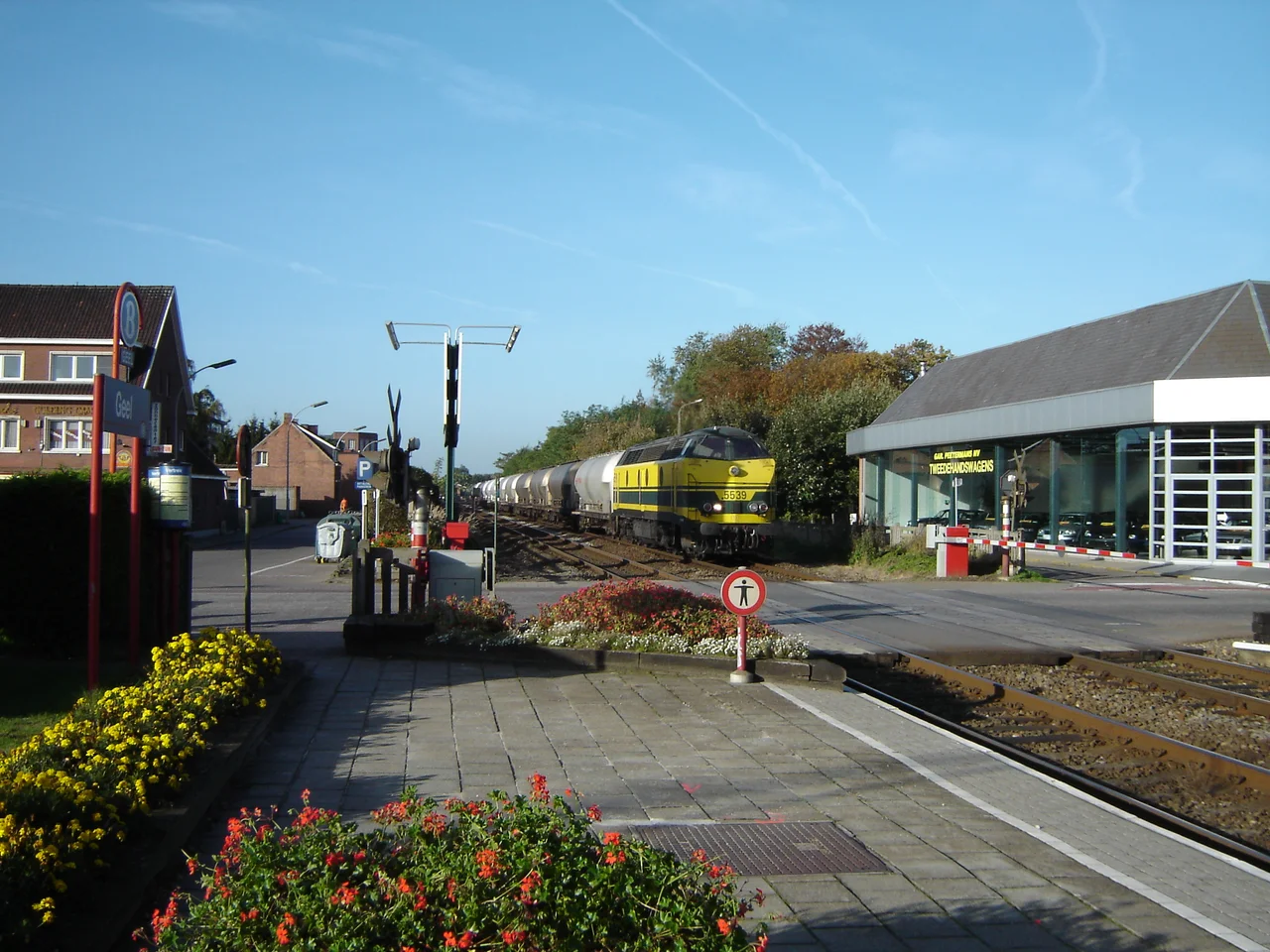

Geel
Imagine being told, in 1938, that the kindest place on earth for a person losing their mind was a small Belgian town where 3,736 strangers were quietly living in other people's homes - sleeping in their spare rooms, eating at their tables, helping in the garden, sharing the day's news at supper. No locked wards. No restraints. Just ordinary households making room for someone whose mind worked differently. That town is Geel, in the Campine north-east of Antwerp, and what began there in the Middle Ages has been called, by the psychiatrists who have come from around the world to study it, the oldest community mental-health system on earth.
A Saint, A Story, A Shrine
The tradition begins with a legend so dark that the town's gentleness reads like a deliberate answer to it. Dymphna, the story goes, was a 7th-century Irish princess whose father was shattered by grief after the death of her mother and demanded his own daughter marry him. She fled across the sea to Geel, where she was eventually found and beheaded by her father. Pilgrims began coming to her shrine almost at once, especially those tormented by what their own age called madness. By the 13th century, so many had come that the church beside the shrine could no longer house them all, and townspeople began taking them in. A canon named Petrus Cameracencis wrote the Vitae Dymphnae in the mid-1200s, fixing the story in ink. The cult grew. So did Geel: 2,136 inhabitants by 1374, many of them caring for guests who never went home.
The Boarders
What started as a religious obligation became something else - a way of life. By the 1700s, the placements were arranged directly between families and patients without the church in the middle. The host families came to be called boarders, and the boarders, in turn, called the people they cared for their own. Patients walked into town during the day, helped with chores, sat in cafes on the market square. At night they returned to the family that had made room for them. Vincent van Gogh's father, in 1880, seriously considered sending his troubled son to Geel - a small line in a biography that nonetheless tells you how far the town's reputation had traveled. By the high point in 1938, nearly four thousand people in Geel lived this way, scattered through a town that simply considered them part of itself.
Why It Worked
Modern psychiatry has a clinical term for what may be the most quietly radical part of the Geel system: low expressed emotion. The families taking patients in were not their families. They had no decades of grievance to carry, no anxious watching for old patterns to return, no urge to fix or to label. The boarder was, simply, a person under the same roof - useful when they could be, looked after when they could not, never reduced to a diagnosis. People with mental illness in Geel were not described as broken or in recovery. They were people. Researchers from Eastern State Hospital in Virginia and from Germany came to look, and most went home shaking their heads. The Geel approach seemed too generous, too unmanageable, too rooted in something a hospital could not bottle. So elsewhere, the world built asylums.
What Survives
A modern psychiatric centre now stands where the old infirmary stood. The numbers have dropped from their 1930s peak, but around 230 boarders still live in Geel households today, an unbroken thread back through eight centuries. The Sint-Dimpna church, on the spot where Dymphna was said to be buried, still anchors the older half of the town. The market square in front of the Sint-Amands church still has its terraces and its centuries-old city hall, the oldest parts dating to the 1600s, when the building was a cloth hall before it became a place of governance. With 40,781 residents in 2021, Geel is not a museum - it has its Janssen Pharmaceutica factory, its Genzyme biotech plant, its branch of the European Commission's Joint Research Centre, and even the Reggae Geel festival each August, one of the largest in Europe.
An Idea That Was Always Ahead
What the rest of psychiatry took most of the 20th century to discover - that people heal better in communities than in institutions, that dignity is itself a kind of medicine, that a meal shared with neighbors is worth more than another locked door - the residents of Geel knew, by inheritance, all along. The town does not boast about it much. The boarders' tradition is treated as ordinary, the way you treat a recipe handed down from your grandmother. But it is not ordinary. It is one of the most remarkable acts of sustained communal kindness anywhere in human history, performed quietly by people who, for the most part, would tell you they just opened a door.
From the Air
Geel sits at 51.16 N, 4.99 E, in the Campine region north-east of Antwerp. Approach low at 2,500 to 3,500 feet to pick out the Sint-Dimpna church on the eastern edge of town and the market square at the center. The river Nete curls past the south. Nearby airports: Antwerp International (EBAW) about 35 km west, Brussels (EBBR) 60 km south-west, and the military base at Kleine Brogel (EBBL) 30 km north-east. Reggae Geel festival traffic in early August.
Nearby Stories
- Battle of Halen 3.2 km away
- Fontys School of Fine and Performing Arts 5.6 km away
- Mechelen Incident 6.4 km away
- 2013-14 Belgian Second Division 7.7 km away
- Roosendaal 8.9 km away
- Brussels Airport 10 km away
- Raceway Venray 18 km away
- Maaseik 19 km away