
Buren, Friesland
Every island that lives by the sea has a story it tells against itself, and Buren's is the story of Rixt van het Oerd. On stormy nights, the old woman would tie a lantern to a cow and drive the beast into the dunes east of the village, hoping that some ship's captain in the dark would mistake the swinging light for a lighthouse and steer for what he thought was a safe harbor. The hull would crack against the sandbars. The cargo would wash up at dawn. Rixt would be there to gather it. The folk tale ends the way these tales always end - with the storm that finally brought her own drowned son's body up the beach. The old people say she still cries his name into the wind, every gale that hits Ameland from the north.
Neighborhood
Buren means neighborhood. The name is older than any deed of ownership, first recorded in the late 11th century as a simple description of a cluster of houses that had grown up at the eastern end of Ameland. The village arranged itself in the medieval Frisian style, gathered around a square, and for centuries it was the smallest kind of Catholic settlement - a few hundred people at most, fishermen and farmers, with a population of just 147 recorded in 1840. It sits at the center of the island today, technically, but everyone still calls it eastern. The Oerd dunes rise immediately beyond, and the sea is never far in any direction.
The Wrecker's Cow
Wreckers are common to every coast with rocks or shoals, but Rixt van het Oerd belongs specifically to Ameland. The story has been told for so long that no one knows when it began. In the version everyone tells, she is old, she is poor, she is cunning - and she has worked out that a lantern moving slowly across high ground in the dark looks, from far enough out, like a lighthouse keeper walking his round. A ship steering for the supposed light grounds on the sandbars off Buren. The vessel breaks up. Whatever survives the surf comes ashore for the taking. The horror in the tale is what eventually washes in - her son Sjoerd, drowned, his face known to her even with the salt and the sand on it. After that, the story goes, Rixt's grief became the weather. There is a small statue of her in the center of Buren, lantern in hand.
From Pirates to Postcards
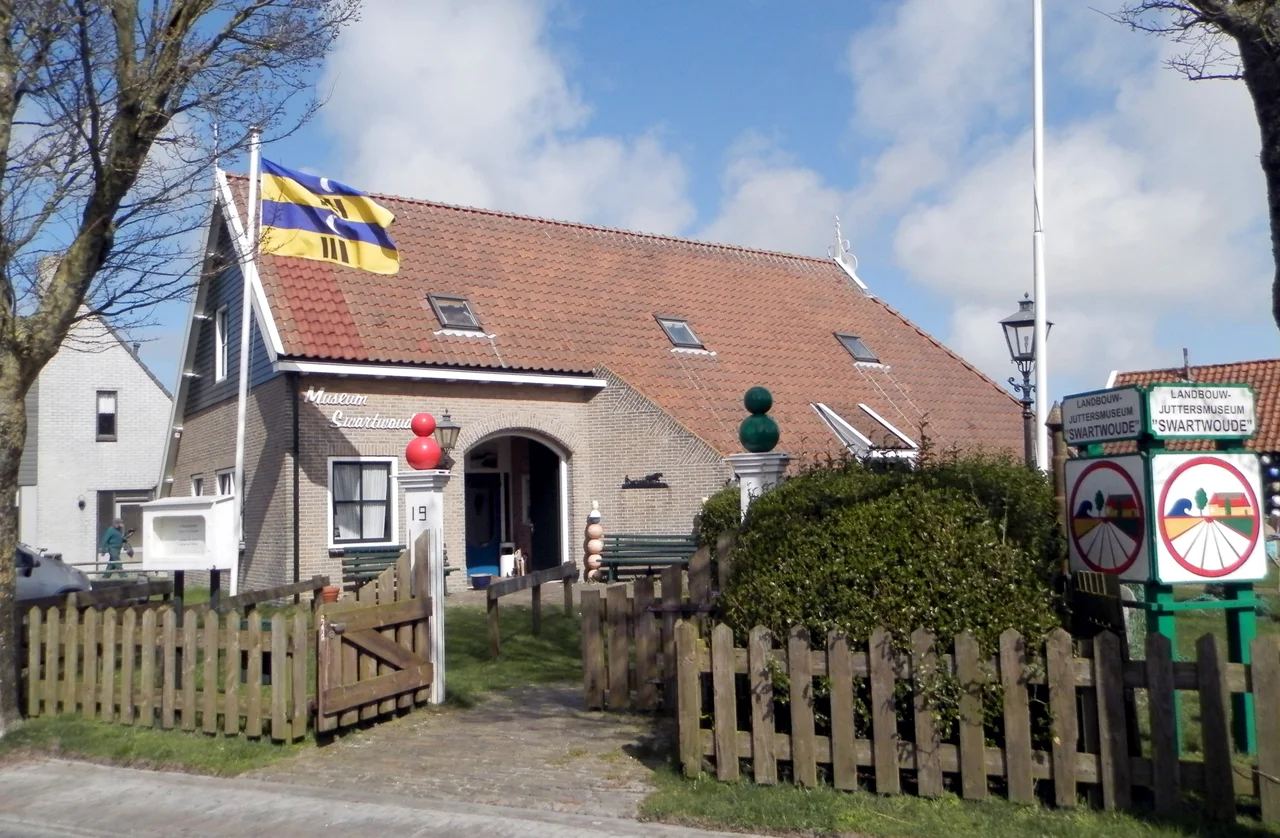
Five hundred years ago, the locals say, the people of Buren were pirates and bandits - or close enough to it that the distinction did not matter much in the half-light of a stormy night. The island sat just far enough from any government to make smuggling, wrecking, and beachcombing into respectable side careers. The wreckage was rich enough to fight over, and Catholic Buren and Protestant Hollum kept up a rivalry for generations that had as much to do with salvage rights as with the catechism. Today the rivalry has dimmed into harmless local pride, and the wreckage has been replaced by tourism. German schoolchildren on class trips fill the guest houses every spring. The agriculture and beachcombing museum at the edge of the village tells both stories - the farming and the salvaging - in equal measure.
The Oerd Beyond
Buren ends and the Oerd begins almost without warning. East of the last houses, the road turns to sand and the sand turns to dunes, a long restless complex that keeps growing year by year as wind and tide push more material into it. More than sixty species of birds nest or pass through. The beach plain called the Hon stretches further east, almost beach-as-sky, the kind of place where you can walk for an hour and meet no one. Somewhere out here, the legend says, Rixt drove her cow into the dark with the lantern swinging. The wind never quite stops. On the worst nights it does sound, if you let it, like a woman calling a name.
Living from the Sea Now
Buren today is hotels, holiday cottages, a few restaurants, a campsite, and the long beach that stretches north of the village toward the open water. The harbor is at Nes, the next village west, so Buren has stayed quieter than its neighbor - more of a base for cyclists and beachgoers than a tourist hub. The agriculture and beachcombing museum, the small statue of Rixt with her cow and her lantern, and the old village square remain. The sea still washes things up. People still walk the tideline at dawn looking for what the storm left.
From the Air
Coordinates 53.4472N, 5.7989E. Buren is the easternmost village on Ameland, sitting just inland from the long northern beach and immediately west of the Oerd dune complex. From 1,500-3,000 ft AGL the village reads as a small grid of streets among green pasture, framed to the east by the pale crescents of the Oerd dunes and the beach plain of the Hon. Ameland Airport (EHAL) lies about 7 nm west near Ballum; Leeuwarden Air Base (EHLW) is roughly 28 nm south; Groningen Airport Eelde (EHGG) about 50 nm southeast. The eastern tip of the island is uninhabited dunes and salt marsh, often photographed for its near-emptiness.
Nearby Stories
- Griend 1.7 km away
- De Hoop, Stiens 2.8 km away
- Hoendiep 5.7 km away
- Pieterpad 16 km away
- Oerol Festival 17 km away
- HVDC DolWin1 24 km away
- Gemini Wind Farm 29 km away
- SM UC-47 322 km away