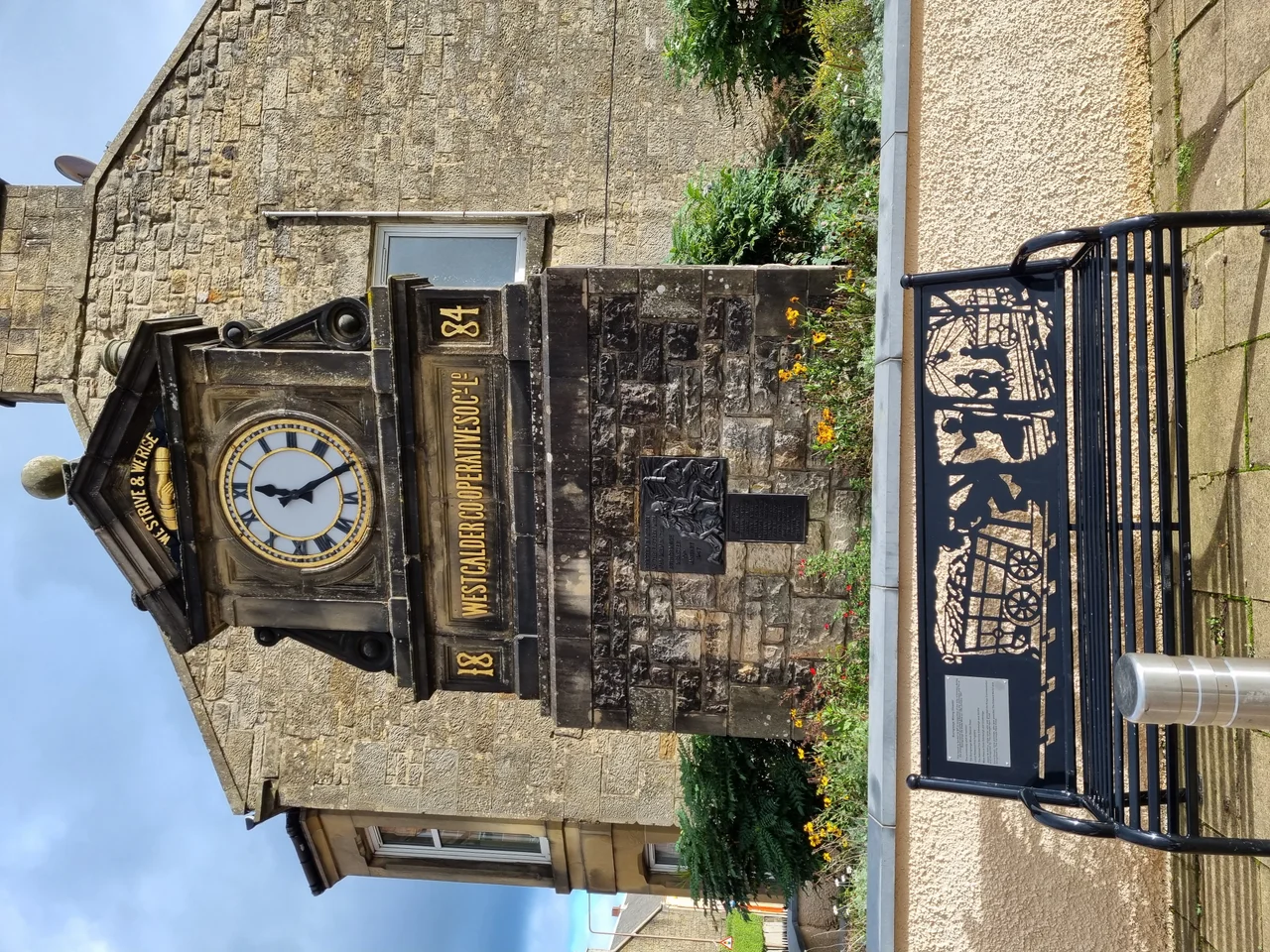

Burngrange Mining Disaster
Eight in the evening on Friday, 10 January 1947. Fifty-three men were at work underground at the Burngrange shale mine, west of Edinburgh, when an open acetylene cap lamp ignited a pocket of firedamp. The explosion was small. The fires it started were not. They spread rapidly through the workings, burning the timber supports, choking the galleries with smoke, and trapping fifteen miners in No. 3 Dook — the steepest of the underground inclines, the hardest to reach. David Brown, the overman on duty that night, made attempt after attempt to get back in to them. So did James McArthur, a miner who volunteered for the rescue team without being asked. By the time the fires were finally controlled four days later and a team could push past the burned area into No. 3 Dook, all fifteen were dead — killed not by the explosion but by afterdamp and fumes. Brown was awarded the Edward Medal. McArthur was awarded the King's Commendation for Brave Conduct. They had done everything that could be done.
The Mine That Made Paraffin
Most British coal disasters are remembered as coal disasters, but Burngrange was something different — it was an oil-shale mine. The shale fields of West Lothian and Midlothian had been worked since the 1850s, when James 'Paraffin' Young pioneered the extraction of mineral oil from oil shale, lighting the world's lamps before Pennsylvania's wells took over the trade. By 1947 the industry was a shadow of its peak, but a dozen mines still operated, owned by Young's Paraffin Light & Mineral Oil Co., Ltd., a subsidiary of Scottish Oils Ltd. Burngrange Nos. 1 and 2 lay 16 miles south-west of Edinburgh in the parish of West Calder. The village around it had grown up in the early twentieth century specifically to house mining families. The workings were narrow — narrower than typical coal galleries — and that narrowness mattered when the fires started, because there was nowhere for the smoke to go but along the same passages the rescuers needed to use.
Three Attempts Into the Smoke
Brown descended the pit with a fireman and pushed in toward the men trapped beyond No. 3 Dook. The smoke was thick but at first not impassable, and they made progress as far as the junction of another heading. There the smoke thickened and they were forced back. Brown waited a few minutes and then went in again, alone. He reached the head of No. 3 Dook itself. He shouted into the darkness and heard nothing. He saw no lights — the cap lamps of the trapped men should have been visible if any of them were alive and conscious — and he was forced to withdraw a second time. On his way out he met the fireman again, who had been trying to improve the ventilation by opening some of the brattice screens, the fabric barriers that direct airflow through the workings. It had not helped. The fires were spreading faster than any of them realised. Brown sent word back to the manager: there was no further hope of going in without self-contained breathing apparatus.
What Brown Asked For
The National Fire Service, despite the fact that fighting fires underground was not part of their mandate, sent a team. Two of them put on their one-hour Proto-breathing sets. Underground they met Brown, who pleaded for the use of those sets so that he and another trained member of the Burngrange Mines Rescue Team could try again. They borrowed the apparatus. They went in. They could not reach the men. At 11:15 that night, under Brown's captaincy, a third attempt was made — a fresh team wearing goggles and using a life-line. The temperature in the workings was now very high. The smoke was so dense that the rescuers could not see their own lights. There had been a fall of stone, and sounds of strata movement could be heard from somewhere ahead. They were forced back again. A further attempt along a different level discovered another fire. By this point it was clear that nothing could be done for the trapped men until the fires themselves were under control.
Four Days
The firefighting continued for four days. Not until the night of 13/14 January was it judged practicable to send a rescue team beyond the burned area. With one exception, the bodies of all fifteen men were found in No. 3 Dook. They had died of afterdamp — the toxic mixture of gases left behind when a fire consumes the oxygen in a confined space — and of the fumes from the burning timber. None of them had been killed by the explosion itself. They had been trapped, had waited, and had asphyxiated. David Brown was awarded the Edward Medal, which in 1971 was upgraded — all surviving holders were invited to exchange it for the George Cross, the highest civilian decoration for gallantry. James McArthur received the King's Commendation for Brave Conduct. The memorial in West Calder lists the names of the fifteen who did not come home. The oil-shale industry itself shut down in 1962. The villages remained, though, and the families that had grown up in them remembered.
From the Air
The Burngrange site lies at 55.85°N, 3.58°W, in the parish of West Calder in West Lothian, about 16 miles southwest of Edinburgh. From cruising altitude the West Lothian shale field shows as a distinctive landscape of pink-red bings — pyramidal spoil heaps of spent oil shale — that still dot the countryside between Bathgate and West Calder. Edinburgh Airport (EGPH) is 12 nm east-northeast; Glasgow (EGPF) is 25 nm west. The M8 motorway runs north of the site. The village of West Calder is the best landmark; the memorial to the fifteen miners stands in the village. The bings are protected as habitat now, and several are designated Sites of Special Scientific Interest — silent monuments to a vanished industry.
Nearby Stories
- Cathcart Castle 2.4 km away
- Roslin Castle 4.7 km away
- Ravenscraig Castle 5.2 km away
- Crawford Castle 8.3 km away
- Catrine 9 km away
- Battle of Dollar 9.8 km away
- Battle of Philiphaugh 18 km away
- Loch Achray 20 km away