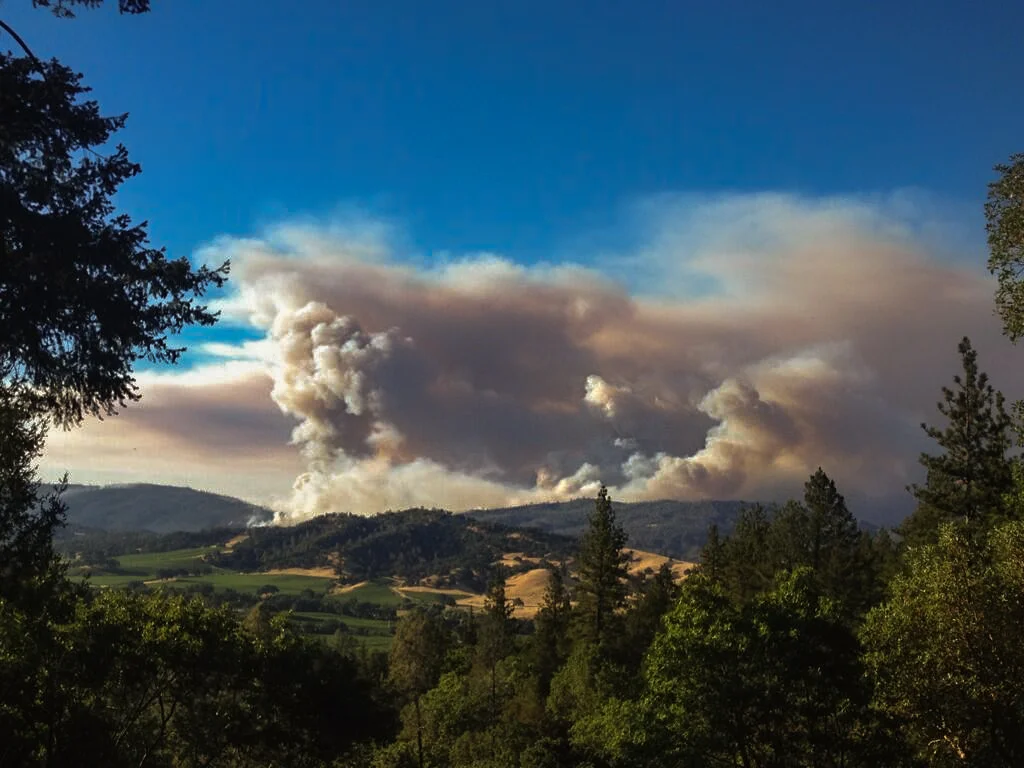

The Canyon That Burned on Independence Day
Nearly two years after the Butts Fire burned through Napa County, concrete workers driving along Butts Canyon Road noticed something in the scorched landscape that stopped them cold. Skeletal remains - two bodies, side by side, in the remote brush north of Pope Valley. It would take months to identify them as Mario and Florentino Avendano, brothers from Santa Rosa who had been reported missing in January 2015, more than seven months after the fire. Investigators believe the brothers died trying to flee during the fire's earliest hours, became trapped, and were consumed by the blaze. No one found them because no one knew to look. The Butts Fire had been contained, the damage tallied, the acreage counted - but the land still held its secrets.
The First Night in Pope Valley
The fire was reported on July 1, 2014, in the rural canyon country north of Pope Valley, about ten miles west of Lake Berryessa. Named for Butts Canyon, where it originated, the blaze started in the dry grass and oak woodland that characterizes this part of Napa County - a landscape that turns tinder-dry every summer and waits for a spark. By Tuesday evening, the fire had ballooned from an estimated 500 acres to over 2,700, moving predominantly northward and forcing the closure of Butts Canyon Road. Over a thousand firefighters were deployed that first night. CAL FIRE called it the most significant wildfire burning in the state that summer, a distinction that would seem modest by later California standards but felt urgent enough at the time. More than 380 structures were under mandatory evacuation threat.
Across the County Line
By Thursday, July 3, the fire had jumped from Napa County into Lake County, spreading through the largely rural terrain between the two jurisdictions. The country here is beautiful and unforgiving - volcanic hills, narrow roads, scattered homesteads separated by miles of grass and chaparral. At its peak, 1,682 fire personnel were working the blaze, supported by 101 engines, 60 fire crews, 10 bulldozers, nine helicopters, and four air tankers. The numbers suggest military logistics, and in a sense that is what wildfire suppression in California has become. Significant burn-off operations on Thursday and Friday - the Fourth of July, when the rest of the state was lighting fireworks - pushed containment from 30 percent to 65 percent and halted the fire's forward progress at 4,300 acres. Two homes and seven outbuildings had been destroyed, but the firefighters had kept the blaze from reaching the hundreds of structures in its path.
Ten Days to Containment
On July 10, nine days after the first report, the Butts Fire was declared fully contained at 4,300 acres. The cause remained under investigation. By the metrics that fire agencies use - acreage burned, structures lost, containment timeline - it was a moderately significant wildfire, the kind that California produces by the dozen in bad years. Two civilians were listed as killed, though at the time of containment those deaths were still unresolved entries in the record. The fire had burned through country that few outside the region knew well: Pope Valley, a farming community with no stoplights and one general store; Butts Canyon, a narrow defile that channels wind and flame; the oak-studded hills above Lake Berryessa where cattle ranchers and retirees share the land with rattlesnakes and mountain lions.
The Brothers from Santa Rosa
Mario and Florentino Avendano were brothers who lived in Santa Rosa, about forty miles west of the fire zone. Exactly why they were in Butts Canyon on the night of July 1, 2014, is unclear. They were not reported missing until January 2015, more than half a year later. When concrete workers discovered skeletal remains along Butts Canyon Road in March 2016, investigators faced the painstaking work of identification. The location, the timing, and the condition of the remains all pointed to the fire. The brothers had apparently tried to flee and failed, overtaken by flames in terrain that offers few escape routes when a canyon fire runs uphill at night. Their deaths transformed the Butts Fire from a contained, quantified, closed event into something more troubling - a reminder that fire tallies are provisional, that the land does not give up its dead on any bureaucratic schedule.
What the Canyon Remembers
Pope Valley remains much as it was before the fire: quiet, agricultural, lightly populated. Butts Canyon Road winds through the same terrain that funneled the blaze, past the same dry grass that will cure to gold every summer. The 2014 fire was neither the first nor the last to burn through this country. The following year, the Valley Fire - vastly larger at over 76,000 acres - would devastate communities just to the north in Lake County. The Butts Fire sits in memory as a precursor, a warning that went unheeded not because anyone ignored it but because there is only so much that warning can accomplish in a landscape built to burn. The canyon holds its shape. The grass comes back. And somewhere along that road, two brothers from Santa Rosa lie in ground that finally gave them up, two years too late for anyone to save them.
From the Air
Located at approximately 38.68N, 122.45W in northern Napa County, California, in the canyon country between Pope Valley and Lake Berryessa. The burn scar extends across rolling hills of grass and oak woodland roughly ten miles west of the distinctive blue expanse of Lake Berryessa. Pope Valley is visible as a small agricultural settlement in the valley floor. The terrain is characterized by narrow canyons and volcanic ridges. Nearest airports: Angwin-Parrett Field (2O3) approximately 8 nm southwest; Lampson Field (1O2) approximately 20 nm north. Lake Berryessa provides a strong visual reference to the east. Summer conditions bring dry grass, haze, and elevated fire risk.
Nearby Stories
- The Park That Saved Itself 6.5 km away
- Jenner Headlands Preserve 8 km away
- The Pawnee Fire 8.4 km away
- The Day Two Nuclear Bombs Fell on Yuba City 14 km away
- Engine Number 5 and the Tunnel That Kept Its Secret 14 km away
- Dharma Realm Buddhist University: Where Plato Meets the Lotus Sutra 16 km away
- Griffith Mansion 16 km away
- Austin Creek State Recreation Area 22 km away