
Byzantine and Christian Museum
On Vassilissis Sofias Avenue, where Athens shows its grandest face of embassies and boulevards, a graceful nineteenth-century villa sits behind a courtyard, slightly apart from the rush of traffic. It looks like a wealthy family's winter home, because that is exactly what it was. The woman who built it, an American-born aristocrat known in Greece as the Duchess of Plaisance, never imagined her Italianate retreat would one day hold one of the finest collections of Byzantine art on Earth. Yet that is the quiet magic of the Byzantine and Christian Museum: it makes the lost empire of Constantinople feel like a place you could walk into.
An Empire Made Visible
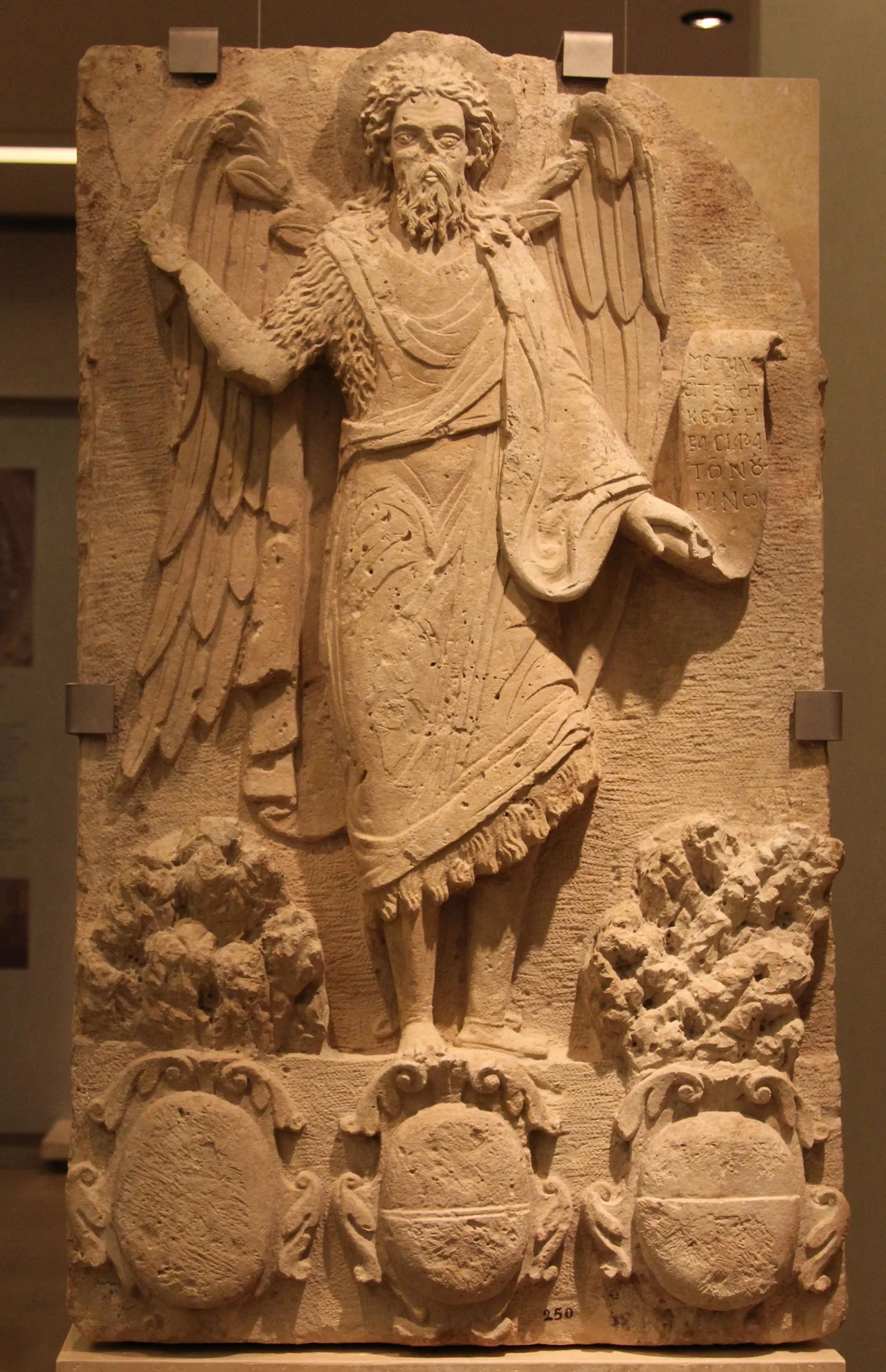
The museum was founded in 1914 to rescue and gather the physical traces of a thousand-year civilization. Byzantium, the Greek-speaking Christian empire that outlived Rome by a millennium, left its mark not in marble temples but in glowing icons, gold-ground panels, frescoes peeled from chapel walls, and the disciplined beauty of Orthodox liturgical art. More than 30,000 objects now fill the collection: icons and sculptures, ceramics and textiles, manuscripts and the fragile remains of wall paintings, spanning from the third century AD through the Late Middle Ages. Together they make the abstract idea of an empire concrete, letting visitors stand face to face with the saints and emperors a vanished world adored.
The Duchess's Villa
The building itself carries a story worth telling. Villa Ilissia was built in the 1840s and completed in 1848, designed by the architect Stamatios Kleanthis for Sophie de Marbois-Lebrun, the Duchess of Plaisance, a wealthy woman born in the United States who married into the French aristocracy and then made Athens her home in the 1830s, in the first years of the modern Greek state. Her villa near the banks of the Ilissos river became her winter residence. After her time, the elegant complex found a new purpose, and in 1930 the growing Byzantine collection moved into these rooms and gardens. A private dream of nineteenth-century luxury became a public temple to medieval art.
A Modern Home for an Ancient Faith
For its ninetieth anniversary, the museum reinvented itself. In June 2004, timed to the Athens Olympics that drew the world's eyes to the city, it reopened after an extensive renovation that added a major new wing. The expansion let the museum present its treasures the way they deserve, in carefully lit galleries that lead visitors through the long arc of Byzantine history rather than simply piling artifacts in cases. Few museums anywhere can rival its depth in this single, luminous tradition. To stand before a centuries-old icon here is to feel the weight of the devotion that made it, the prayers and patronage and skilled hands behind every gilded surface.
Finding It
The museum is easy to reach and easy to miss, which is part of its appeal. It sits at 22 Vassilissis Sofias Avenue, a short walk down the street from the Hilton Athens, in a district thick with embassies and cultural institutions. The Evangelismos station on the Athens Metro lets you out almost at its door. Step off the busy avenue into the calm of the old villa's courtyard, and the centuries seem to fold inward, the Athens of cars and commerce giving way to the slow, golden gaze of Byzantium.
From the Air
The Byzantine and Christian Museum is located at 37.975°N, 23.745°E, on Vassilissis Sofias Avenue in central Athens, near the National Garden and at the foot of Mount Lycabettus, the conical hill that dominates the city skyline. The Acropolis lies a short distance to the southwest. Nearest major airport is Athens International (LGAV), roughly 30 km to the east-southeast. The broad ceremonial avenue and the green of the National Garden help mark the location within the dense urban core; the Attic climate offers clear visibility for most of the year.
Nearby Stories
- Great Sand Beach 5 km away
- Battle of Delium 7.7 km away
- Tower of Aliartos 9 km away
- HMHS Britannic 10 km away
- Saronic Gulf 15 km away
- Sousaki Volcano 17 km away
- Sanctuary of Apollo Maleatas 24 km away
- Skyros 66 km away