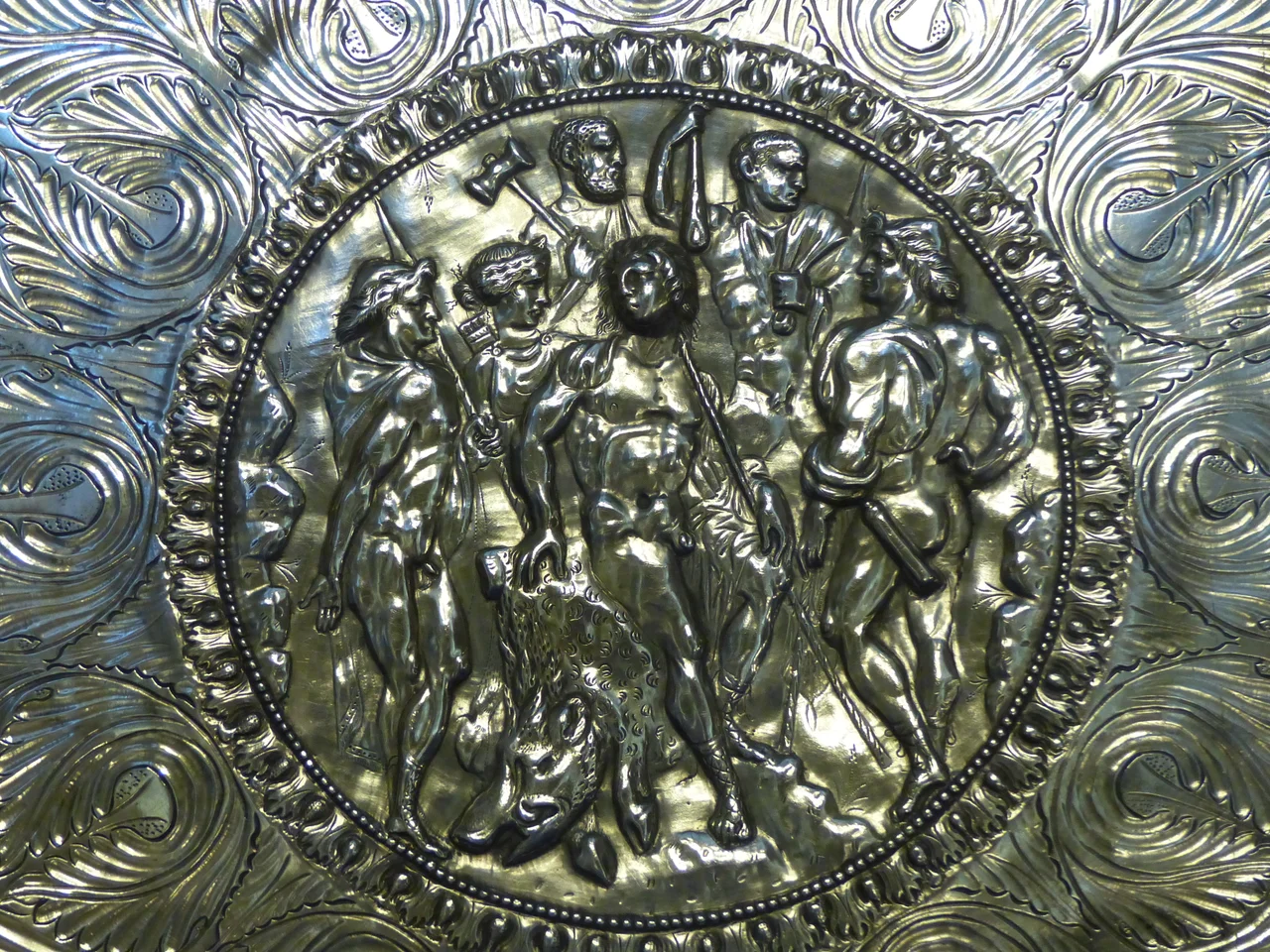

Calydon
Homer called it lovely. Strabo, writing centuries later, said Calydon and its neighboring city Pleuron had once been the ornament of Greece — and then, in the same breath, noted that both had sunk into insignificance by his time. The arc from ornament to ruin is the story of Calydon: a city so embedded in Greek mythology that the gods themselves took notice of it, and so caught up in the political machinery of the ancient world that it was eventually emptied out by imperial decree.
The City of Meleager and the Boar
In Greek mythology, Calydon was founded by Aetolus — the same mythical ancestor from whom the region takes its name — on land previously held by the Curetes tribe. Aetolus named the city after his son Calydon. From the beginning, the Calydonians and the Curetes were in conflict, and the Iliad preserves a vivid account of one of their battles.
But it is the Calydonian Boar hunt that gave the city its lasting fame. When King Oeneus of Calydon failed to honor Artemis in his harvest sacrifices, the goddess sent a monstrous boar to ravage the fields. Oeneus's son Meleager assembled a gathering of heroes to hunt it — among them Atalanta, Theseus, Jason, and Castor and Pollux. Meleager killed the beast, but the aftermath brought tragedy: disputes over the boar's hide led to a conflict with the Curetes, Meleager killed two of his mother's brothers in the fighting, and his mother burned the fateful brand on which his life depended. Meleager died. The myth, in its different versions, turns on questions of honor, family loyalty, and divine punishment — themes that made Calydon's story compelling enough for Homer to tell it in the Iliad.
A Contested City in a Contested Land
In the historical period, Calydon changed hands repeatedly. By 391 BC it was in the possession of the Achaeans — the exact circumstances unclear, though it likely passed to those Achaeans who had been settled at nearby Naupactus after the Peloponnesian War. Pressed hard by the Acarnanians, the Achaeans at Calydon called on Spartan help, and Agesilaus II led an army into Aetolia. The city remained in Achaean hands until the Battle of Leuctra in 371 BC ended Spartan supremacy; Epaminondas then restored Calydon to the Aetolians.
Calydon's location on the west bank of the Evenus River, about 11 kilometers from the sea, gave it access to trade routes without full coastal exposure. It remained significant enough that Julius Caesar and Pompey's forces were still treating it as a meaningful place during their civil war in 48 BC. A few years later, that significance ended. Augustus founded Nicopolis to commemorate his victory at the Battle of Actium in 31 BC, and obliged the inhabitants of Calydon to relocate. The city was not destroyed so much as drained — of people, purpose, and eventually its most sacred possessions.
Artemis Laphria and What Augustus Took
Calydon was the center of the cult of Artemis Laphria — a particular aspect of Artemis associated with wilderness and the spoils of the hunt, the "Laphrios" aspect that the Aetolians revered throughout their region. The goddess had a sanctuary at Calydon, and her cult statue was one of the city's most prized objects.
When Augustus depopulated Calydon to fill Nicopolis, he gave the statue of Artemis Laphria to Patrae in Achaea. A statue of Dionysus that had stood at Calydon was also moved to Patrae. Near the city, Apollo had a temple — Apollo Laphrius — and there was a lake known for its fish. The cult of Artemis was not merely relocated; it was redistributed as a political gift, the goddess becoming an instrument of imperial city-building. The Calydonian Boar hunt, which had once drawn the heroes of the Greek world to this plain, was now a myth belonging to a depopulated ruin.
What the Excavations Found
The site of ancient Calydon lies north of the modern village of Evinochori in the Aetolia-Acarnania regional unit. Archaeological excavations have uncovered a Hellenistic theatre of an unusual square plan — most ancient theatres followed a roughly semicircular form, making the square plan at Calydon a distinctive architectural choice. A Hellenistic Heroon, used as a wrestling ground, contained a rich tomb underneath its floor. The sanctuary of Artemis Laphria revealed a temple of Artemis and a smaller temple of Apollo, along with remains of other structures spanning the Geometric to Hellenistic periods — evidence of continuous use of the sacred site across many centuries.
Lower down, excavations uncovered a peristyle house and kilns in what was once the lower town, and a house from the 2nd century BC on the lower acropolis. Finds from the site — terracottas from the temple of Artemis and much else — are displayed in the Archaeological Museum of Agrinion and in the National Archaeological Museum in Athens. Above the ruins, a modern infrastructure coincidence: one of the tunnels of the A5 motorway passes beneath the site, and is named the Calydon Tunnel in honor of the city whose ground it crosses.
From the Air
Ancient Calydon lies at approximately 38.37°N, 21.53°E, north of the modern village of Evinochori in western Greece. From the air at 3,000–5,000 feet, the site is set on rising ground above the Evenus River plain, with the Gulf of Corinth visible to the south. The sanctuary plateau of the Laphrion, where the temple of Artemis stood, is the most prominent elevated feature of the ancient city. Nearest major airport: LGRX (Araxos), approximately 55 km to the west along the southern shore of the Gulf of Corinth. The A5 motorway visible from the air passes directly beneath the ruins.
Nearby Stories
- Battle of the Echinades (1427) 5.2 km away
- Diakopto–Kalavryta Railway 5.8 km away
- Acarnania 8.7 km away
- Prousou Monastery 9.2 km away
- Battle of Chalandritsa 15 km away
- Pyre of Heracles 16 km away
- 1861 Eliki Earthquake 16 km away
- HMS Perseus (N36) 32 km away