
Camden Park Mound
An Adena burial mound built sometime between 1000 BCE and 1 CE - older than the Roman Empire's peak, older than the founding of Christianity, older than every European visitor who ever crossed the Atlantic - sits at the geographic center of a working amusement park in Huntington, West Virginia. The mound is the third-largest in West Virginia. Camden Park, founded around it in 1903, had to design its layout around the earthwork rather than through it. Local lore says the result is cursed. The mound itself, regardless of curses, remains - quietly older than everything else within sight, and visible to anyone willing to look past the carousel and the roller coaster.
Who Built It
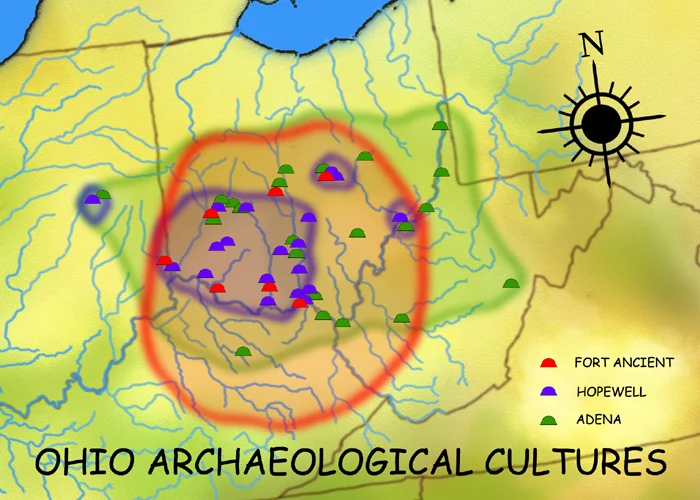
The Adena culture flourished across what is now Ohio, West Virginia, eastern Kentucky, and parts of Indiana and Pennsylvania from roughly 1000 BCE to around 200 CE. They built earthen mounds for burial, ceremony, and territorial markers - some small, some massive. The largest Adena mound in the world is the Grave Creek Mound in Moundsville, West Virginia, just upriver. The Camden Park Mound is the third-largest in the state, suggesting the people who built it invested significant labor in marking this particular spot at this particular bend of the Ohio River. The exact purpose remains a matter of inference rather than knowledge. Most Adena mounds contained burials. Some also served as ceremonial platforms. Some may have marked clan territories or trade routes. The Camden Park Mound has not been thoroughly excavated, which is appropriate; modern archaeological practice prefers to leave such sites undisturbed when possible.
The Sister Mound That Was Lost
A second Adena mound once stood just east of what is now Camden Park. It was demolished during the construction of the Ohio-and-Big Sandy Railroad in the late nineteenth century, joining the long list of Native American earthworks destroyed during the railroad-building era. Several other mounds throughout Huntington and the surrounding tri-state area met similar fates as the city laid out main roads in its early growth. The Adena landscape that once defined this part of the Ohio Valley has been heavily reduced. The Camden Park Mound is one of the few survivors in the immediate Huntington area. Its survival is something of an accident - it happened to be on land that became a picnic ground, then an amusement park, rather than land that became a railroad bed or a city street.
Designed Around
When the Camden Interstate Railway Company began developing the picnic ground in 1903, the mound was already there. They built around it. The park's overall plan from its earliest decades shows the mound at the geographic center, with paths and ride placements bending to accommodate the earthwork rather than going through it. The decision to preserve the mound was an unusual one for the era - many similar earthworks were destroyed to make way for development without a second thought. Camden Park's owners across the generations have kept the mound intact even as the rides around it have come and gone, the swimming pool has been built and removed, and the layout has evolved. Today the mound is heavily grown over with trees, no longer formally used as a picnic area, but unmistakably present at the park's heart.
The Curse
Local Huntingtonians sometimes say the mound has cursed the park - blaming various accidents and misfortunes on the disturbance of a sacred site. Whether one credits the curse or not, the story reflects something honest about the relationship between modern American leisure culture and the indigenous past. Building an amusement park around an ancient burial site creates a moral tension that the curse narrative attempts to articulate. The Adena people who built the mound buried their dead here. The Camden Park visitors who picnic nearby are doing something fundamentally different. The juxtaposition is uncomfortable when you think about it directly, and the curse story is one way the community has found to keep thinking about it indirectly. The mound itself is silent on the matter.
Seeing It Today
The Mound Builder Pavilion at Camden Park takes its name from the earthwork and hosts live music as part of the park's summer concert series. The mound itself is not part of any guided tour or formal interpretation. There are no signs explaining what it is, no educational displays, no archeologists giving talks. It is simply present - a grass-and-tree-covered earthen hill in the middle of an amusement park, easy to miss if you do not know what to look for. From the air, the mound is a small circular rise visible amid the otherwise flat park footprint. It has been visible from above for two thousand years, longer than any human flying over it can fully comprehend, and it will remain after the rides have all been taken away.
From the Air
Located at 38.398 degrees north, 82.531 degrees west, at the center of Camden Park in Huntington, West Virginia. Recommended viewing altitude 2,500 to 4,500 feet AGL to see the mound's circular shape among the park's structures. Nearest airport is Tri-State (KHTS), about 6 nautical miles east. The mound itself is a low circular rise covered in trees, easier to identify in winter when the surrounding hardwoods have lost their leaves.
Nearby Stories
- Battle of Scary Creek 6 km away
- Portsmouth 7.2 km away
- Fred M. Vinson Museum and Welcome Center 14 km away
- Staats Mill Covered Bridge 24 km away
- Lake Tight 25 km away
- Battle of Blair Mountain 32 km away
- Lower Shawneetown 35 km away
- The Kentucky Meat Shower: When Flesh Fell From a Clear Sky 68 km away