
Catalão
A priest gave the town its name. Frei Antonio came to Brazil from the region of Catalonia in Spain, and his companions on one of the early bandeirante expeditions called him simply "o Catalao" - the Catalan. Sometime around 1728, Frei Antonio decided to build a small rest stop beside a stream in the south of what is now Goias, where troops penetrating inland could water their horses and sleep without fear. The camp grew. The Catalan's name stuck. Nearly three centuries later, his rest point has become a city of 68,000 people that assembles Mitsubishi cars, operates John Deere factories, digs phosphate out of the subsoil, and each September hosts the largest Congadas festival in Brazil.
Bandeirantes and Chaplains
The first Portuguese presence in the region came around 1722 or 1723, when the bandeirante Bartolomeu Bueno da Silva planted crops here to supply his expedition southward. A few years later, in 1728, the chaplains accompanying similar expeditions - including Frei Antonio - established more permanent huts for troops. By 1828, the settlement held five tile-roofed houses and twenty grass-roofed shacks. It took until 1859 for Catalao to be officially recognized as a city. Today the municipality covers 3,789 square kilometers, about 1.1 percent of Goias state territory, and sits at the border with Minas Gerais where the Barragem de Emborcacao dams the Paranaiba River between the two states. Highway connections run 253 kilometers to Goiania, 330 kilometers to Brasilia, and 114 kilometers to Uberlandia - short enough, by Brazilian interior standards, that Catalao has functioned as a crossroads city for a long time.
The Festival of Congadas
In 1820, enslaved Africans were brought to the Vila of Catalao to work the coffee plantations. Forced into bondage and stripped of their names, they carried with them anyway the cultural practices Portuguese overseers could not take away: among them, the cult of Our Lady of the Rosary, a devotion layered with rhythms from the Kingdom of Kongo and from Mozambique. The celebrations they developed - dances in colorful costume, calls and responses in Portuguese carrying echoes of Bantu languages, long processions offering thanks to the Virgin - survived slavery's formal end in 1888 and grew afterward. Today, Catalao hosts the largest Congadas festival in Brazil. It begins on the last Friday of September and runs until the second Sunday of October, when the dancers fill the streets in the clothes their ancestors made, singing the songs their ancestors sang to a patron they chose themselves from inside a religion imposed on them.
Phosphate and Horsepower
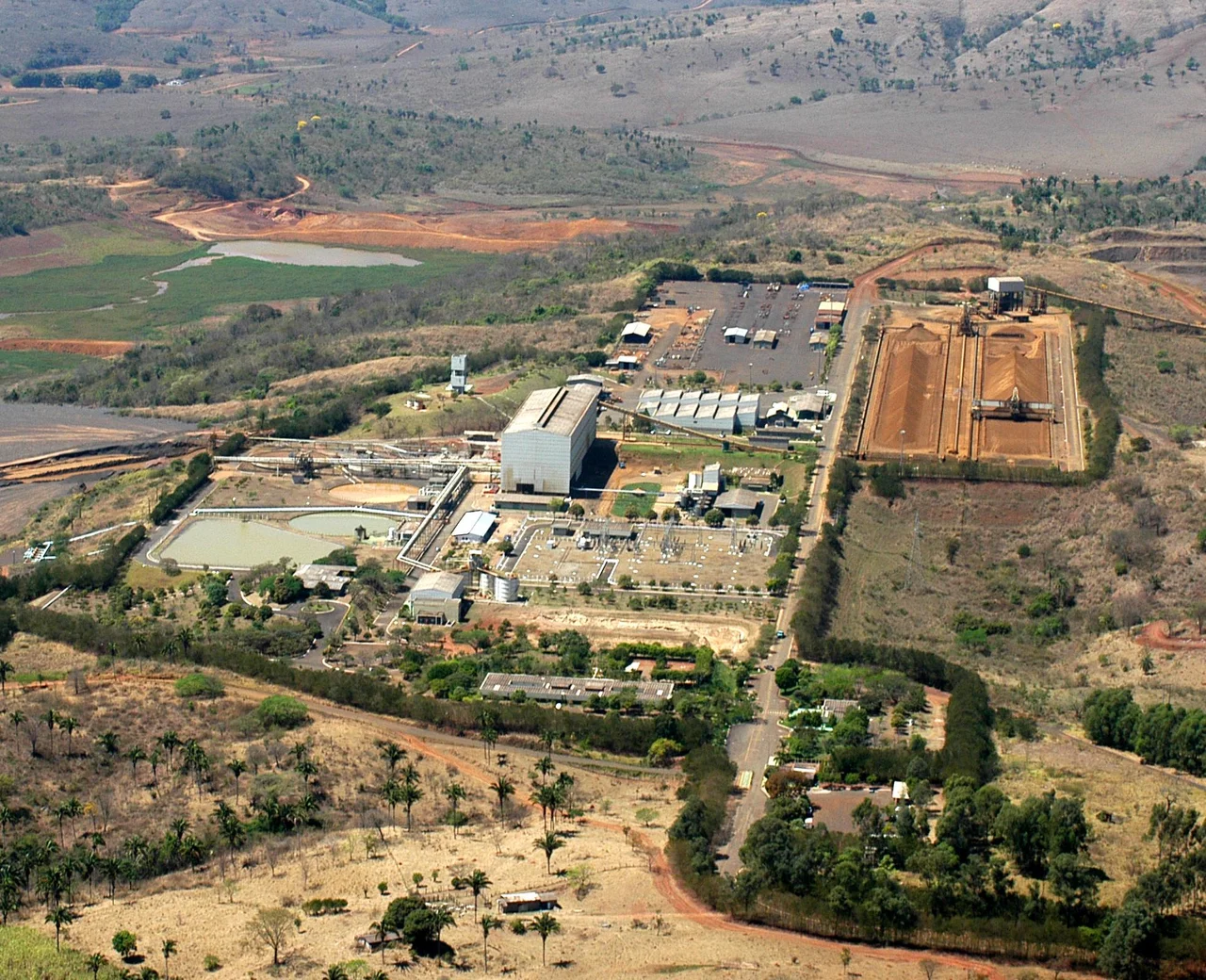
Beneath Catalao lies one of Brazil's richest phosphate deposits, and three major fertilizer plants - Copebras (controlled by the Anglo-American mining group), Fosfertil, and Mineracao Catalao De Goias - extract the phosphate rock and convert it into the fertilizer that sustains Brazilian industrial agriculture. John Deere builds sugar cane harvesters here. In 1998, Mitsubishi opened the first automobile assembly plant in Brazil's Center-West. The plant has grown considerably and now employs more than 2,500 people directly and indirectly. The industrial park, called the Distrito Minero-Industrial or DIMIC, has made Catalao the third-largest tax payer among Goias municipalities. On the UN Human Development Index, the city scores 0.818 - third in the state of 242 municipalities, 253rd out of 5,507 nationwide.
Cattle and Garlic
Industry arrived on top of older agricultural foundations that still drive much of the economy. In 2003, Catalao grazed 150,000 head of cattle and raised 424,000 head of poultry. Soybeans covered 650 square kilometers and yielded 238,500 tons. Corn came in at 110 square kilometers and 77,000 tons, grown in two harvests a year on land kept fertile by central-pivot irrigation. But one crop stands out for a more surprising reason: garlic. Catalao has become one of Brazil's most important garlic-producing regions, with three square kilometers dedicated to small-scale family farms. The garlic crop - more labor-intensive than soy, with smaller per-acre returns - preserves rural employment in a municipality that has otherwise mechanized and industrialized rapidly. At the local market, strings of garlic hang next to sacks of phosphate fertilizer, in a juxtaposition no one finds strange.
A Medical Center and a University
Catalao has become the medical center for southeast Goias. Four hospitals, 347 beds total (275 public), and 33 health establishments serve not only Catalao's residents but the populations of surrounding towns - Tres Ranchos, Ouvidor, Goiandira, Ipameri - that depend on the city for specialized care. Patients from further afield arrive by highway or by train - Catalao sits on the East-West railroad system and will eventually connect to the North-South line extending from Anapolis. The local airport runs a 1,400-meter paved runway, lit at night, capable of handling regional flights. UFCat, the Federal University of Catalao, enrolls 2,864 students across engineering, the sciences, humanities, and psychology. A chaplain's rest point has turned into a city that feeds itself, feeds the country, assembles cars, digs up fertilizer, and still dances its ancestors' songs every fall.
From the Air
Located at 18.17 degrees S, 47.94 degrees W in southeastern Goias state, near the border with Minas Gerais. Elevation roughly 800 meters on the Central Plateau. Nearest airport is Catalao Airport (SWKT) with a 1,400-meter runway for regional flights; major connections through Uberlandia (SBUL) 114 km south, Goiania (SBGO) 253 km northwest, or Brasilia (SBBR) 330 km north. Best viewing altitude 3,000-5,000 feet to see the city sprawl, the DIMIC industrial park, and the Paranaiba River forming the southern state boundary with its Emborcacao reservoir.
Nearby Stories
- Caldas Novas 24 km away
- Ipameri 29 km away
- Araguari 30 km away
- Vazante 63 km away
- Patrocínio 73 km away
- Ituiutaba 115 km away
- Unaí 184 km away