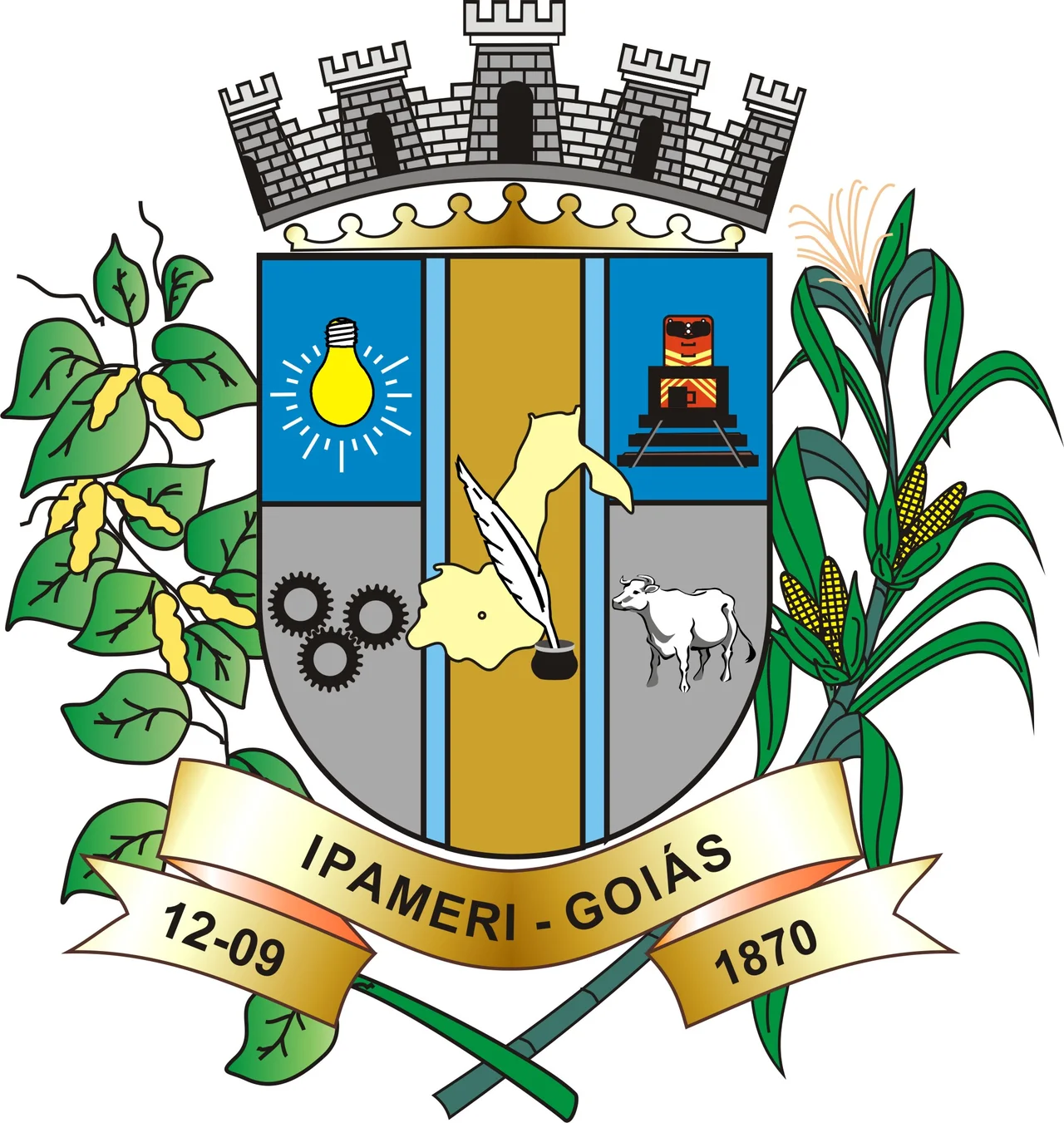

Ipameri
The story locals tell begins with a poisonous snake. Francisco Jose Dutra, a rancher in the middle of the nineteenth century, was bitten somewhere on his Fazenda Vai-Vem along the river of the same name in southeastern Goias. If he survived, he promised, he would donate all the land he could see from the top of the hill called Sao Domingos to the Divine Holy Spirit. He survived. The land he could see from that hilltop became the municipality of Ipameri, now home to about 27,000 people, most of them working in one way or another with the soybeans and cattle that dominate the surrounding fields.
The River That Comes and Goes
The first settlement was called Vai-Vem, which means it comes and goes, a name with two possible origins. One version says the river seemed to zigzag, its bed winding back on itself so that travelers felt they were crossing the same water twice. Another version recalls the Xavante and Caiapo peoples who crossed the stream on a makeshift bridge that was sometimes there and sometimes not. Both stories involve uncertainty, motion without commitment. In 1845, Vai-Vem became a district of Catalao. In 1870, it became a municipality and was rechristened Entre-Rios, Portuguese for between the rivers, because it sat on the uplands separating the Verissimo and Corumba tributaries of the Paranaiba. In 1904, the name was updated one more time to Ipameri, from the Tupi Ipau-meri, meaning the same thing: between the rivers. The Indigenous name simply replaced the Portuguese one.
A Town of Firsts
Ipameri collected firsts at a remarkable pace in the early twentieth century. In 1913, the first hydroelectric station in the state of Goias was built here. The automobile appeared in 1914. A cinema opened in 1915. A newspaper was founded in 1917. In 1921, the first bank in all of Goias opened its doors in this town. In 1922, a military base was established. In 1938, the Igreja Matriz do Divino Espirito Santo was inaugurated, today the episcopal cathedral of the Roman Catholic Diocese of Ipameri. For a brief window in the 1910s and 1920s, Ipameri was the most modern town in its state, at the intersection of the railroad, the electrified grid, and the imported cultural machinery of cinema and the daily newspaper. Then the railroad declined, the major highways went elsewhere, and the town entered a long period of relative stagnation. Locals began describing Ipameri with a backhanded phrase: the city that already had, or the city that already was. What it had, it had lost.
The Cerrado Revolution
The turnaround started in the 1980s. Rural electrification reached the farms. Mechanized agriculture arrived, along with paved roads connecting Ipameri to Catalao fifty kilometers south and Goiania 193 kilometers northwest. The cerrado soils, once considered too acidic for serious farming, responded well to lime and fertilizer. Soon the soybean and cotton booms that transformed interior Brazil reached these uplands. Today the municipality plants 66,000 hectares of soybeans, 14,000 of corn, 5,800 of cotton, and runs about 180,000 head of cattle across 284,000 hectares of farmland. The city that already was now is again, one of the more prosperous small municipalities in Goias. Agroindustries cluster in the DIAIPA industrial zone. Three hospitals serve the population. Two university campuses train engineers and agronomists.
The Cattle, the Cotton, the Cereals
The local economy is focused enough to be legible from the air. Ipameri is primarily a cattle-shipping center, with meat-processing plants and rice hullers clustered where the railroad meets the highway. The cotton goes to cotton processors. The soy goes to the oil pressers. The dairy cattle feed the milk cooperatives. The municipality is the largest cereal producer in southeast Goias. There are 1,246 farms occupying 284,247 hectares, of which 143,365 hectares are pasture and 51,075 hectares are perennial crops. The farming is mechanized now: 308 farms own tractors, and the municipality holds 704 tractors total. Fifty years ago, the ratio would have been closer to one tractor per ten or twenty farms. The cerrado revolution arrived here in iron, diesel, and lime.
A Cathedral in the Highlands
Ipameri's Catedral Divino Espirito Santo, dedicated to the Holy Ghost in 1845 when the first chapel went up, is the episcopal see of a Catholic diocese that covers the surrounding agricultural country. The current cathedral building dates from 1938 and is a solid midcentury structure that anchors the main square. The diocese is small, but the cathedral serves a region where Catholic identity remains strong even as Pentecostal churches have grown in recent decades. The legend of Francisco Jose Dutra's vow, the rancher bitten by the snake who gave his land to the Divine Holy Spirit, is still recounted by local priests to explain how the town came to exist at all. A vow kept, two hundred years later, in a stone building on a square where Indigenous place names and Catholic saints share the official registers.
From Above
From cruising altitude, the view shows classic mechanized-cerrado landscape: the grid of farm fields running in sharp geometric blocks, punctuated by the dark meandering lines of the Verissimo and Corumba rivers. Ipameri itself forms a compact urban grid set on a gentle rise, with the cathedral tower visible near the main square. The DIAIPA industrial zone sits on the edge of town where processing plants and grain elevators cluster near the railroad. To the south, the railway line runs toward Catalao, still functional if less central to the economy than it once was.
From the Air
Coordinates: 17.72 degrees south, 48.16 degrees west. Recommended viewing altitude 3,500 to 6,500 feet above the cerrado plateau (surface elevation approximately 750 to 850 meters / 2,500 to 2,800 feet). The nearest major airport is Goiania (GYN / SBGO) 193 km to the northwest. Catalao has a smaller regional field (TLZ / SBTG) about 50 km south. The rolling uplands between the Verissimo and Corumba rivers carry both the town and its agricultural hinterland. Expect afternoon thunderstorms in the wet season (October through March).
Nearby Stories
- Caldas Novas 15 km away
- Catalão 27 km away
- Pires do Rio 33 km away
- Vazante 59 km away
- Silvânia 83 km away
- Goiatuba 90 km away
- Unaí 130 km away
- Patrocínio 150 km away