
The Oldest Paintings on Earth
For most of the twentieth century, the story of art began in Europe. Lascaux, Altamira, Chauvet -- these were the caves that textbooks cited when tracing the moment humans first painted the world they saw. Then researchers turned their attention to the limestone towers of South Sulawesi, and the timeline shattered. In the Maros-Pangkep karst, known locally as Leang-Leang from the Makassarese word for "many caves," paintings of pigs and hunters have been dated to at least 51,200 years ago. That is more than twice the age of the famous hand prints at Pech Merle in France. The oldest figurative art in the world is not in a European museum. It is on the ceiling of a cave in Indonesia, thirty meters above a rice field, reachable only by ladder.
A Gallery Older Than Ice Ages
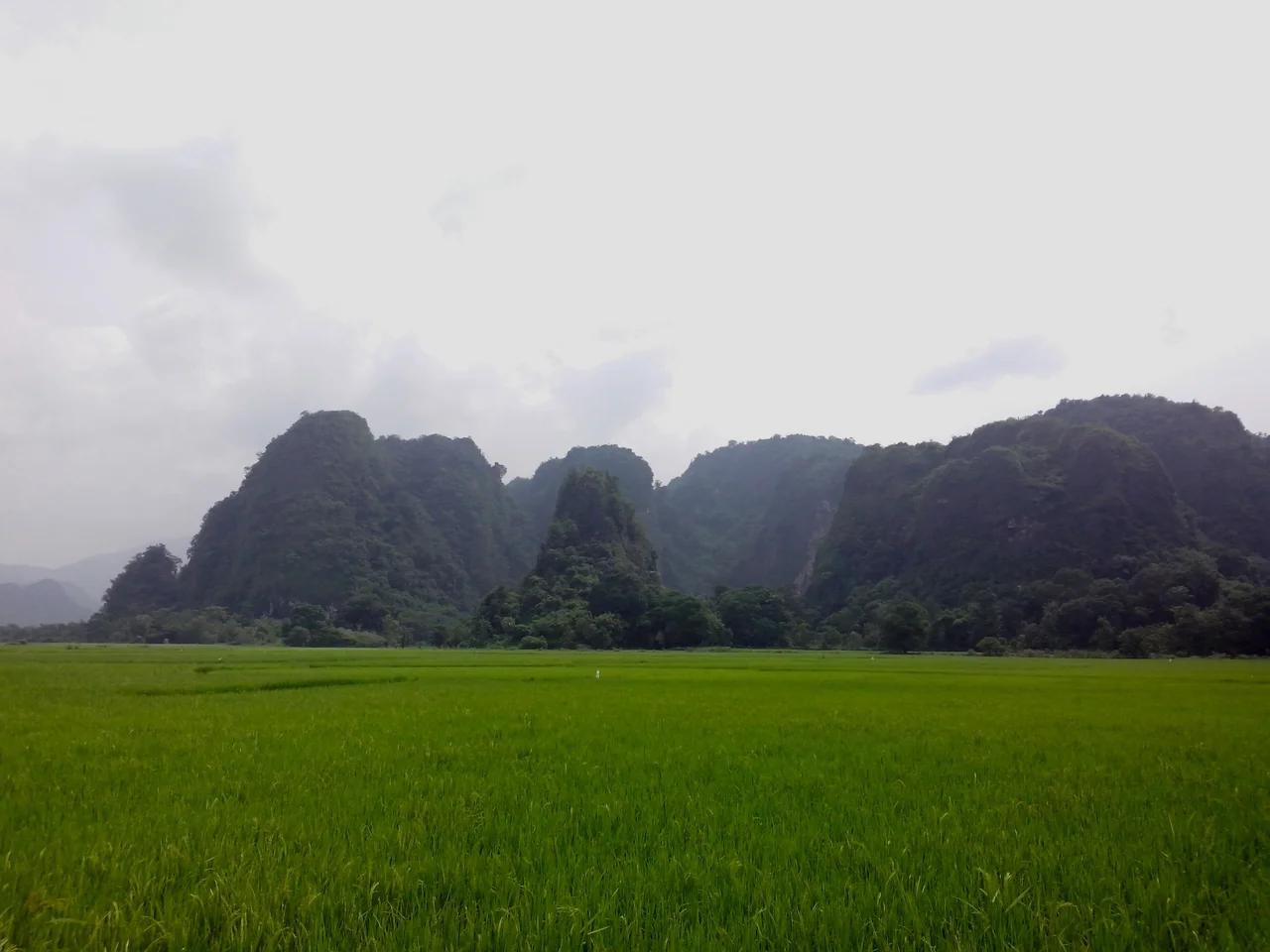
The Leang-Leang geopark sprawls across a limestone karst region roughly twelve kilometers from the town of Maros and thirty kilometers from the port city of Makassar. Countless caves riddle the cliffs, carved by water erosion over geological time. Some entrances sit at ground level, opening directly onto rice paddies; others perch thirty meters up the cliff face, accessible only by climbing. Archaeological excavations have revealed evidence of human presence stretching back approximately 50,000 years -- long before the first Austronesian seafarers arrived from Taiwan around 2000 BCE. What these earlier inhabitants left behind is extraordinary: red ochre hand stencils pressed against cave roofs, figurative paintings of animals that still roam the surrounding forests, and hunting scenes that represent the earliest known narrative art anywhere on Earth.
The Caves That Rewrote History
Each named cave in the complex has pushed a different boundary. Leang Karampuang holds the oldest known figurative rock paintings, dated to 51,200 years ago by analysis of uranium isotopes in the calcite crusts that formed over the pigment. Bulu Sipong 4 contains what researchers have identified as the oldest hunting scene in the world: human-like figures pursuing animals, painted 43,900 years ago. In Leang Tedongnge, two figurative paintings of warty pigs were dated to at least 45,500 years old, and in 2024, research led by Indonesian archaeologist Dr. Adhi Agus Oktaviana pushed the confirmed age of the Leang Karampuang scene to at least 51,200 years, making it the oldest known painted cave art anywhere. Gua Pettakere features hand stencils alongside depictions of babirusas, the tusked deer-pigs unique to Sulawesi. Inside the Pettakare cave, twenty-six red and white hand prints mark the ceiling, with a half-meter-long painting of a red anoa at their center.
Hands Across Millennia
The hand stencils are among the most emotionally direct artifacts in all of archaeology. Someone placed a palm against the cave ceiling, blew red ochre pigment around it, and left an outline that has survived for tens of thousands of years. A stencil in Leang Tempuseng was dated to at least 39,900 years old in a 2014 study -- making it, at the time, the oldest known hand stencil in the world. The technique is identical to what appears at prehistoric sites across Europe, separated by thousands of miles and tens of thousands of years. Whether this represents independent invention or a shared practice carried out of Africa remains an open question. What is certain is that the impulse to leave a mark -- to say "I was here" -- is among the deepest human instincts, and it was expressed on these Sulawesi walls before the last Ice Age reshaped the continents.
Protecting the Record
The Indonesian government designated the Leang-Leang complex as an archaeological park, and in October 2014 announced plans to place all the caves in Sulawesi on the nation's official cultural heritage list. Discussions have included applying for UNESCO World Heritage status, a recognition that would bring both international protection and scrutiny. The urgency is real. Karst limestone is porous and fragile. The same water that carved these caves continues to seep through the rock, depositing calcite over the paintings -- the very process that allowed uranium-series dating also slowly entombs the art. Climate change, pollution, and the vibration of nearby quarrying operations pose additional threats. Some paintings have already deteriorated visibly within the span of a few decades. The caves hold a record of human creativity that predates agriculture, writing, and every civilization that has ever existed. Losing them would mean losing something irreplaceable about what it means to be human.
From the Air
Coordinates: 4.91S, 119.75E. Located roughly 30 km north of Makassar and 12 km from the town of Maros. Nearest major airport is Sultan Hasanuddin International Airport (WAAA/UPG). The karst towers are clearly visible from 5,000-8,000 ft as jagged limestone pillars rising from flat rice paddies. The Leang-Leang geopark area is distinguishable by its dense cluster of towers in the Maros-Pangkep corridor running north-northeast from Makassar.
Nearby Stories
- The Three Summits Pact 11 km away
- The Village That Said No to the Modern World 29 km away
- Kingdom of Tallo: Two Kings, One People 30 km away
- The Script That Grew on Palm Leaves 33 km away
- The Ninety Minutes of MV Marina Baru 2B 127 km away
- The Five Minutes That Swallowed the Teratai Prima 132 km away
- Two Minutes of Distraction 172 km away
- Isuzu: The Cruiser That Refused to Sink 304 km away