
Kingdom of Tallo: Two Kings, One People
The agreement had a name that left no room for ambiguity: *Rua karaeng se're ata* -- two kings but one people. Sometime around 1540, the rulers of Gowa and Tallo codified one of the most unusual political arrangements in Southeast Asian history. The King of Gowa would reign as *Sombaya*, the highest king. The King of Tallo would serve as the 'blind Speaker' -- chancellor, diplomat, and the voice that spoke for both kingdoms without seeing to its own interests first. It was a partnership born from rivalry and sealed after Tallo's defeat, but it produced something neither kingdom could have built alone: a maritime empire that dominated eastern Indonesia for over a century.
Brothers Divided, Then Bound
The Kingdom of Tallo was born from a succession dispute in the mid-15th century. When the 6th King of Gowa, Tunatangka'lopi, died, his eldest son took the throne as the 7th King of Gowa. His brother, Karaeng Loe ri Sero, carved out a separate domain -- the territories of Saumata, Pannampu, Moncong Loe, and Parang Loe -- and became the first King of Tallo. For decades the two kingdoms competed and clashed, sibling polities locked in the kind of rivalry that only shared blood produces. The fighting ended with Tallo's defeat, but what emerged was not subjugation. The *Rua karaeng se're ata* agreement gave each kingdom a defined role: Gowa held supreme authority, while Tallo provided the chancellors who actually ran the dual state. It was an arrangement that turned a military loss into political indispensability.
The Scholar-Chancellor
The partnership reached its zenith under two generations of Tallo rulers who served as chancellors of extraordinary ability. Karaeng Matoaya, who ruled Tallo from 1593 to 1623, was the king who brought Islam to both kingdoms in 1605, fundamentally reshaping Makassarese identity and forging new alliances across the Muslim world. But it was his son, Karaeng Pattingalloang, who became the most remarkable figure to emerge from Tallo. Chancellor from 1639 until his death in 1654, Pattingalloang spoke Portuguese "as fluently as people from Lisbon itself" and devoured every book in Portuguese, Spanish, or Latin that passed through Makassar's cosmopolitan port. A French Jesuit, Father Alexandre de Rhodes, described being pestered endlessly by Pattingalloang about mathematics and astronomy. Even his Dutch adversaries conceded he was "a man of great knowledge, science and understanding." Under these two chancellors, Makassarese power expanded to encompass most of Sulawesi, East Kalimantan, Lombok, Sumbawa, and parts of Maluku and Timor.
The Fall and the Wanderers
Pattingalloang's death in 1654 cracked the foundation of the dual monarchy. The new King of Gowa, Sultan Hasanuddin, declared he would serve as his own chancellor, dismantling the partnership that had sustained Makassarese power for over a century. Internal fractures widened. The Bugis people of Bone rebelled under their prince Arung Palakka, and the Dutch East India Company, which had long resented Makassar's policy of free trade and open ports, seized the opportunity. The wars of 1667 and 1669 were devastating. The fortress of Sombaopu fell in what became one of the greatest battles of 17th-century Indonesia. The Treaty of Bongaya stripped Makassar of its empire and installed the Dutch as the dominant power in South Sulawesi. Tallo's King Harunarrasyid, unable to accept the new reality, gathered a fleet and sailed to Sumbawa, where he died in 1673. In the decades that followed, dispossessed Tallo princes scattered across the seas, living as migrants, raiders, and occasionally pirates -- restless men from a kingdom that had lost its purpose.
A Kingdom That Outlived Its Power
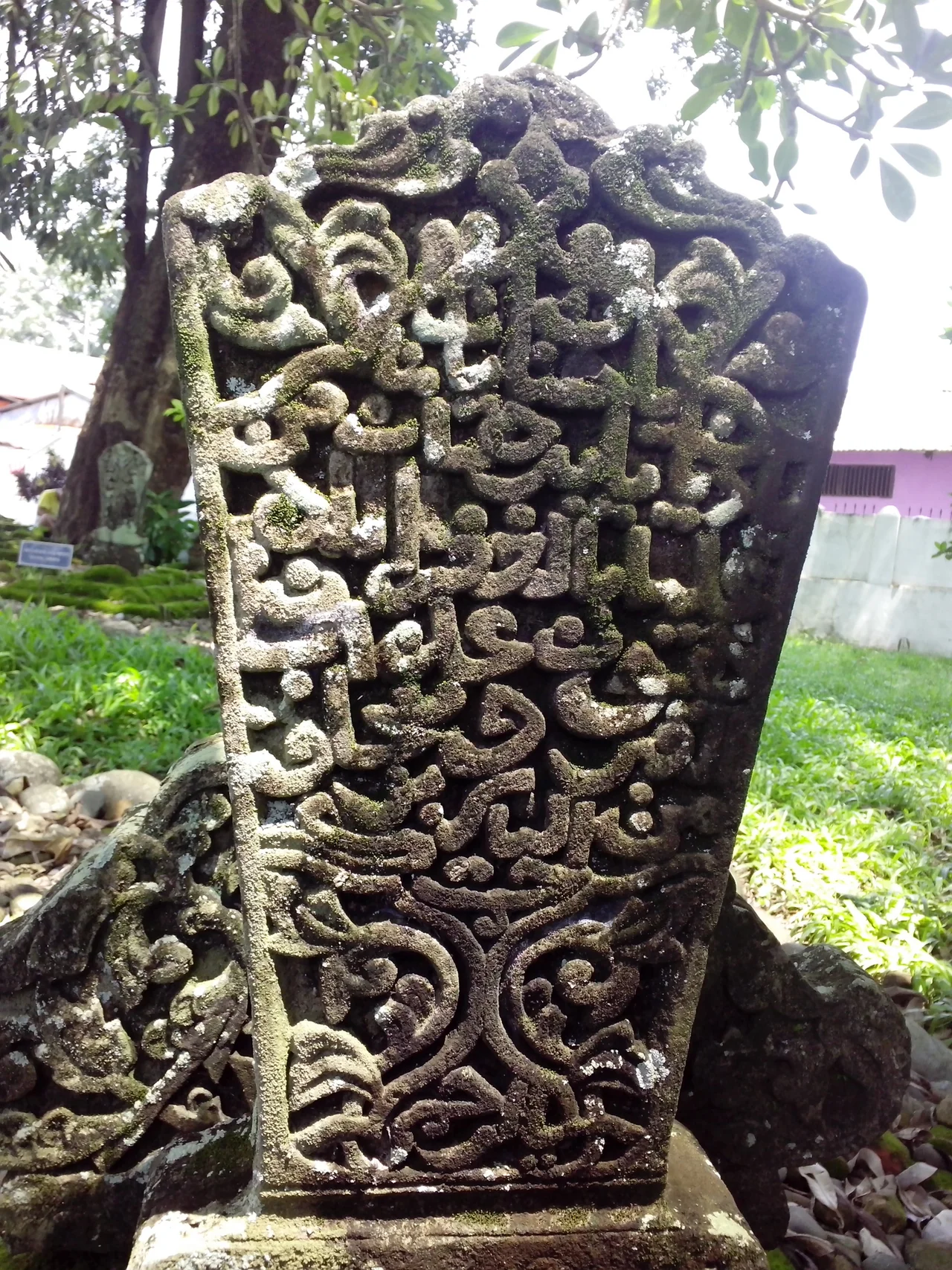
Tallo survived as a nominal state under Dutch suzerainty for nearly two more centuries, a kingdom in name that governed by permission. Twenty-three rulers sat on its throne from the mid-15th century to 1856, when the last king, La Makkarumpa Daeng Parani, was forced to step down and the territory was placed directly under colonial administration. The list of rulers tells its own story: queens as well as kings, including Sitti Saleh I who governed from 1767 to 1777, and a 37-year interregnum from 1777 to 1814 when no ruler sat on the throne at all. Yet Tallo never entirely lost its identity. Even after Indonesian independence in 1949, the territory maintained a distinct sense of self. Today, a traditional society leader still carries the old Tallo title of Karaeng. The royal burial ground, with its gravestones carved in Arabic script, remains a cultural heritage site -- stone evidence that a small kingdom once punched far above its weight in the affairs of an archipelago.
From the Air
The Kingdom of Tallo was centered in what is now the northern part of modern Makassar, at approximately 5.12°S, 119.44°E on the southwest coast of Sulawesi. The Tallo royal burial site lies in the Tallo district of Makassar. From the air, the area is part of the greater Makassar urban sprawl. The nearest major airport is Sultan Hasanuddin International Airport (ICAO: WAAA), approximately 20 km east. Best viewed at 3,000-5,000 feet AGL. Look for the Tallo River winding through the northern districts of the city.
Nearby Stories
- The Forest People Who Vanished 18 km away
- The Morning After the Strongman 24 km away
- Four Sails in the Selayar Strait 40 km away
- The Oldest Paintings on Earth 43 km away
- The Bird Letters of Sulawesi 57 km away
- Two Minutes of Distraction 157 km away
- The Five Minutes That Swallowed the Teratai Prima 193 km away
- Isuzu: The Cruiser That Refused to Sink 254 km away