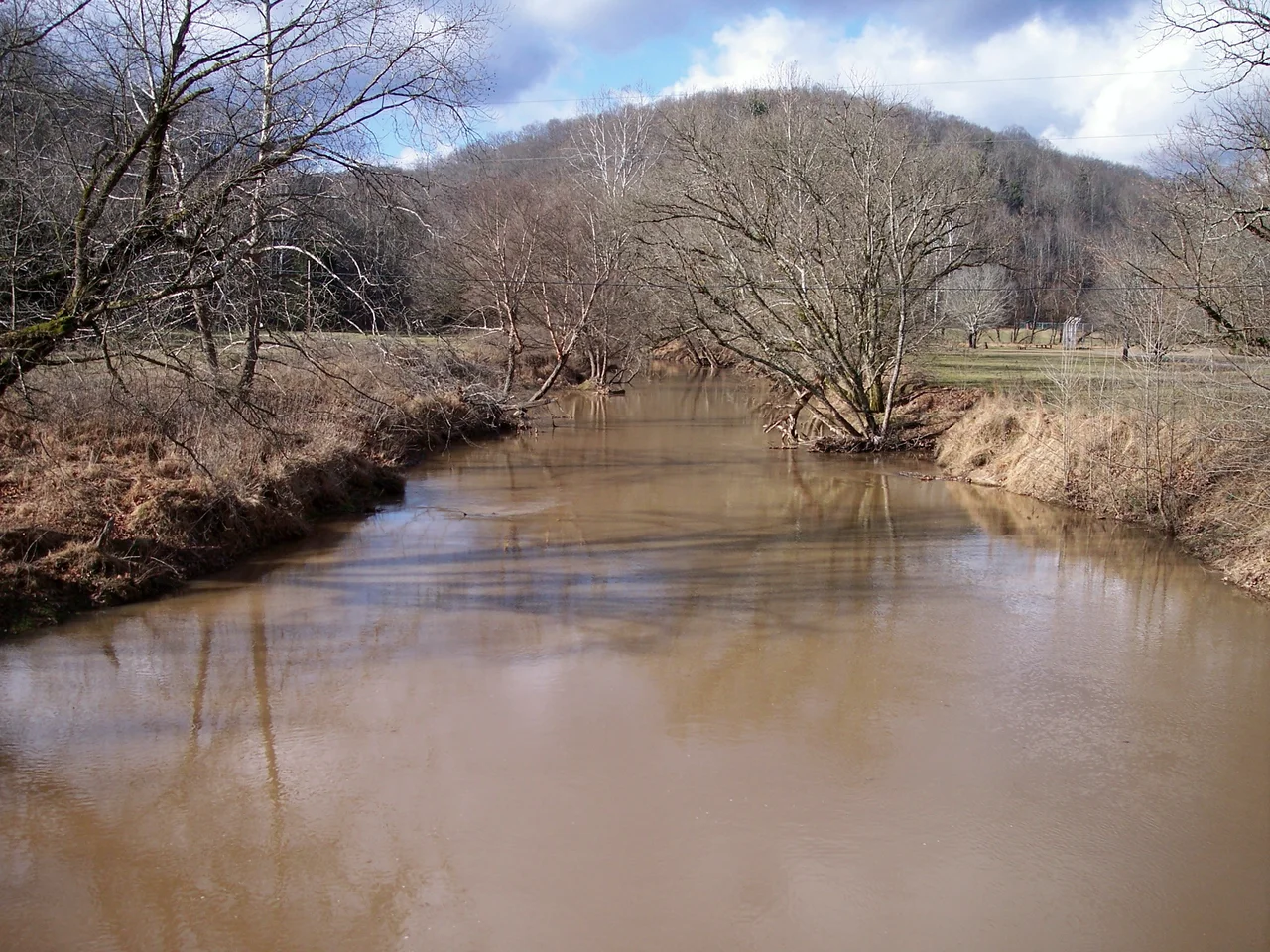

Cedar Creek State Park
On Saturdays in summer, you can walk into the Pine Run One Room School at Cedar Creek State Park and sit at a desk that someone else sat at in 1925. The desks are original. The potbellied stove in the corner is original. The blackboard is original. So is the wood smell, which the Pine Run School acquired sometime around the Coolidge administration and has held onto ever since. The state of West Virginia restored the schoolhouse and moved it to the park as a small interpretive site, and the result is the kind of frozen-in-time space that, on a quiet Saturday morning, can put a visitor squarely into a moment a century ago.
The Park
Cedar Creek State Park covers 2,588 acres in Gilmer County, about four miles south of Glenville. It was established in 1955, making it a relative latecomer to the West Virginia state park system. The park sits in the rolling country of the Little Kanawha River drainage - not high mountains, not dramatic vistas, but the kind of working forest that fills most of central West Virginia. There are 65 camping sites with water and electric, three small fishing lakes, a swimming pool, picnic shelters, a camp store, and a miniature golf course. The miniature golf is, in its own modest way, one of the few that exist in a West Virginia state park. The whole atmosphere is family vacation rather than wilderness retreat.
The Schoolhouse
The Pine Run One Room School originally stood in neighboring Lewis County. When the consolidated school districts of the 1950s and 1960s closed the small rural schools - a trend that swept through Appalachia and erased most of the surviving one-room schoolhouses - Pine Run was one of the few buildings that got preserved rather than torn down. The state moved it to Cedar Creek, restored it, and added period-appropriate furnishings: rows of small wooden desks with attached inkwells, a teacher's desk at the front, slates and chalk, the iron potbellied stove that heated the building in winter. The schoolhouse is open for tours on Saturdays during the summer season, staffed by volunteers who can answer questions about how a single teacher taught all grades at once in a building this size.
The Pioneer Cabin
The campground check-in station at Cedar Creek is housed in a restored log cabin that dates from West Virginia's pioneer era. Like the schoolhouse, the cabin was moved from its original site and restored as an interpretive piece - a small architectural artifact of the kind of dwelling that the first European settlers of central Appalachia built in the late 1700s and early 1800s. The logs are dovetailed at the corners, the chinking is mud and straw between the logs in the traditional manner, and the proportions are domestic: about 16 by 20 feet, with a single door and a stone chimney. The cabin is now staffed by campground rangers, which gives it a strange modern function while preserving its 19th-century appearance.
Accessibility
West Virginia University assessed the park's accessibility for visitors with disabilities in 2005. The evaluation found the park to be generally accessible, though with some specific issues: signage problems in a parking lot, and ramps to the swimming pool and one of the ponds that may require assistance to use. Cedar Creek is one of the more accessible parks in the West Virginia system, which matters: state parks are public infrastructure, and the way they treat visitors with mobility limitations is one measure of whether they are actually meeting their mandate. The 2005 report is older now than the schoolhouse interpretive program is in continuous operation, but it remains the most comprehensive accessibility assessment of the park.
What This Park Is For
Some state parks are wilderness destinations. Cedar Creek is something quieter. It is a place where families from Glenville and Sutton and Spencer come for the weekend, where school groups visit the schoolhouse on field trips, where retired teachers volunteer to walk visitors through what their own childhood classrooms might have looked like. The fishing lakes are stocked. The paddleboats are slow. The miniature golf course has the kind of hand-built quirky obstacles that bigger commercial courses lost in the 1980s. There is value in this kind of public space. It is the working middle of the state park system - not a postcard destination but a place where ordinary West Virginians have spent fifty years of weekend afternoons.
From the Air
Located at 38.88 degrees N, 80.86 degrees W in Gilmer County, West Virginia. Cedar Creek State Park covers 2,588 acres in rolling hill country about 4 nm south of Glenville. Yeager Airport (KCRW) in Charleston is the nearest tower-controlled field about 65 nm southwest. Elkins-Randolph County Regional Airport (KEKN) is about 35 nm east. Recommended viewing altitude 3,500 to 5,500 feet MSL. Expect dissected Allegheny Plateau terrain throughout the area; valley fog common in the Little Kanawha drainage mornings.
Nearby Stories
- Stonewall Jackson Lake State Park 2 km away
- Fort Boreman 6.9 km away
- Sarvis Fork Covered Bridge 7.3 km away
- North Bend Rail Trail 11 km away
- Booger Hole, West Virginia 12 km away
- Harrison County, West Virginia 15 km away
- Holly River State Park 16 km away
- John E. Amos Power Plant 31 km away