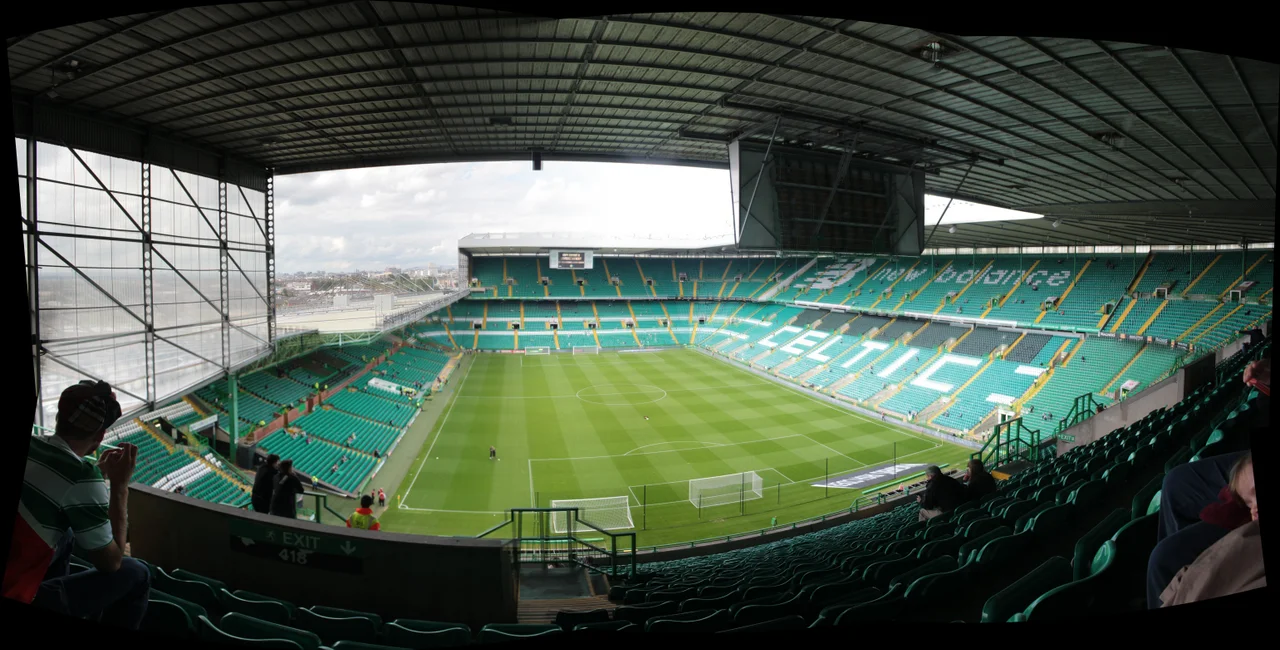

Celtic Park
Paradise. That is what Celtic supporters call the stadium, and it is not ironic. Celtic Park sits in Parkhead, one of the eastern districts of Glasgow that the 19th-century industrial city threw up around its iron furnaces and shipyards. The stadium holds 60,832 - the largest football ground in Scotland, the eighth largest in the United Kingdom. On 1 January 1938, an Old Firm derby against Rangers drew 83,500 people through the gates: a record that no Scottish club ground will ever break, because no club ground is built to take that many bodies anymore.
An Irish Catholic Foundation
Celtic Football Club was formed on 6 November 1887 by Brother Walfrid, a Marist brother born in County Sligo, Ireland. His purpose was charitable: to raise money for the Poor Children's Dinner Tables, which fed Irish Catholic immigrant children in Glasgow's east end. The original Celtic Park opened in Parkhead in 1888 on a piece of ground rented for an annual fee. By 1892 the landowner had raised the rent so steeply that the club moved a few hundred yards to a new site - the present location. Supporters carted earth, stone and turf from the old ground to the new one by hand, walking the distance in long lines. The new stadium was developed as an oval bowl with vast terracing, in the pattern Scottish grounds favoured in those decades.
The Old Firm and the Record Crowd
The Old Firm derby - Celtic against Rangers - is among the oldest and most charged fixtures in world football, rooted in the sectarian divide between Glasgow's Irish Catholic and Scottish Protestant working classes. On New Year's Day 1938 the two sides met at Celtic Park before a crowd of 83,500. Photographs of the day show the terraces packed solid, men in flat caps shoulder to shoulder all the way up the rake. Today the standard rules of football safety would forbid such a crowd at any covered ground, and Celtic Park's modern capacity of 60,832 reflects post-Hillsborough requirements for all-seater stadiums. The terraces are gone. In their place stand four steep, covered stands with the corners filled in - the Lisbon Lions Stand commemorating the 1967 European Cup winners, the Jock Stein Stand named for the manager who led them.
Paradise Modernised
In the 1990s a financial crisis nearly ended Celtic. The club had not won the league for years, the old stadium was decaying, and Rangers were dominating Scottish football. In 1994 Canadian businessman Fergus McCann took control and committed to rebuilding the ground while the club played on. Three new stands were constructed in stages, the old terraces demolished, and by 1998 Celtic Park had become the modern stadium it is today. In 2016 a safe-standing rail-seating section opened at the south end, the first in British football, restoring a measure of the standing experience that had been lost. The stadium hosted the opening ceremony of the 2014 Commonwealth Games. Inside, statues of Brother Walfrid, Jock Stein and Jimmy Johnstone stand watch over the supporters arriving on match days.
Match Day in the East End
Celtic Park dominates a corner of Glasgow that has never been wealthy. Around it the city rebuilt itself for the 2014 Games, replacing the worst of the post-industrial wasteland with the Sir Chris Hoy Velodrome, the National Indoor Sports Arena and the Athletes' Village that became affordable housing. The stadium itself remains the centre of gravity. On a European night the floodlights are visible from the M74 motorway and the noise carries to Dalmarnock. Supporters call the moments before kickoff, when the crowd raises green and white flags in unison and sings 'You'll Never Walk Alone,' one of the great sights in world football. Whether you take or leave the religious and political dimensions of the Old Firm, the stadium itself - oval bowl, four steep stands, 60,832 people - is among the most atmospheric places to watch a game anywhere in Europe.
From the Air
Celtic Park sits at 55.85N, 4.21W, in the Parkhead area of Glasgow's east end, about 2 nm east of the city centre. From the air the stadium is a clear oval surrounded by car parks and the dense residential streets of the east end. The Sir Chris Hoy Velodrome and Emirates Arena lie immediately to the southeast. Look for the M74 motorway passing about a mile to the south. Glasgow International (EGPF) is 7 nm west, Glasgow Prestwick (EGPK) 25 nm southwest, Edinburgh (EGPH) 37 nm east. Best viewed from 2,000 to 4,000 feet for a clear shot of the stadium and surrounding Games venues.
Nearby Stories
- HMS Gannet 3.6 km away
- Luss 5.3 km away
- Oliver Castle 6.8 km away
- Battle of Bannockburn 6.9 km away
- Beith 7.9 km away
- Pentland Hills 7.9 km away
- Lochleven Castle 16 km away
- Cumnock 17 km away