.jpg)
HMS Gannet
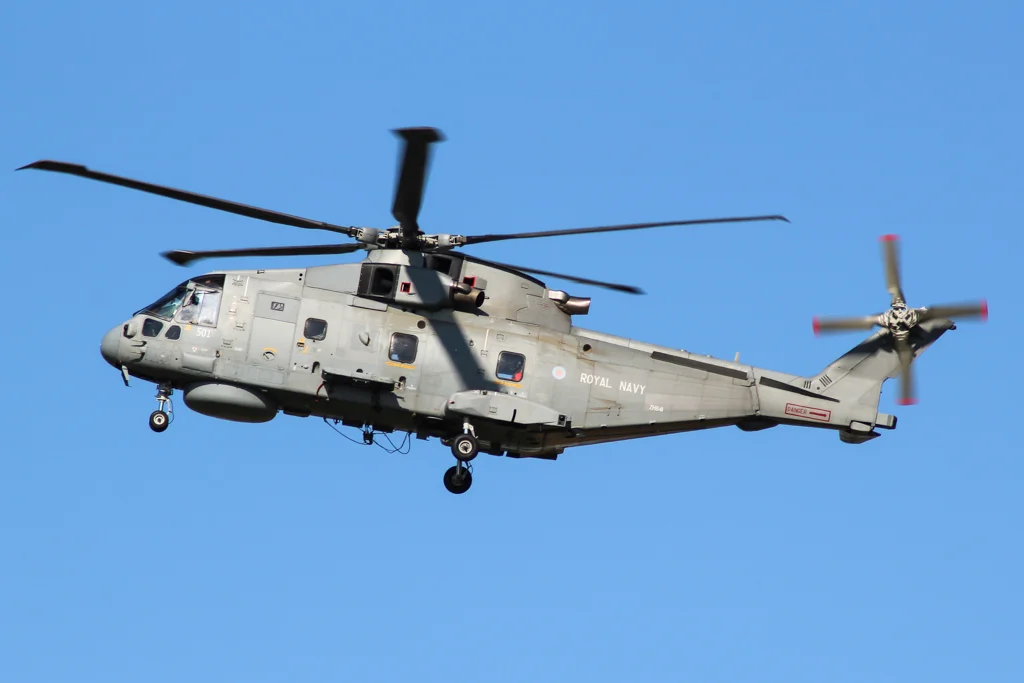
On 1 January 2016, at nine in the morning, a duty crew at HMS Gannet handed over the SAR phone for the last time. The Sea King helicopters that had launched from Prestwick into Scottish blizzards, North Atlantic gales, and Highland night fogs for decades fell silent in their hangars. Civilian aircrew from Bristow Helicopters took the call sheet, and a small piece of British military aviation history slipped from active service into memory. The base itself did not close - HMS Gannet still operates as a forward operating base for the Fleet Air Arm at Glasgow Prestwick Airport in South Ayrshire - but the helicopter that locals had learned to recognise by the distinct beat of its rotors stopped flying on government tasking.
Ninth of the Name
The ninth ship or shore station to carry the name HMS Gannet was commissioned in 1971 at Prestwick Airport. The Royal Navy traditionally names shore establishments as if they were vessels, a tradition that gives a flat slab of Ayrshire tarmac the same dignity as any frigate at sea. Three Naval Air Squadrons rotated through the base in its lifetime: 814 NAS, 824 NAS, and 819 NAS. The 819, which set up in 1971 and stayed for thirty years, ran three flights from the field - A Flight, B Flight, and the Search and Rescue Flight. A and B deployed at sea aboard British and allied support ships, sometimes for months at a time on exercises like Naval Task Group 2000. The SAR Flight, by contrast, never left home. Its job was to be ready to leave at fifteen minutes' notice, three hundred and sixty-five days a year.
Ninety-Eight Thousand Square Miles
When the SAR Flight took over from 819 NAS in November 2001, its operational area stretched from Ben Nevis in the Highlands to the Lake District in the south, from Edinburgh and the Firth of Forth in the east to the waters two hundred miles west of Ireland. That is roughly ninety-eight thousand square miles of Britain - coastline, mountain, moorland, and grey ocean. Two Sea King HU5 helicopters covered all of it, usually with a third in reserve. The base ran on fifteen officers, eleven ratings, twenty-eight civil servants, and fifty civilian staff. One aircraft sat at fifteen minutes' notice during daylight and forty-five minutes overnight. The duty crew lived with the pager. In 2009 the flight broke records: 447 tasking calls in a single year, twenty percent of every military SAR call-out in the United Kingdom. They were the busiest unit in the country five years running.
The Wilkinson Sword
In 1998 the Royal Navy awarded HMS Gannet the Wilkinson Sword of Peace - a quiet honour reserved for British military units that have done exceptional work for civilian communities. It captures something the call-out statistics cannot. The crews who lifted hill walkers off Highland ridges in driving sleet, who medevaced patients from remote islands in the small hours, who pulled fishermen from broken trawlers in the Irish Sea - those crews were on first-name terms with mountain rescue teams, coastguard volunteers, and hospital staff across half the country. Television cameras captured some of it. Channel 5's Highland Emergency and BBC's Countryside Rescue followed the flight between 2008 and 2011. Earlier still, when 819 NAS handled the role, the crews appeared in the dramas Rockface and Two Thousand Acres of Sky. The fictional flying borrowed heavily from the real.
Final Year, Final Record
By 2015, plans had been laid to civilianise British military search and rescue entirely. HMS Gannet flew its last full year as a dedicated SAR unit and remained the busiest in the country, completing 313 rescues. The flight won the Prince Philip Helicopter Rescue Award in both 2015 and 2016. Then, with little fanfare, the duty crews from Bristow Helicopters and HM Coastguard took over the call sheet on 1 January 2016. The flight itself disbanded formally on 5 February. The Sea Kings, by then long obsolete, were retired across the British military within months. The Royal Navy still keeps aircraft and people at Prestwick - the base supports allied training and operations - but the rotors no longer spin up for storm-tossed climbers and stranded sailors. Civilians do that work now, from the same hangars.
From the Air
HMS Gannet sits on the eastern side of Glasgow Prestwick Airport (EGPK) at 55.51 N, 4.58 W. From the air the base appears as a cluster of hangars and apron on the east side of the runways, with the long Ayrshire coastline immediately to the west. Recommended viewing altitude: 3,000-5,000 ft AGL. Visual landmarks include the Firth of Clyde coastline, the Isle of Arran to the west, and the town of Prestwick north of the airport. The Polish memorial and Shaw Monument stand on high ground overlooking the field.
Nearby Stories
- Kilbirnie 4.2 km away
- East Kilbride 5.4 km away
- Knockshinnoch Disaster 7.3 km away
- Machrie Moor Stone Circles 9.4 km away
- Kenmure Castle 16 km away
- Ballantrae Lifeboat Station 20 km away
- Loch Fyne 38 km away
- SM UB-85 46 km away