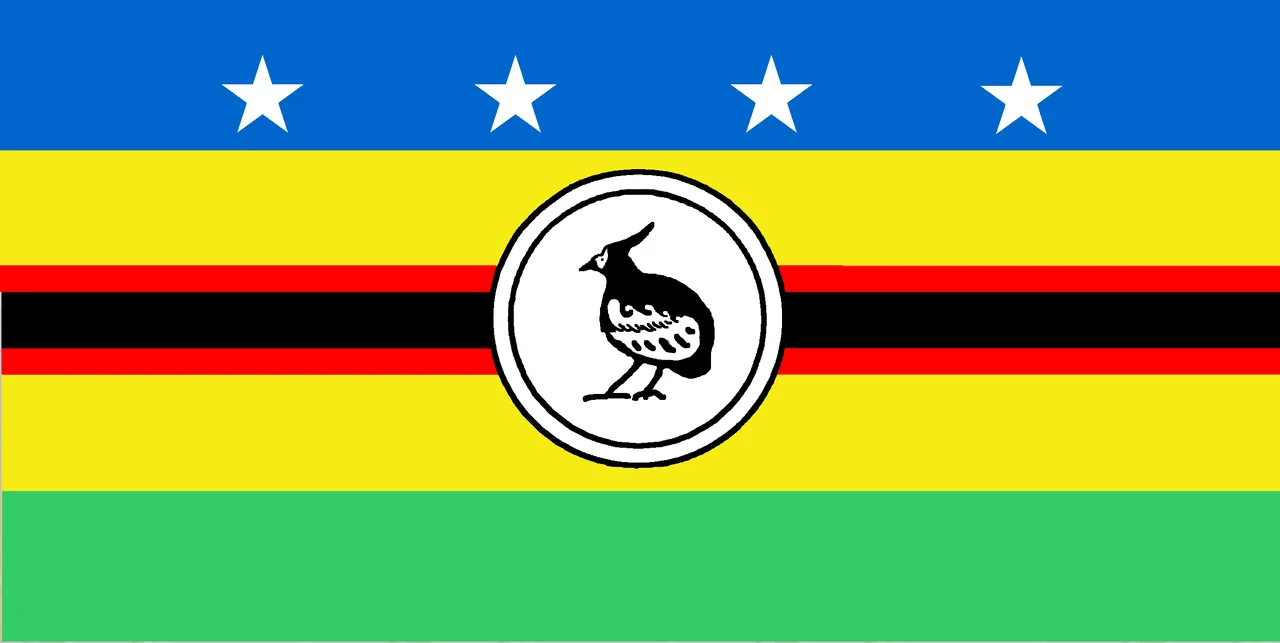

Choiseul Province
The capital of Choiseul Province fits on an island you could walk across in twenty minutes. Taro Island is one and a half square kilometers - smaller than many city parks - and yet it holds the provincial hospital, the assembly hall, the wharf, the airstrip, the premier's office, the only EFTPOS machine that was ever briefly installed in the province, and the first generator that electrified any of it, which did not arrive until 2011. A province of roughly 37,000 people is administered from this speck of coral. Almost everything that matters to the province's formal government happens here. And almost nothing else does.
A Young Province
Choiseul Province is new as Solomon Islands provinces go. Until 25 February 1992 it was part of Western Province, and local leaders had argued for years that a population spread across the islands of Choiseul (Lauru), Wagina, Rob Roy, and a scattering of smaller offshore bodies needed its own administrative seat closer to home. Separation came, and with it a string of premiers: Clement Kengava, Simmy Vazarabatu, Jackson Kiloe for a remarkable nineteen-year run from 1999 to 2018, then Watson Qoloni, Benjiman Harrison, Tongoua Tabe, and from 2024 the current premier Harrison Ngosu Pitakaka. The three national constituencies - Northeast, Northwest, and South Choiseul - each send a member to the national parliament. Manasseh Sogavare, who would eventually serve four separate terms as prime minister of the Solomon Islands, has held the Northeast Choiseul seat since 1997.
The Islands Themselves
Choiseul Island, which the Lauru people call Lauru, is the largest by an order of magnitude - 2,971 square kilometers of mountain, forest, and reef. Wagina, 243 square kilometers, lies at the southern end of the province. Rob Roy, 200 square kilometers, sits between them. Then come Bembalama, Cyprian Bridge, Kaghau, Laena, Moli, Nuatambu, Saerema, Supizae, Butuburu, Kundakaniboko, Parama, and the Zinoa group - islets that appear in schoolbook lists and on provincial shipping schedules and rarely anywhere else. Most carry villages of a few hundred people. The flora and fauna here straddle two zoogeographic realms, mixing Australian and New Guinean species. Dugongs still graze the seagrass near Rob Roy and Taro Island. Saltwater crocodiles haunt the mangroves. Sanford's sea eagles - found nowhere outside the Solomons - wheel above the ridges. The Choiseul crested pigeon, last recorded in 1904, is gone.
Sasamungga and the Peace
The twentieth century came to Choiseul in the form of missionaries and logging ships, but it did not erase what came before. In 1916 a series of brutal inter-tribal feuds swept the island, the kind of conflict with deep roots in questions of land and honor and old grievances. Five years of fighting ended at Sasamungga on 8 August 1921, when the warring parties signed a peace treaty that is still observed as a public holiday on Choiseul - Kulabule, it is called. Few places anywhere celebrate the anniversary of their own peacemaking. Choiseul does. The first Methodist missionaries had arrived in 1905 at Sasamuqa in the south, after an earlier 1904 attempt led by Reverend John Goldie failed; the mission station that took root became a seed for churches and schools across the province. Methodists, Catholics, and Seventh-day Adventists still divide the religious landscape among them. Deaconess Iula Qilanoba, born on Choiseul, became the first Methodist deaconess ordained in the Solomon Islands.
Taro Island, Slowly Built
To understand Choiseul Province, picture Taro Island in 2010 and then in 2012, and note everything that changed in between. In 2010 there was no provincial assembly hall of the modern kind, no concrete wharf, no airport terminal, no generator providing consistent light, no EFTPOS machine - the small white box that lets people use a bank card. The years 2011 and 2012 changed all of that. A new assembly hall rose in time for the Premiers' Conference. A concrete wharf replaced an old wooden one. The airport was upgraded and fenced. A first diesel generator arrived. A computer lab was installed at Choiseul Bay Provincial Secondary School, the only provincial secondary school in the province. In April 2013, Westpac Bank briefly installed an EFTPOS machine, the first in Choiseul - it did not last, and the service is no longer offered. Nothing about this transformation is large by metropolitan standards. Everything about it is large by local standards. In October 2013, four women ran for the 14-seat Provincial Assembly - the first time any woman had competed at the provincial level. None of them won. But they ran.
Logging, Mining, and What Comes Next
Eagon Resource Company landed at Moli in 1989 and became the first commercial logger on Choiseul. Since then, logging has continued across much of the province, and the forest Hugo Bernatzik photographed in 1932 is no longer the forest the grandchildren see. A nickel mine was proposed at Katupika that would clear over 2,000 hectares, though no license had been issued as of 2020. Prospecting for gold has occurred near Susuka in the north. A proposed oil palm plantation in north Choiseul would claim another 4,000 hectares. Against these pressures, Taro Hospital - the province's main referral hospital - became in October 2010 the first certified Baby Friendly Hospital in the Solomon Islands, awarded by UNICEF and the WHO for its commitment to breastfeeding and early-childhood nutrition. The province is small, poor, and remote. It has also learned to do a few things well, and to do them its own way. On 25 June 2010, a cargo boat called MV San Marcos was commissioned in Taro - 35 meters long, bought from Japan with pooled funds from the national government, Taiwan, Lauru Shipping, and the South Choiseul constituency. She still runs.
From the Air
Choiseul Province is centered near 7.0 degrees south, 156.96 degrees east, encompassing Choiseul (Lauru), Wagina, Rob Roy, and many smaller islands across the northwest Solomons. Recommended viewing altitude: 5,000-8,000 feet for a sense of the island chain and inter-island waters. Choiseul Bay airport (AGGC) on Taro Island has a short unsealed runway and serves as the provincial aviation hub. The next nearest larger airport is Munda (AGGM), about 150 nautical miles south on New Georgia. Honiara's Henderson Field (AGGH/HIR) is about 300 nautical miles southeast. Expect tropical cumulus by midafternoon and heavy rain during the November-April wet season.
Nearby Stories
- Japanese Seaplane Carrier Nisshin 33 km away
- Battle of Vella Lavella (naval) 40 km away
- Japanese cruiser Jintsu 49 km away
- Japanese submarine Ro-100 54 km away
- Bougainville Copper Limited 168 km away
- Païta 1913 km away
- Maré Island 1970 km away
- 1737 Kamchatka Earthquake 6583 km away