
Clear Water Bay Country Park
The name is straightforward, and for once, honest. Clear Water Bay really does have clear water — not the murky harbor visibility of central Hong Kong, but the clean blue-green transparency of an east-facing coast open to the prevailing currents and relatively sheltered from urban runoff. The park that frames it has been protecting this stretch of the New Territories since 28 September 1979, and the 6.15 square kilometres it covers contain more variety than its modest size suggests.
From the Ridge Down
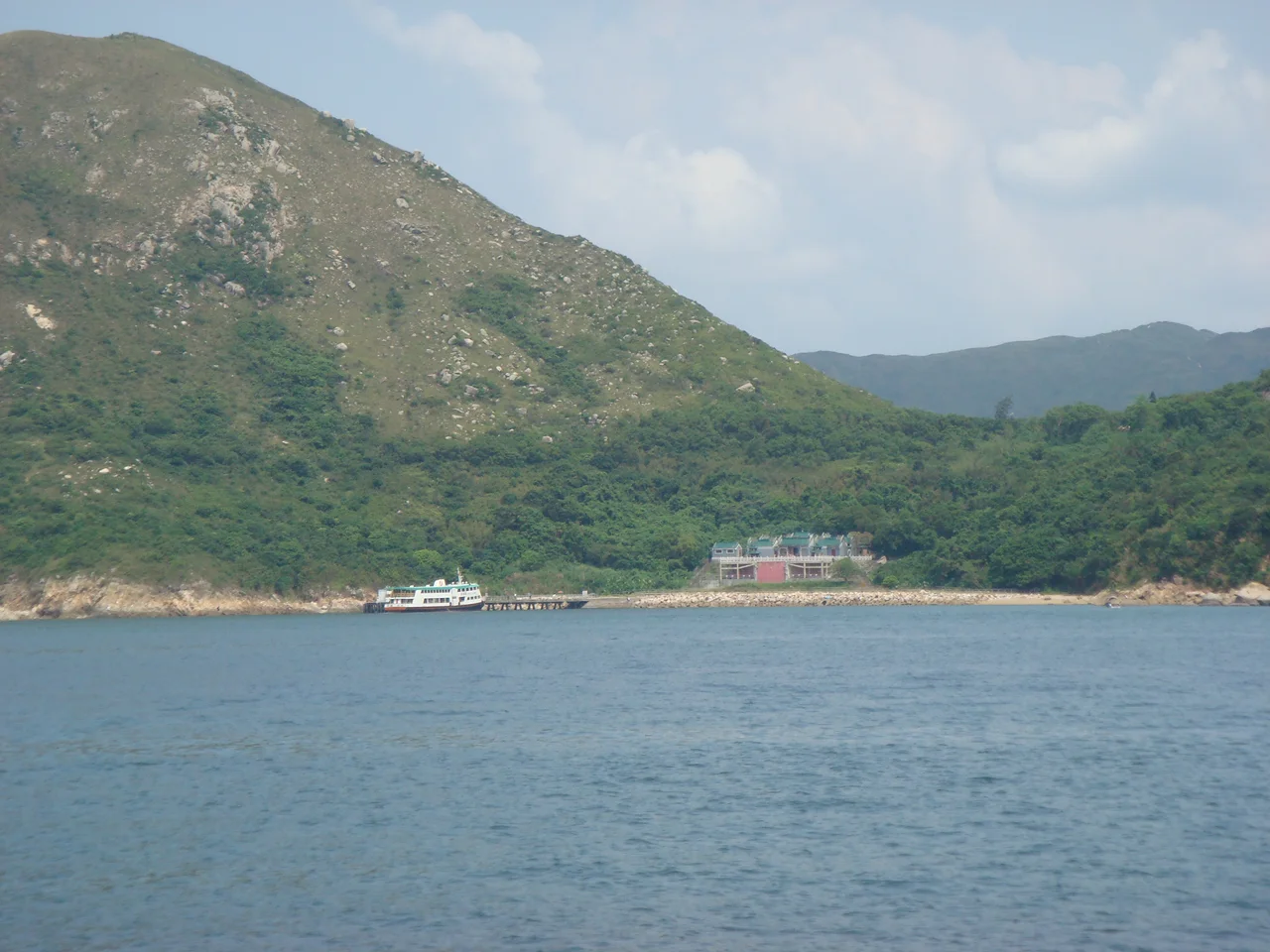
The dominant landform in Clear Water Bay Country Park is High Junk Peak (釣魚翁, Diu Yue Jung in Cantonese), a rocky summit that forms the spine of the Clear Water Bay Peninsula. The peak earns its name visually: from certain angles, its ridgeline silhouette resembles the sail of a traditional Chinese junk. Hikers who make the climb are rewarded with panoramic views across the South China Sea, east toward the open Pacific, and back west over the dense development of Kowloon and the New Territories.
Below the ridge lies Miu Tsai Tun, a small coastal inlet that provides some of the most sheltered water in the park. The hiking trail that runs through the park begins near Tseung Kwan O off Clear Water Bay Road and winds down through the hills toward the golf course near the coast — a route that crosses habitats ranging from open shrubland on exposed ridges to denser vegetation in sheltered valleys.
The Temple at Joss House Bay
At Fat Tong Mun, on the western side of the peninsula at Joss House Bay, stands the Tin Hau Temple — one of the oldest and most venerated in Hong Kong. Tin Hau is the goddess of the sea, protector of fishermen and sailors, and her temples are scattered across Hong Kong's waterfront communities. This one predates the park itself by centuries.
The temple draws its most significant gathering annually: tens of thousands of people arrive by boat for the Tin Hau Festival, held on the 23rd day of the third lunar month. On that day, Joss House Bay fills with vessels of every size, and the usually quiet bay becomes one of the most animated scenes in the territory. The rest of the year, the temple sits quietly at the water's edge, the smoke of incense drifting toward the sea the goddess is said to watch over.
The Beaches
Clear Water Bay First Beach and Second Beach are the park's most visited destinations in summer, when Hong Kong families make their way out from the city on weekends. The beaches face east, which means they catch the morning light and the cleaner water that comes with an open fetch across the South China Sea. The sand is coarse and the water does not warm to the temperatures of tropical beaches further south, but by Hong Kong standards these are considered among the better swimming spots on the mainland side of the territory.
The park's designation as protected land means that the development that has absorbed most of the territory's coastline has not reached here. The hills behind the beach are still green, the water still clears after rain, and the density that defines urban Hong Kong stops at the park's boundary.
Trees, Trails, and the Golf Course Anomaly
Among the park's listed features is the Clear Water Bay Tree Walk, a designated route through secondary woodland that gives visitors a sense of the vegetation that would have covered this landscape before extensive land clearance. The dominant species here are the shrubs, ferns, and pioneer trees typical of Hong Kong's regenerating coastal hillsides — not the ancient forest the territory once held, but living evidence that given time and protection, the landscape recovers.
The Clear Water Bay Golf and Country Club sits near the southern edge of the park area, its fairways occupying flat coastal land that provides a sharp visual contrast to the wild hillsides above. The juxtaposition is distinctly Hong Kong: immaculate greens adjacent to protected shrubland, the country park boundary running along the edge of a different version of leisure. The Lung Ha Wan Country Trail connects the park's inland trails to the coastal headlands, offering a full loop for those who want to see both the ridge and the waterline in a single walk.
From the Air
Clear Water Bay Country Park is centered at approximately 22.294°N, 114.302°E, on the Clear Water Bay Peninsula in the eastern New Territories of Hong Kong. From the air at 2,000–4,000 feet, the peninsula is distinct: a green hillside arm projecting southward into the South China Sea, with Junk Bay (Tseung Kwan O Hoi) to the west and the more open waters of eastern Sai Kung District to the east. High Junk Peak at the peninsula's center is recognizable for its jagged ridgeline. The nearest airport is Hong Kong International Airport (VHHH), approximately 35 km to the west. Flying eastward from Kowloon at low altitude, the contrast between the dense urban development of Tseung Kwan O and the green park land of the peninsula becomes immediately apparent. Joss House Bay and its Tin Hau Temple are visible near the western shore of the peninsula. Weather in this area is generally clearer than the harbor, with good visibility common on east or northeast wind days.
Nearby Stories
- Shek Pik 1.7 km away
- Tung Ping Chau 4.8 km away
- Hong Kong 12 14 km away
- Wanshan Archipelago Campaign 16 km away
- Pearl River Delta 18 km away
- Battle of Penghu 478 km away
- Penghu Air Raids 487 km away
- Cape Maobitou 596 km away