_Jan_2026.jpg)
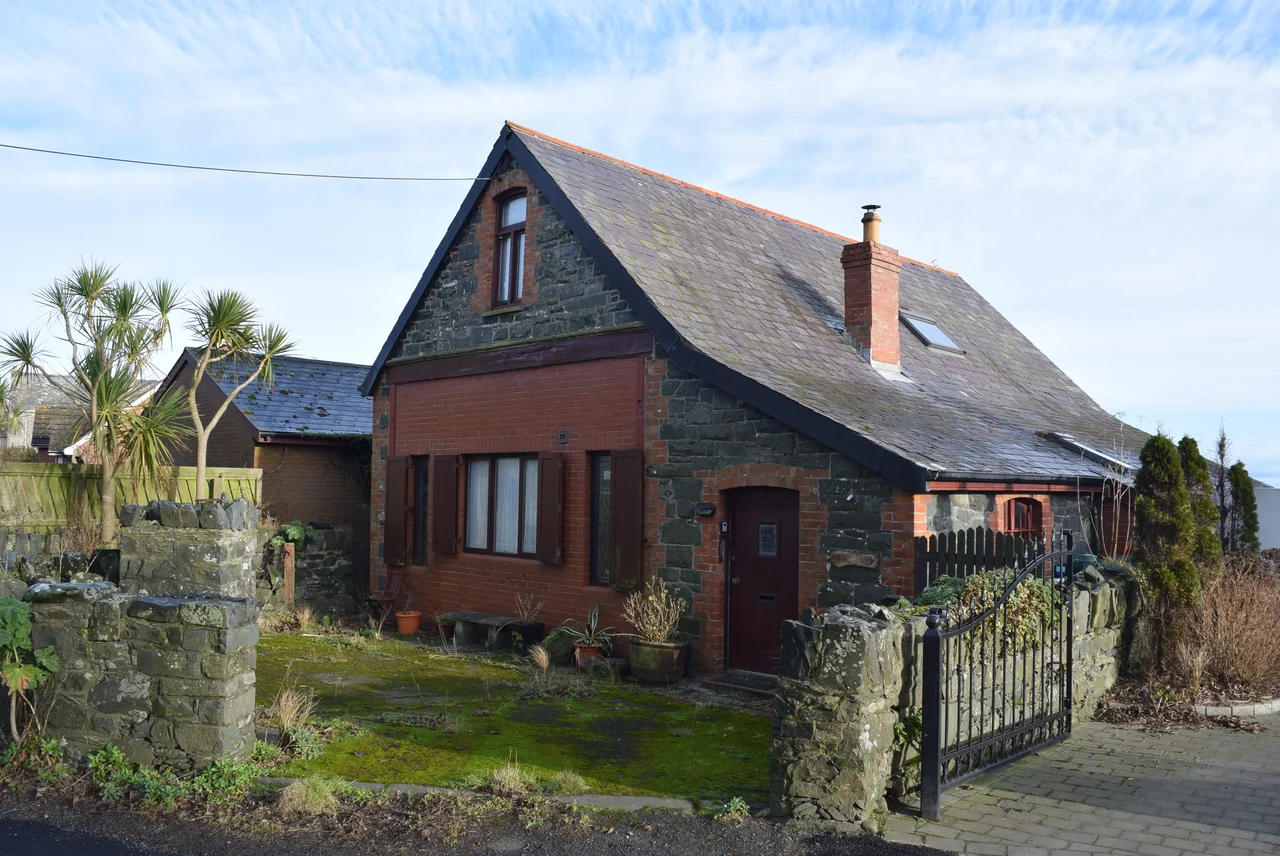
Cloughey Lifeboat Station
On the night of 11 January 1924, with the Cloughey coxswain John Young away from the village and his brother and second coxswain Robert C. Young in bed with a serious illness, a call came in at 23:30. The third brother, Andrew, left Robert's bedside and walked out into a south-east gale to take the boat himself. By daylight, after standing by in worsening conditions, the Cloughey lifeboat had taken five men off the rigging of the sunken brigantine Helgoland. When Andrew returned to the village he found that Robert had died two hours after the boat had launched. The watching Inspector of Coastguards said it was the finest piece of seamanship he had ever seen. Andrew Young was awarded the RNLI Bronze Medal. He was the eldest of three coxswain brothers in a station that, between 1885 and its closure in 1965, saved 311 lives from the rocks of the Ards Peninsula.
Faith, Hope and Charity
The RNLI established a lifeboat station at Cloughey in 1885, after years of lobbying by local residents and a careful assessment by the committee in May 1883 that the village had plenty of good boatmen to form a crew. The new station was funded out of a £1,500 legacy from Mrs S. H. Bradshaw of Reading, whose 1881 bequest provided three lifeboats in all: Faith for Cloughey, Hope and Charity for two other stations on the British coast. Faith was a 34-foot self-righting Pulling and Sailing boat that had just won the prize for the best lifeboat at the International Fisheries Exhibition. She was brought to Cloughey along with her carriage in November 1885, and a boathouse was built on Manse Road by a local contractor, Mr N. Parkinson, for £451 2s 6d. Over the next twenty-one years Faith launched thirty-two times and saved fifty-four lives. The South Rock and the broken ground around it had been hungry for ships for centuries, and the RNLI station gave the Ards Peninsula its first organised answer.
The Beaconsfield and the Croisset
When the barque Beaconsfield grounded on the ridge at North Bock on 9 April 1898, bound for Glasgow with a cargo of teak, the Cloughey men found a crew who refused to leave the ship. Of the sixteen aboard, only two would come away in the lifeboat that first day. The rest insisted on staying with their kit. By the following morning conditions had worsened, and the lifeboat went out again, this time bringing off seven, with the remaining seven coming ashore in the ship's boat with the crew of Faith helping. Ten years later, on 14 November 1908, the French barque Croisset of Rouen ran aground on South Rock in hurricane conditions, carrying nickel to Glasgow. The Cloughey lifeboat John, by then replacing Faith, made several trips out to the wreck and brought ashore all twenty-six on board. The French government awarded the coxswain and the chief officer of HM Coastguard its Gold Medal (Second Class), and the rest of the crew its Silver Medal (First Class). The story ran in the Paris papers and was picked up by the Irish News, the kind of international recognition that small lifeboat stations rarely sought and quietly accepted when it came.
The Young Brothers and the Aruntzazu-Mendi
Andrew Young took the new motor lifeboat William Maynard to sea in September 1931, the first coxswain of the first engine-powered boat at Cloughey. By 1939 the station was due for replacement again. The Herbert John ordered for Cloughey burnt up in a fire at Groves and Guttridge boatyard before she could be shipped, and a second Herbert John would not arrive until late that year. Before she did, on 17 June 1939, the old William Maynard was launched at ten in the evening into a fifteen-foot sea to the Aruntzazu-Mendi of Bilbao, which had wrecked earlier that day. To get close enough to pass a line, the lifeboat had to veer down stern-first onto the casualty. Eleven salvage men were taken off. Coxswain Robert Young, the next generation, received the RNLI Silver Medal, and the mechanic George Young the Bronze. The Herbert John that finally arrived served Cloughey through the Second World War and into 1952, launched forty-six times and saved sixty-seven lives. By the end of the pulling and sailing era at Cloughey, the station's first forty-six years had saved 189.
The End at Manse Road
In 1965 the RNLI moved a larger 41-foot Watson-class lifeboat to the peninsula, the Glencoe Glasgow, and moored her afloat at Portavogie harbour instead of keeping her at Cloughey. The Cloughey crew kept operating her under the new name Cloughey-Portavogie. After eighty years of launches from Manse Road, the Cloughey station itself stood quiet. In 1978 the lifeboat was put into storage during harbour works at Portavogie and never returned to service, and the station closed in 1981. Over the full eighty years from 1885 to 1965, the Cloughey lifeboats had launched 152 times and saved 311 people. That is one rescue every six months, on average, for an Ards Peninsula coast that has not stopped sending ships up onto its rocks but is now covered, since 1980, by the modern inshore station across the lough at Portaferry. The Young brothers, and the men beside them, gave the village a kind of long-form heroism that does not look like heroism from the outside, only like a community that turned out into the gale because someone was at sea.
From the Air
The former Cloughey Lifeboat Station sat at 54.428°N, 5.480°W on Manse Road in Cloghy, at the southern end of the Ards Peninsula, on a stretch of coast notorious for the offshore reefs known as North Bock and South Rock. The South Rock lightvessel station (and its lighthouse) lies a few miles offshore to mark these hazards. From the air look for the small village strung out along the coast road and the dark ribbon of broken ground running parallel to the shore offshore. Recommended viewing altitude 1,500–3,000 feet for the coast and reef detail. Nearest airports: Newtownards (EGAD) 14 nm north-northwest, Belfast City (EGAC) 22 nm northwest, Belfast International (EGAA) 33 nm west-northwest. Watch for strong southeasterly winds funnelling up the Irish Sea, the prevailing direction in many of the great Cloughey rescues.
Nearby Stories
- Silent Valley Reservoir 1.7 km away
- Drummore 3 km away
- Copeland Islands 5.2 km away
- Castle Upton 8.4 km away
- Hillsborough Castle 9.5 km away
- Bradda Head 11 km away
- Pasages (steam trawler) 20 km away
- Chicken Rock Lighthouse 41 km away