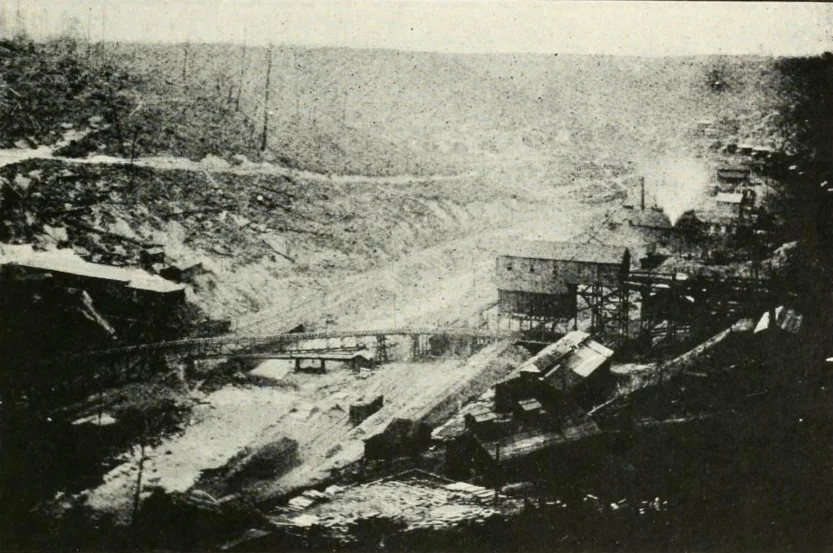

Coketon, West Virginia
In 1892, the all-white Tucker County Board of Education told Carrie Williams, a Black schoolteacher at the Coketon Colored School, to shorten her school year by four months. The white schools in the county would still run a full nine months. The Black school would run five. The board's reasoning was simple: state-mandated equal funding could not be evaded directly, but a shortened year for Black students would let the county pay the Black teacher less. Carrie Williams said no. She kept teaching for the full nine months and demanded full pay. Her lawyer, J.R. Clifford - the first African-American attorney in West Virginia - took her case to the Tucker County Courthouse in Parsons, and then to the West Virginia Supreme Court. They won in 1898. Williams v. Board of Education of Fairfax District was one of the first court cases in the history of the United States to find racial discrimination in school services illegal. The school is gone. The coal town that surrounded it is gone. The decision is part of American constitutional law.
Henry Davis's Coal Empire
Coketon was a company town from the beginning. The settlement was founded in the 1880s by the Davis Coal and Coke Company, led by Henry Gassaway Davis - the former US Senator who would become a major industrial force in eastern West Virginia. Large coal reserves were discovered in the area, and the town grew quickly to house workers and the operations they ran. At its peak, Coketon held about 1,500 people. Most were immigrants, drawn from Europe to the rough Appalachian coal patches with their housing tied to the company's payroll. Coketon sat at the confluence of Snyder Run and the North Fork of the Blackwater River, just south of Thomas - another Davis town - and within easy reach of the West Virginia Central and Pittsburgh Railway tracks that carried the coal out.
The Beehive Ovens
The Davis Coal and Coke Company pioneered the beehive coke oven in the area: large sealed brick chambers that heated coal at high temperatures to burn off impurities and convert it into coke - the hot, almost pure carbon fuel needed by steel mills. The company experimented with two ovens in 1887. By 1900, more than 600 beehive ovens were operating around Coketon. The visual effect at night must have been extraordinary: long rows of glowing brick beehives along the riverbanks, with smoke and waste gases hanging in the canyon. The technology, however, was fragile. In 1915, a change in steelmaking methods made it more efficient to ship raw coal directly to mill-side coke operations rather than process it at the mine. By 1919, no coke was being produced anywhere in Tucker County. The long banks of obsolete beehive ovens were simply abandoned.
The Williams Decision
The case Carrie Williams brought turned on whether the county's instructions to shorten her school year constituted illegal racial discrimination. Williams herself was the plaintiff in fact - she was the teacher who refused the shortened schedule and sued for her full salary. Clifford advised her to teach for the full nine months regardless of funding, then file for back pay. The local court ruled in her favor. The Board of Education appealed. On November 16, 1898, the West Virginia Supreme Court affirmed the ruling, finding that providing a shorter school year to Black students than to white students was illegal racial discrimination under state and federal law. The decision came more than half a century before Brown v. Board of Education. It did not desegregate schools. The Coketon Colored School remained a Black school. But it established that separate schools had to be genuinely equal in their offerings - and the case became part of the long legal foundation that civil rights lawyers would build on for the next sixty years.
The Long Decline
Coal output around Coketon stayed massive for another decade after the coke ovens shut down. From 1915 to 1921, the 15 mines near Coketon shipped over a million tons of coal each year, making them the sixth most productive operation in West Virginia. But the underground reserves were finite. Through the 1920s, 1930s, and 1940s, the mines closed one by one as the seams gave out. By 1950, only two mines were still working. By 1954, total annual production had fallen to 100,000 tons - a tenth of its peak. Underground mining ceased entirely by 1956. A few surface mining operations kept some coal moving until 1965. The town followed the coal. The houses came down or fell down. The school was abandoned. By the late twentieth century, Coketon was an unincorporated community in the legal sense and a ghost town in the practical sense.
What Remains
Today the Coketon site sits along the Blackwater Canyon, accessible from the rail-trail that follows the former West Virginia Central line through the gorge. The ruined foundations of the coke ovens and mine buildings are still visible in places - brick rectangles in the woods, mossed over and slowly being absorbed back into the forest. The Coketon Colored School site is marked. Carrie Williams's case is taught in West Virginia history courses and cited in civil rights law. The remains of the company town that once housed 1,500 people are reduced to interpretive signs along a former railroad grade. The lesson is hard but plain: places that exist only to extract a resource tend not to survive when the resource runs out. What survives is what people did while they lived there.
From the Air
Located at 39.14 degrees north, 79.51 degrees west, in Tucker County, West Virginia, just south of Thomas. Best viewed from 3,500 to 5,000 feet AGL. The Coketon site sits along the North Fork of the Blackwater River - look for the former railroad grade (now a hiking trail) running through the canyon. Nearest airports are Elkins-Randolph County (KEKN) and Cumberland Regional (KCBE). Watch for terrain in the canyon vicinity.
Nearby Stories
- District of West Augusta 2.4 km away
- Battle of Moorefield 12 km away
- Sinks of Gandy 15 km away
- Helvetia, West Virginia 16 km away
- Orkney Springs Hotel 26 km away
- Battle of Fort Necessity 49 km away
- United Airlines Flight 93 77 km away
- West Virginia Penitentiary 79 km away