
Colditz Castle
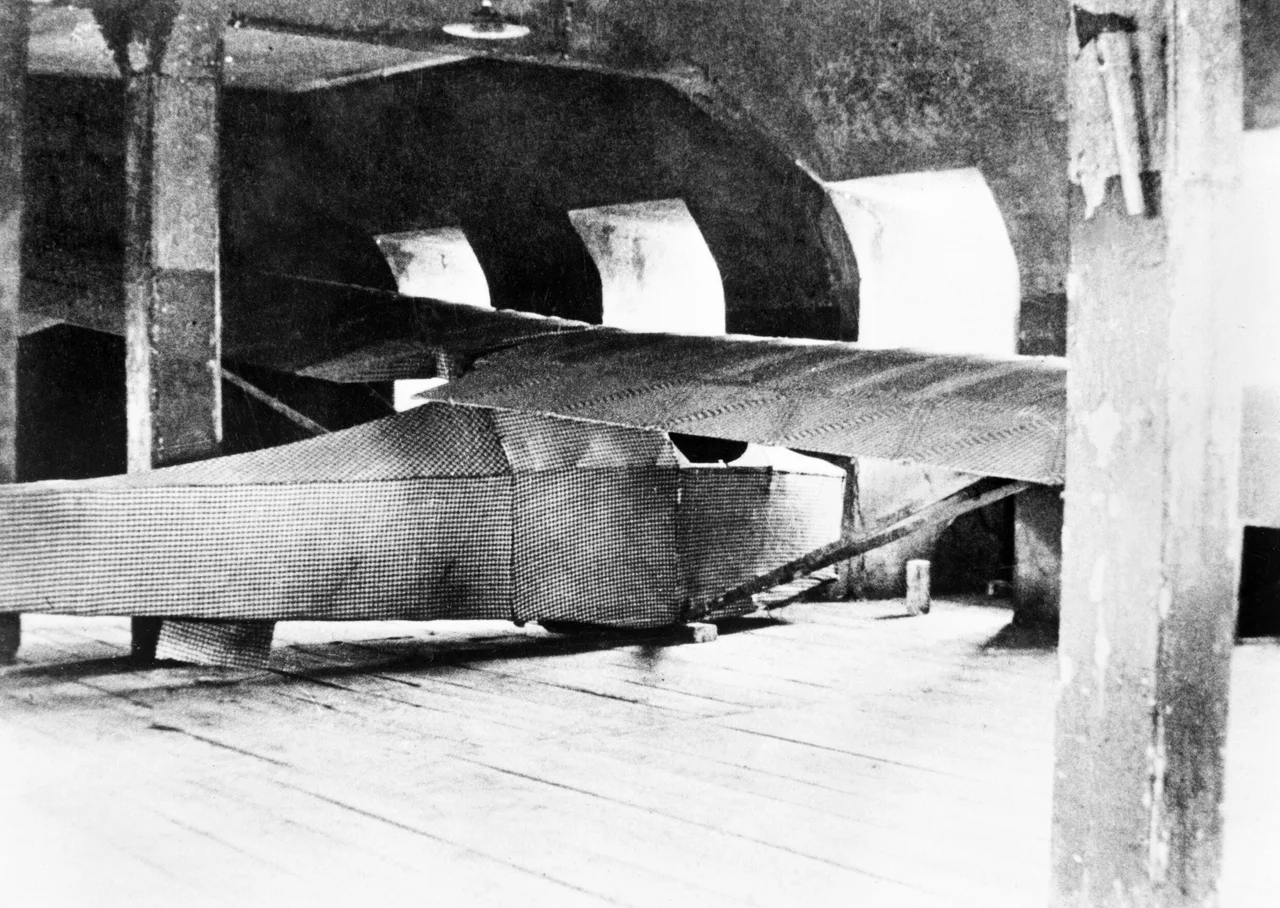
By the spring of 1945, in a remote attic of Colditz Castle, a group of British Royal Air Force officers had built an aircraft. It had a fabric skin made from prison bedsheets stiffened with boiled millet. Its airframe was fashioned from floorboards. Bill Goldfinch, a flight lieutenant, had designed it from memory, and the plan was to launch it from a roof above the chapel using a bathtub full of concrete as the counterweight. The two-man glider — the Colditz Cock — was meant to carry escapees over the River Zwickauer Mulde and into the surrounding fields. They never had to fly it. American troops liberated the castle on 16 April 1945 before the launch could happen. But the Cock existed. War correspondent Lee Carson photographed it the day she walked in with the liberators, and the photograph survived to prove that what sounded like a tall tale had been entirely real.
The Wrong Castle for the Job
Colditz had been many things before it became Oflag IV-C. A Renaissance castle on a rocky hill spur above the Zwickauer Mulde, between Leipzig and Dresden in Saxony, it had begun as a medieval lookout in the eleventh century and ended up as a Hohenzollern hunting lodge under Augustus the Strong of Poland in the 1690s, with seven hundred rooms by the time he was finished expanding it. From 1829 to 1924 it served as a sanatorium for the wealthy and noble, with darker chapters during the First World War when 912 patients died of malnutrition. The Nazis turned it into a political prison in 1933 — for communists, homosexuals, Jews, and others they considered undesirable. When the Wehrmacht needed a high-security camp for Allied officers in 1939, the castle's perch above the river made it look ideal. The Germans believed it could not be escaped from. They were exactly wrong about exactly the wrong men.
The Incorrigibles
Colditz received its first British prisoners on 7 November 1940 — the Laufen Six, transferred after their first attempt to escape from another camp. By policy the prison was reserved for officers who had become particular escape risks, men who had already broken out of other camps and been recaptured. From May 1943 the Wehrmacht restricted Colditz to British and American officers, though earlier prisoners had included French, Belgian, Polish, Dutch and Canadian officers. The roster reads like a who's who of remarkable lives. Douglas Bader, RAF flying ace and double leg amputee. David Stirling, founder of the Special Air Service. Tadeusz Bór-Komorowski, who had led the Polish Underground Army during the Warsaw Uprising. Charles Upham, the New Zealand infantryman and only fighting soldier ever to receive the Victoria Cross twice. Desmond Llewelyn, who later became known as Q in seventeen James Bond films. Airey Neave, who later became a Conservative MP and was assassinated by the INLA in 1979. Concentrating these men in one castle and expecting them to sit quietly was, in retrospect, a peculiar plan.
Tunnels, Disguises, and Forged Papers
The escape attempts were continuous and inventive. Pat Reid, one of the Laufen Six and the British escape officer at Colditz, succeeded in October 1942 — he later wrote The Colditz Story and The Latter Days at Colditz, books that became the source material for the 1972 BBC television series Colditz. The French POWs dug a tunnel from the chapel that went undiscovered for so long that it was rediscovered, twenty years after the war, by repairmen. There was a hidden radio room. Officers got out in German uniforms cobbled together from blankets and stage paint. Lorne Welch was recaptured trying to start a German aircraft to fly to Sweden. The success rate was high enough that the camp's reputation, amplified by postwar films and books, gave rise to what historians now call the Colditz Myth — the idea that POW escapes during the war were common. They were not. What was unusual about Colditz was that it concentrated, in one place, the men most likely to keep trying.
What the Cock Proves
Bill Goldfinch took his glider drawings home after the war and kept them. For decades, with Colditz behind the Iron Curtain in the Soviet zone and then in East Germany, the story of the attic glider sounded like exaggeration. When Lee Carson's single photograph finally surfaced, the story was taken seriously. In 1999 Channel 4 commissioned a full-size replica, built by Southdown Aviation at Lasham Airfield, and several of the original prisoners watched it test-fly at RAF Odiham in 2000. The glider worked. In 2012, another Channel 4 replica, this one radio-controlled, was launched from the same chapel roof the original was meant to use. It crossed the river and landed in a meadow 180 metres below. The escape plan, dismissed for decades as fantasy, would have flown. The castle today is a museum and a youth hostel. The chapel floor has glass panels showing the French tunnel. The Colditz Cock has not been built into the displays in original form, but its replicas, and the photograph of the original, hang on the walls — proof that the men the Germans had labelled incorrigible had, until the very last weeks of the war, been working out how to fly home.
From the Air
Colditz Castle stands at 51.131°N, 12.807°E, on a hill spur above the Zwickauer Mulde river in Saxony, midway between Leipzig (about 45 km northwest) and Dresden (about 70 km east). Leipzig/Halle (EDDP) is the nearest major airport. Dresden (EDDC) is 70 km east. From altitude the castle's pale Renaissance walls sit dramatically above the river bend, surrounded by the agricultural land of central Saxony. The Mulde valley provides a clear visual reference threading northeast toward its confluence with the Elbe.
Nearby Stories
- Meissen porcelain 13 km away
- DKW 18 km away
- Ore Mountain Toy Museum, Seiffen 18 km away
- Battle of Lutzen 25 km away
- Francke Foundations 29 km away
- Torgau 29 km away
- 2001 American Memorial 45 km away
- Walpersberg 53 km away