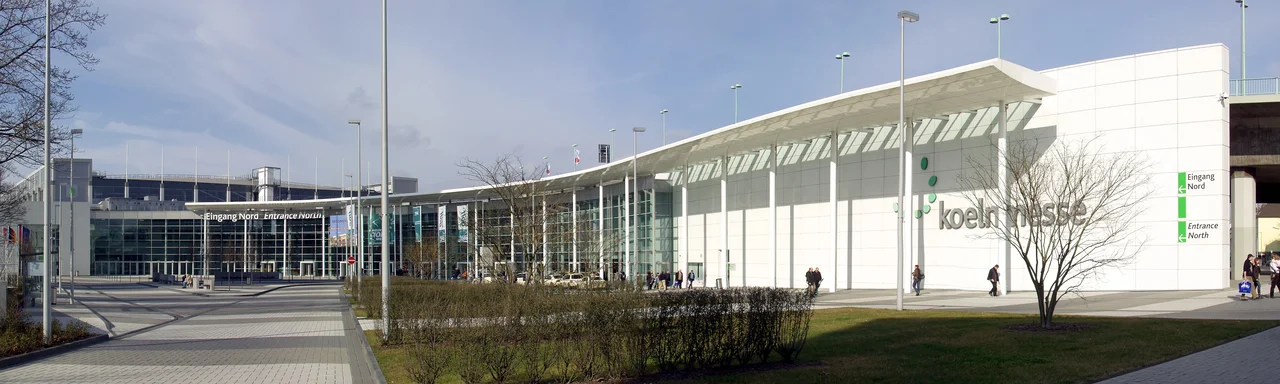

Cologne
On the night of 31 May 1942, the Royal Air Force sent 1,046 heavy bombers over a single German city. Operation Millennium was the first thousand-bomber raid in history, and Cologne was the target. The attack lasted seventy-five minutes, dropped 1,455 tons of explosives, and made 59,000 people homeless before sunrise. By the end of the war the population had collapsed by ninety-five percent, mostly through evacuation, and roughly eighty percent of the old city center lay in rubble. The architect Rudolf Schwarz, surveying the wreckage in 1945, called Cologne 'the world's greatest heap of rubble.' And then, somehow, the cathedral was still standing.
Twenty Centuries
Cologne is older than almost any city north of the Alps. The Romans founded it in 50 AD as Colonia Claudia Ara Agrippinensium, the only Roman colony named after a living empress, and made it the capital of Germania Inferior. The grid of Roman streets still ghosts beneath today's Hohe Strasse and Schildergasse. After the Franks took the city in 462, it became a seat of bishops, then archbishops, then prince-electors who chose Holy Roman Emperors. By 1475 Cologne was a free imperial city of the Holy Roman Empire and one of the great Hanseatic trading powers. Each layer pressed down on the one before. The medieval walls rose where Roman walls had stood. The cathedral, begun in 1248, would take more than six centuries to finish.
The Cathedral That Outlasted Everything
Construction on Kolner Dom stopped around 1560 with the choir complete and a wooden crane stranded atop one unfinished tower, a silhouette Cologne lived with for three hundred years. The cathedral was finally finished in 1880, briefly making it the world's tallest building. Sixty-two years later the bombers came. The cathedral was hit at least seventy times during the war but its twin Gothic spires survived, towering over a city that had largely ceased to exist. American photographs from March 1945 show the Dom rising above an ocean of broken brick. It became, almost by accident, a symbol that something endured. Today it is the third-tallest church in the world and one of Europe's most visited pilgrimage destinations.
What Was Lost
The bombing killed roughly 20,000 civilians across 262 raids. By the end of the war, essentially all of Cologne's pre-war Jewish population of 11,000 had been deported or murdered by the Nazi regime; all six of the city's synagogues were destroyed. The synagogue on Roonstrasse was rebuilt in 1959, and the modern Jewish community in Cologne, whose roots go back to a letter of protection from Emperor Constantine in 321 AD, claims to be the oldest north of the Alps. To walk certain streets here is to walk past absences. The EL-DE Haus on Appellhofplatz, the former Gestapo headquarters, is now a museum documenting that history honestly, including the cells in the basement where prisoners scratched messages into the walls.
Rebuilding, Brick by Stubborn Brick
Rudolf Schwarz drew the master plan for reconstruction in 1947, threading new north-south arteries through the wreckage while keeping the medieval street pattern and the names that went with it. The twelve great Romanesque churches, ruined or half-ruined, were rebuilt one by one over five decades. Saint Gereon, Great Saint Martin, Saint Maria im Kapitol, Saint Kunibert. The last was completed in the 1990s. About twenty-five percent of today's cityscape is genuinely pre-war; the rest is reconstruction, infill, and the optimistic concrete of the 1950s. Konrad Adenauer, the mayor of Cologne from 1917 to 1933 who was dismissed by the Nazis, returned to politics and became the first chancellor of West Germany. The Cologne Bonn Airport bears his name.
Kolsch, Karneval, and a City That Will Not Be Solemn
Cologne refused to be a tragic city. It produces more pubs per capita than anywhere else in Germany and a beer called Kolsch that doubles as the name of the local dialect. Karneval, the great street festival, officially opens on 11 November at 11:11 in the morning and culminates in the wild Tolle Tage before Ash Wednesday, when roughly a million people fill the streets in costume. Eau de Cologne has been distilled here since Johann Maria Farina began the practice at the beginning of the 18th century. The cathedral spires anchor the skyline, the Rhine slides past the Rheinauhafen with its crane-shaped Kranhaus towers, and the city that the world tried to erase keeps insisting on its own continuity.
From the Air
Cologne sits at roughly 50.94 degrees north, 6.96 degrees east on the left bank of the Rhine. Cologne Bonn Airport (EDDK / CGN), named for Konrad Adenauer, is 14 kilometers southeast of the city center. Düsseldorf International (EDDL / DUS) lies 40 kilometers north. From altitude the city is unmistakable: the twin spires of the cathedral on the riverbank, the green semicircle of the Inner Ring tracing the old medieval wall, six road and rail bridges crossing the Rhine, and the modern Kranhaus towers downstream marking Rheinauhafen. The cone-shaped Cologne Lowland flattens to the west toward Aachen.
Nearby Stories
- Diamond Interchange: How a Simple Idea Reshapes Towns Like Julich 2.8 km away
- Dusseldorf-Unterbach 6.1 km away
- Baumwollspinnerei Ermen & Engels 11 km away
- RAF Bruggen 15 km away
- Hagen Open-air Museum 21 km away
- Belgium 130 km away
- Marcinelle Mining Disaster 173 km away
- Zwingenberg Castle 178 km away