.jpg)
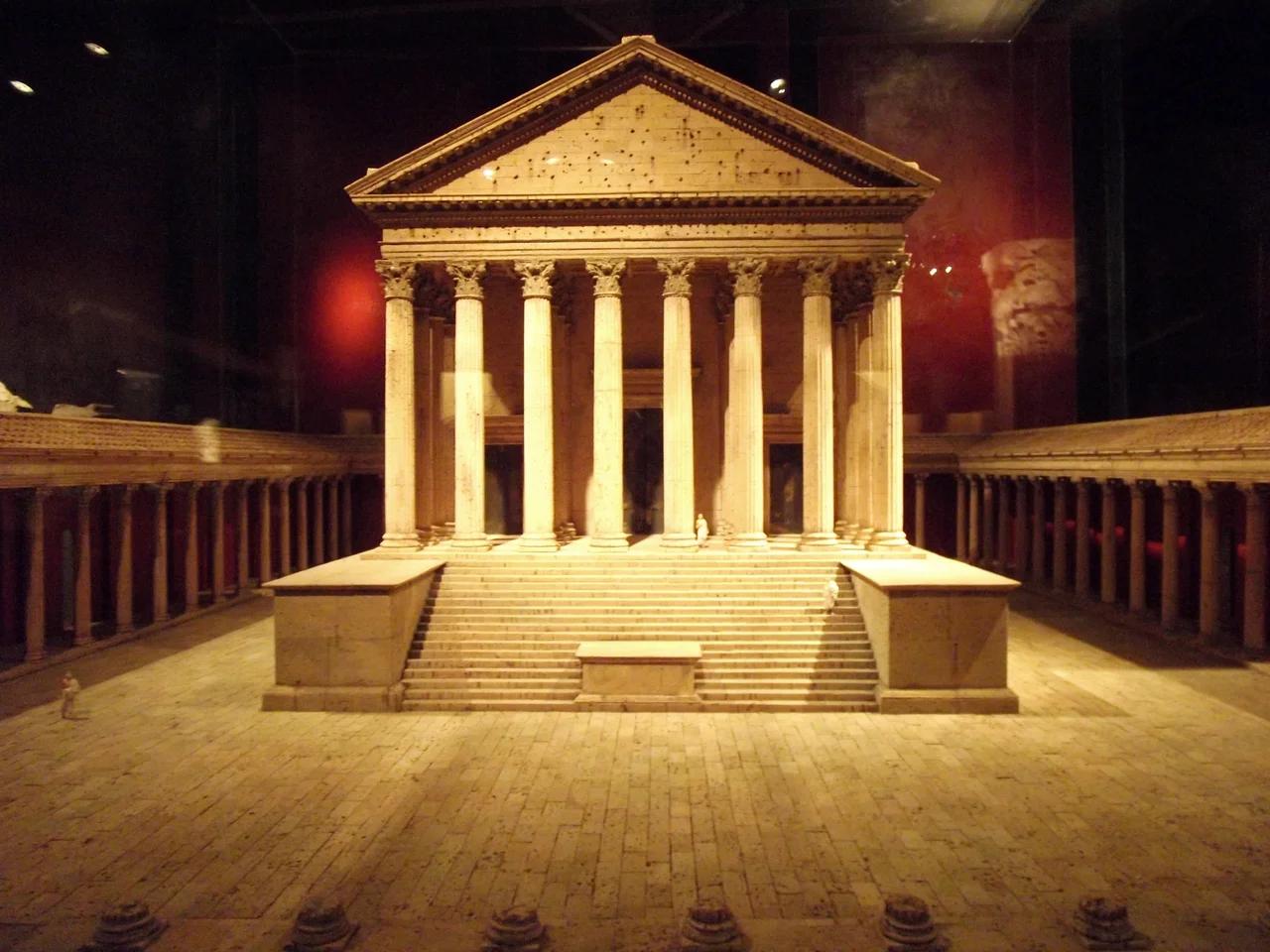
Colonia Claudia Ara Agrippinensium
Agrippina the Younger was born here in AD 15, in a Rhineland garrison town that called itself Oppidum Ubiorum, the settlement of the Ubii. Her father was Germanicus, the Roman general posted to Cologne to plan campaigns into unconquered Germania. Thirty-five years later, Agrippina had survived banishment, exile, and the murderous court of Caligula, married her uncle the Emperor Claudius, and somehow remembered the muddy frontier town of her birth. Around AD 50 she convinced Claudius to elevate it to a Roman colonia. The full name they gave it, Colonia Claudia Ara Agrippinensium, honored her husband's title, the sacred altar at the city center, and Agrippina herself. It is the only Roman colony in the empire named after a living woman.
Before the Romans Came
The land where Cologne now stands had belonged to the Eburones, a Germanic tribe. Julius Caesar destroyed them in a war of reprisal during his Gallic campaigns. The Roman general Marcus Vipsanius Agrippa, in 38 BC, resettled a friendlier Germanic tribe called the Ubii onto the emptied land, moving them from the right bank of the Rhine into the lowlands to the left. The Ubii chose a flood-safe rise above the river for their main settlement, roughly where Cologne's Heumarkt and Alter Markt sit today. Within decades they had laid it out in a Roman grid. The Roman epoch of Cologne's history begins there, on a slight elevation just above the Rhine. The city has been continuously inhabited since.
Agrippina's City
Agrippina was the daughter of Germanicus, the sister of the emperor Caligula, the wife of the emperor Claudius, and the mother of the emperor Nero. Few women in Roman history wielded such direct political influence, and few paid for it more brutally. Her decision to promote her birthplace was not sentimental. A Roman colonia held legal status far above a frontier oppidum: full citizenship for its residents, the right to mint coins, a place in the imperial administrative system. Cologne immediately became the capital of Germania Inferior. Claudius died in AD 54, probably poisoned; many sources name Agrippina herself as the architect. Five years later, her son Nero, whom she had positioned for the throne, had her killed at her own villa. Her city kept her name.
Walls, Streets, and the Praetorium
From AD 70 Cologne had a serious stone wall, eight meters high and two and a half meters thick. By the third century it had been rebuilt and now stretched almost four kilometers, punctuated by nineteen towers and nine gates. The northwest Roman Tower, dating to around AD 50, survives in remarkable condition on what is now Zeughausstrasse. The Roman grid still organizes the city: the modern Hohe Strasse follows the cardo maximus, Schildergasse follows the decumanus maximus. The Praetorium, the governor's palace, sat directly on the eastern wall above the Rhine. Its foundations can still be visited today beneath the Spanish Building of Cologne City Hall, the only administrative building in the whole Roman Empire where the word praetorium is preserved on an original inscription.
Aqueduct, Library, Mosaic
Around AD 80 the Romans built the Eifel Aqueduct, one of the longest in the empire, to deliver 20,000 cubic meters of water a day from springs roughly 95 kilometers to the southwest. By the late first century the city held about 20,000 people, comparable to Roman London and considerably larger than Roman Paris. In 2017 archaeologists excavating beneath a planned Protestant church found foundations identified as the oldest known library in Germany, dating to the second century and possibly holding more than 20,000 scrolls. The most spectacular surviving artifact is the Dionysus Mosaic, laid in the early third century in a luxurious Roman villa near the cathedral, preserved in place and built into the Romano-Germanic Museum that now sits above it.
The Long Twilight
Cologne survived the chaos of the third century, briefly serving as capital of the breakaway Gallic Empire under Postumus from AD 260 to 269, and continuing under his successors until the empire was reunified in 274. In AD 310 Emperor Constantine I had a stone bridge built across the Rhine, guarded on the eastern side by the castellum Divitia, today's Deutz district. The city was sacked by the Franks in December 355, recaptured by the future emperor Julian a year later, and reconstructed. By the early fifth century Roman power was visibly fraying. In AD 459 the Ripuarian Franks took the city for good. Its population, once 20,000, collapsed to perhaps 3,000 by the year 700. The amphitheater was lost so completely that archaeologists still cannot find it. But the bishopric continued without interruption, and the city itself never quite stopped being a city. Two thousand years on, Agrippina's foundation is the fourth-largest city in Germany.
From the Air
The footprint of ancient CCAA lies beneath the central old town of modern Cologne at approximately 50.94 degrees north, 6.96 degrees east, immediately west of the cathedral and the Rhine. The 97-hectare Roman walled city occupied roughly the area now bounded by the inner ring of streets that follow the medieval (not Roman) wall. From altitude, look for the cathedral and the Romano-Germanic Museum beside it, where the most important Roman artifacts including the Dionysus Mosaic are preserved. Cologne Bonn Airport (EDDK / CGN) is 14 kilometers southeast.
Nearby Stories
- Diamond Interchange: How a Simple Idea Reshapes Towns Like Julich 2.8 km away
- Dusseldorf-Unterbach 6.1 km away
- Baumwollspinnerei Ermen & Engels 11 km away
- RAF Bruggen 15 km away
- Hagen Open-air Museum 21 km away
- Belgium 130 km away
- Marcinelle Mining Disaster 173 km away
- Zwingenberg Castle 178 km away