
Cornwall and West Devon Mining Landscape
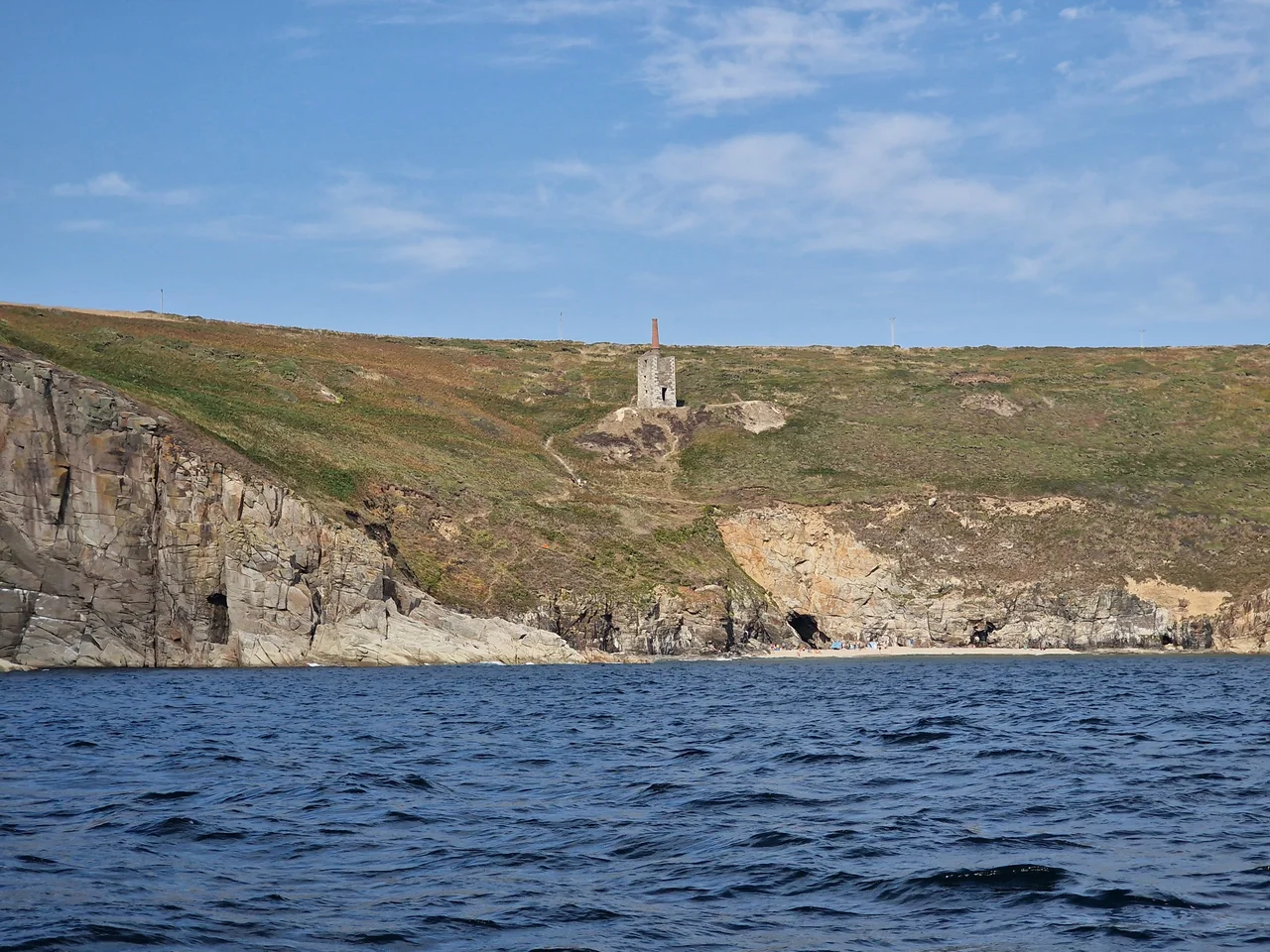
At the height of the boom, in the early 1800s, two out of every three pounds of copper smelted anywhere on Earth came out of the ground in Cornwall and West Devon. Stand on the cliffs above St Just on a clear day and you can still see the engine houses that did the work, perched like sentries above the Atlantic, smokestacks pointing at the sky. They are roofless now and the boilers are long cold, but in 2006 UNESCO listed them as a single World Heritage Site stretching from the granite cliffs of Penwith all the way east to Tavistock in Devon - ten districts, nearly two hundred square kilometres, a working museum of the industrial revolution before steam came to the cities.
Ten Districts, One Landscape
The site is unusual among World Heritage listings: it is not one place but ten, threaded together by a common history. From west to east: St Just on the Land's End peninsula, the Port of Hayle that shipped the ore, Tregonning and Gwinear where deep-shaft mining was perfected, the Wendron district inland of Helston, the great mining city of Camborne and Redruth with their satellite Wheal Peevor, the harbour at Portreath, the Gwennap district near Truro with Devoran and Perran Foundry, St Agnes on the north coast, the Luxulyan Valley behind St Austell with Charlestown harbour, Caradon on the southern edge of Bodmin Moor, and finally the Tamar Valley and Tavistock straddling the Cornwall-Devon border. Each district tells a different chapter of the same story.
Trevithick's Engines and the Deep Lode
Surface tin had been streamed from Cornish rivers since the Bronze Age. The thing that transformed Cornwall in the eighteenth and nineteenth centuries was the ability to follow ore deep underground - and that required pumps capable of lifting water from depths no waterwheel could reach. Richard Trevithick, born at Tregajorran near Camborne in 1771, gave the world the high-pressure steam engine. Arthur Woolf improved it. From the Hayle, Perranarworthal and Tavistock foundries, Cornish-design beam engines were exported to every mining field on the planet. They are still standing, identifiable by their tall stone houses with arched windows, in Australia, Mexico, South Africa, Spain, the Channel Islands and the American West. The Cornish engine is one of Britain's quiet exports, a piece of industrial DNA scattered worldwide.
Copper, Tin, and Arsenic
Copper drove the early nineteenth century. By the 1810s, Gwennap parish alone was producing roughly a third of the world's supply, and Cornwall as a whole supplied two thirds. The crash came in the 1860s, when richer copper was discovered abroad and the price collapsed. Mines pivoted to tin, then to a third metal that nobody had previously bothered with: arsenic, recovered as a by-product of tin roasting and used in everything from pigments to insecticides and embalming. By the late nineteenth century the Cornwall and West Devon mines supplied half the world's arsenic. The flues and condensing chambers where the white poison was collected still snake across hillsides at places like Botallack and Devon Great Consols, lined with brick scoured pure by what passed through them.
The Diaspora
When the copper crashed and again when tin faltered, miners left. They went where the ore was - Burra in South Australia, Grass Valley in California, Real del Monte in Mexico, the Witwatersrand in South Africa, Butte in Montana, the lead and zinc fields of Wisconsin, the copper mines of Michigan. They took with them everything: the engine design, the deep-shaft technique, the pasty for lunch, the Methodist chapel, the Cornish dialect, the male voice choir. The cliff-edge engine houses you can see in this World Heritage Site have identical twins across six continents. "A hole in the ground anywhere in the world," goes the old Cornish boast, "and you'll find a Cornishman at the bottom of it." The diaspora may number five to six million people today, many times the population of Cornwall itself.
The Last Mine, and the Return
Metalliferous mining in Cornwall ended officially on 6 March 1998 with the closure of South Crofty at Pool, between Camborne and Redruth - the last tin mine to operate in Europe. The miners hung a sign on the gate that has become famous: "Cornish lads are fishermen / and Cornish lads are miners too / but when the fish and tin are gone / what are the Cornish boys to do?" The site became a heritage trail, the engine houses a backdrop for tourists. Then, in January 2025, the British government announced a £28.6 million investment to support reopening South Crofty for tin extraction - tin being newly strategic for electronics and renewable energy. The story is not, after all, finished. The UNESCO designation protects what was built; the new investment bets that the lodes have more to give.
How to Read the Landscape
From the air, the signs are everywhere. Tall granite chimneys spaced along ridge lines: those are stack houses for boilers. Square or rectangular stone buildings with one arched gable end: engine houses. Linear earthworks running uphill across moorland: tramways for ore. Round walled pits like miniature reservoirs: dressing floors and buddles for separating ore from waste. Long, low brick flues snaking across hillsides: arsenic condensers. The whole landscape is a flow diagram of nineteenth-century metallurgy at scale. Two centuries on, gorse and bracken are reclaiming the spoil heaps, but the bones of the industry remain, preserved by the same UNESCO listing that protects the Taj Mahal and the Acropolis. They look out at the same Atlantic the ore once crossed to feed the rest of the world.
From the Air
The site stretches across south-west England, with a centre point near 50.14 N, 5.38 W and components scattered from the Land's End peninsula at 50.13 N, 5.69 W (St Just Mining District) east to Tavistock at 50.55 N, 4.14 W. Most engine houses sit at 50-200 m elevation on exposed cliff tops and moorland - dramatic from low altitude in clear weather, often lost in cloud or mist. Land's End airfield (EGHC) lies in the western district; Newquay (EGHQ) is centrally placed for the Camborne-Redruth and St Agnes areas; Plymouth City (EGHD) is closest to the Tamar Valley and Tavistock components.
Nearby Stories
- Wadebridge 8.1 km away
- Caerhays Castle 8.1 km away
- Sevenstones Lightship 16 km away
- Battle off Lizard Point 20 km away
- MV Cita 22 km away
- Carnewas and Bedruthan Steps 30 km away
- 1979 Fastnet Race 71 km away
- HMS Affray 108 km away