
Cuiaba
You do not come to Cuiaba for Cuiaba. You come for the Pantanal, the largest tropical wetland on Earth, and Cuiaba happens to be where the road in begins. Most travelers arrive at Marechal Rondon International Airport, take a taxi into town, spend one night, and leave at dawn driving south toward Pocone and the start of the Transpantaneira Highway. The hotels know this. The tour operators know this. Cuiaba itself is a modern city of 500,000 in the middle of Brazilian cattle country, and while it is a pleasant enough stop, nobody pretends the city itself is the attraction. The attraction is 98 kilometers down the road.
The Unfinished Highway
The Transpantaneira was supposed to cross the entire Pantanal. Construction stopped 144 kilometers in, at Porto Jofre, which is roughly where the floodplain begins to get serious and the bridges start getting expensive. The project's abandonment turned out to be the best thing that ever happened to the wetland. Had the road been completed, it would have skewed the ecosystem's drainage patterns and likely destroyed the place it was built to cross. Instead, the dirt ribbon runs as a dead-end causeway through 144 kilometers of flooded grassland, and the ditches on either side have become some of the richest wildlife habitat in South America. You spend a day here and see more animals than a week in the Amazon delivers. Capybara lounging in the mud, caiman by the dozen, giant river otters sliding through the channels, jabiru storks standing motionless in the shallows, kingfishers plunging for fish. The road is mostly dirt, only the first three kilometers paved, and you cross more than 100 wood and concrete bridges to reach Porto Jofre. Many of the wooden ones are in poor shape. The posted speed limit is 60 km/h. Nobody drives that fast. The slow pace is part of the point.
Cowboy Country
Cuiaba sits in the middle of Mato Grosso's vast cattle country, and until recently it was not unusual to see working pantaneiros on the streets in full cowboy rig: leather hats, boots scuffed from stirrups, belt buckles the size of saucers. The city has modernized, but the ranching economy remains. This is still the place to buy saddles, boots, bridles, hats, and the assorted gear of the Brazilian cowboy. Shops around the Praca da Republica specialize in pantaneiro equipment, and the quality is serious, made for people who actually use it rather than tourists looking for souvenirs. The weekend crafts fair at Praca Santos Dumont brings regional artisans into the center, their stalls selling woven palm baskets, ceramic bowls, and the rope work that is essential equipment on any working fazenda.
Downtown in the Heat
The centerpiece of Cuiaba is the Praca da Republica, a small green square fronted by the stylish modern basilica, the tourist office, and the small natural history museum. The Basilica do Senhor Bom Jesus de Cuiaba has Art Deco features and striking stained glass, and the adjacent yellow baroque Palacio de Instrucao houses the city's history and natural history museums. The history wing focuses heavily on the 1860s war between Brazil and Paraguay, largely fought in this remote region. The natural history side features stuffed Pantanal wildlife of varying quality and a collection of indigenous clubs, arrows, and headdresses worth seeing. Down by the renovated riverside port, the Museu do Rio Cuiaba and the Municipal Aquarium display Pantanal fish and exhibits on the changing face of the river that gave the city its name. The old centro is walkable, hot, and mostly safe, though travelers are advised to avoid the riverside strip at night. Taxis run R$7 to R$21 around town, and the ride to the airport or bus station takes a few minutes.
Beyond the Wetland
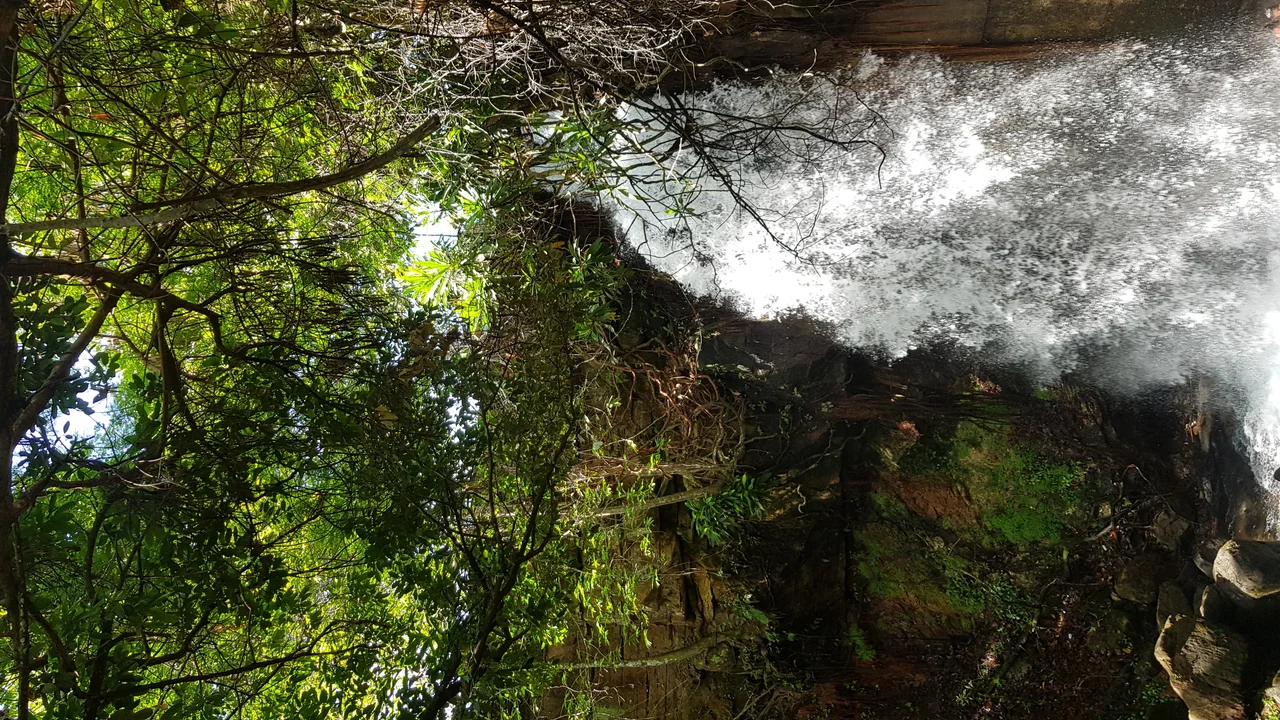
After the Pantanal, the other essential side trip is the Chapada dos Guimaraes, the highlands rising north of the city. Red rock formations, tall plateaus, canyons, and a string of waterfalls and swimming holes make the Chapada a one or two day excursion from Cuiaba. The birdlife includes red macaws, and the hiking is excellent. The contrast is striking: the flat wet Pantanal south of Cuiaba versus the dry high plateau to the north, with Cuiaba sitting in the transition zone between three of Brazil's great ecosystems (Amazon, Cerrado, and Pantanal). Most travelers combine a four or five day Pantanal tour with an overnight in the Chapada, using Cuiaba as the hinge. The city earns its nickname as the Southern Gate to the Amazon by geography as much as anything, but the gate itself is modest. It is what lies through the gate that draws the crowds.
From the Air
Cuiaba lies at 15.60 S, 56.10 W, near the geographical center of South America. Marechal Rondon International Airport (SBCY) serves the city 10 km from downtown. Cruise at 3,500 to 5,500 feet to observe the urban grid giving way to cerrado north toward Chapada dos Guimaraes and the start of the Pantanal wetlands to the south. Expect hot, humid conditions; summer temperatures routinely exceed 40C.
Nearby Stories
- Guiratinga 200 km away
- Central-West Region, Brazil 225 km away
- Pantanal Matogrossense National Park 226 km away
- Guaporé River 264 km away
- Araguainha Crater 306 km away
- Vila Bela da Santíssima Trindade 364 km away
- Serra Azul State Park 413 km away