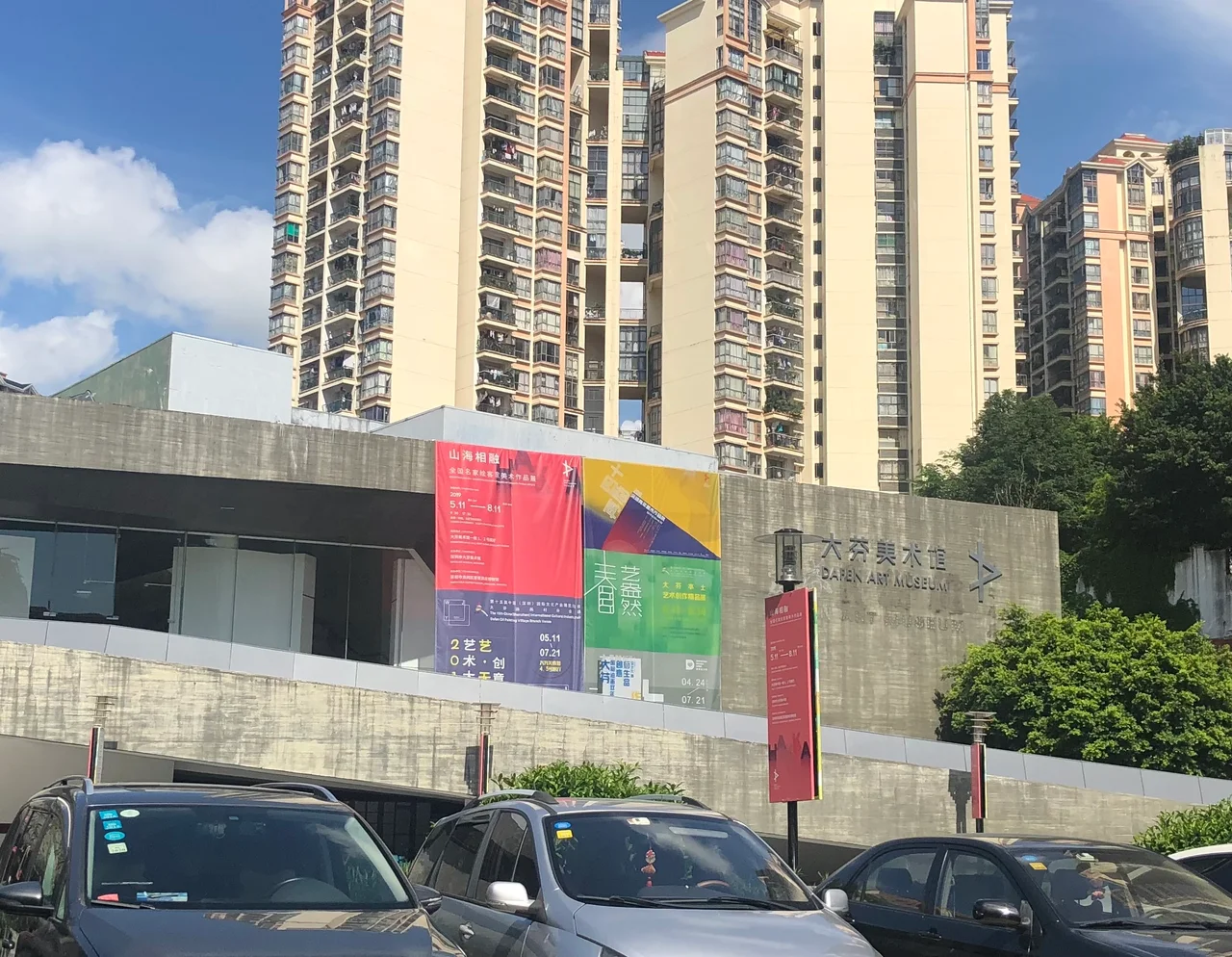

Dafen Art Museum
When the Chinese government decided to spend 100 million yuan on an art museum in a Shenzhen suburb best known for churning out van Gogh copies by the pallet, the ambition was explicit: change the story. The Dafen Art Museum, completed in 2007 and designed by the Chinese architectural firm Urbanus, was not built for art-world insiders. It was built as a message — to tourists, to critics, to the international press — that Dafen Village was something more than the world's largest replica factory. Whether the message landed is a question the building still poses.
Urbanus and the Architecture of Reputation
Urbanus is one of China's most internationally recognized architectural practices, known for projects that engage critically with the conditions of rapid urbanization. Their commission in Dafen was unusual: design a building that could sit comfortably within a working village of painters, galleries, and studios, while also signaling institutional seriousness. The result is a structure that frames the village's existing streetscape rather than overwhelming it. Large openings in the facade invite visitors in from the pedestrian lanes; interior volumes shift between compressed and expansive. The building does not pretend the village's commercial identity does not exist. Instead, it tries to hold both scales at once — the local and the global, the copy shop and the gallery.
What the Museum Contains
The Dafen Art Museum is not a conventional white-cube gallery. Its interior mixes two things that art institutions usually keep separate: retail and exhibition. Vendors with studios in Dafen can sell work from dedicated spaces within the building, alongside gallery rooms used for temporary exhibitions. This arrangement reflects the village's economic reality — thousands of painters live and work in Dafen, and a museum that served only visiting curators would be disconnected from the community it occupies. Critics have argued that the blended model muddies the distinction between a market and a cultural institution. Supporters point out that Dafen has always been a place where those categories overlapped, and the museum is simply honest about it.
The Reputation Problem
The government's intention in building the museum was to shift outside perception of Dafen as a center for low-quality replica art. That perception had a basis in fact: the village built its entire economy on reproduction, and much of what it produced was not intended to be mistaken for fine art. Mass-produced copies of van Gogh, Renoir, and da Vinci shipped by the container-load to hotels, restaurants, and homes across Europe and North America. The museum was meant to introduce a different register: original work, serious exhibition, architectural distinction. Progress has been gradual. Dafen's identity as a copy village remains the dominant story internationally, even as individual artists within it have built genuinely original practices. The museum sits at that tension, somewhere between monument and argument.
A Village and Its Landmark
In the context of Dafen Village, the museum functions as a gateway and an anchor. Visitors arriving in Dafen often pass through or alongside it before entering the warren of studios and galleries that make up the village proper. The building's scale — substantial without being overwhelming — marks it as distinct from the surrounding streetscape without severing the connection. It gives Dafen a landmark that photographs well and appears on tourism materials, which was part of the point. Whether a building can change a reputation is a long bet, and the jury is still out. But as architectural commissions go, the Dafen Art Museum is an honest attempt to take a complicated place seriously on its own terms.
From the Air
The Dafen Art Museum sits at approximately 22.6126°N, 114.1335°E, in the Longgang District of Shenzhen. From the air at 3,000 feet, Dafen Village appears as a dense residential-commercial cluster southeast of central Shenzhen, distinguishable from surrounding development by its concentration of signage and low-rise studio buildings. Shenzhen Bao'an International Airport (ZGSZ) lies roughly 30 km to the northwest. The district is well inland, with no significant water features nearby for aerial navigation.
Nearby Stories
- Hong Kong Disneyland 4.1 km away
- Mount Guanyin (Dongguan) 7 km away
- 2024 Lixinsha Bridge Collapse 7.4 km away
- Portas do Cerco 12 km away
- Lotus Hill 15 km away
- Nanxiong Formation 78 km away
- Heyuan 130 km away
- Checheng Fu'an Temple 629 km away