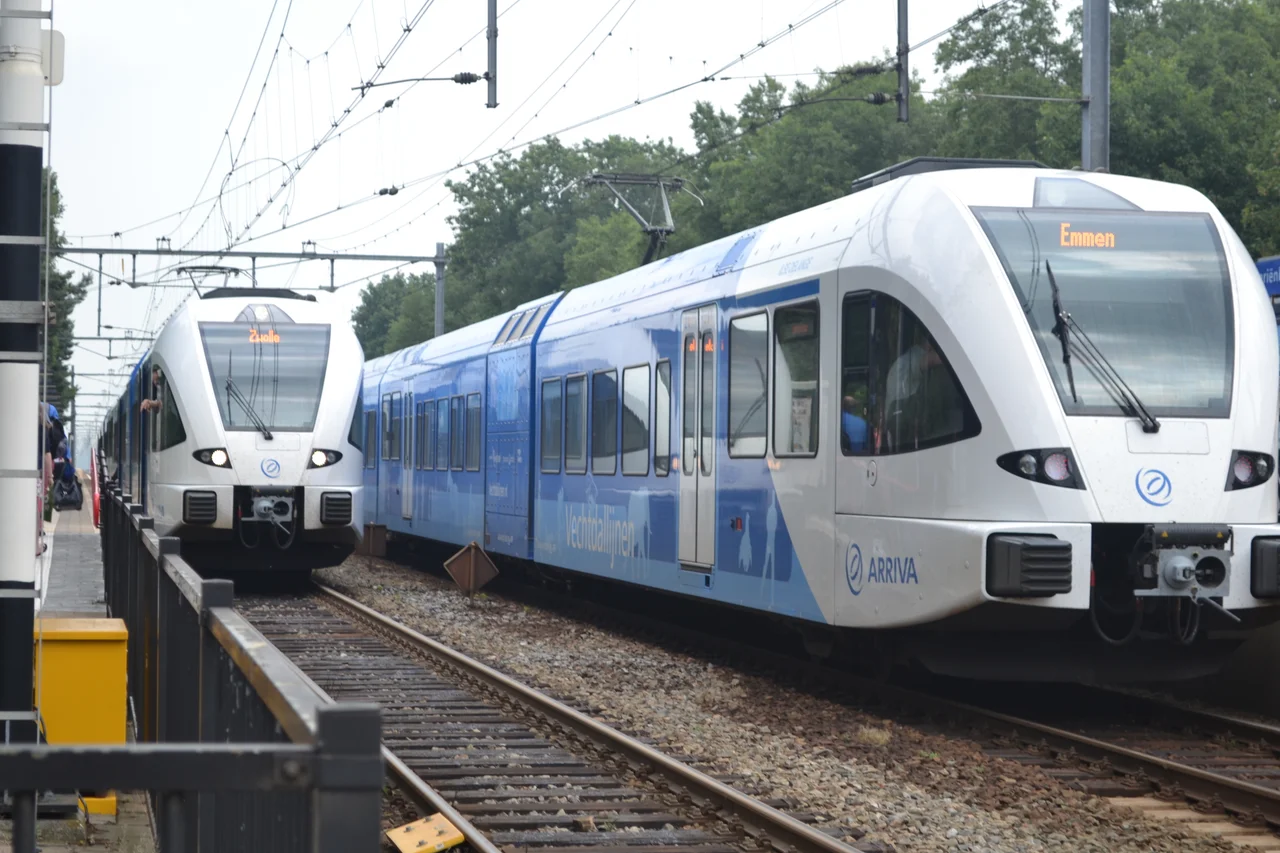

Dalfsen Train Crash
It was 08:50 on a Tuesday morning, the kind of grey late-winter light that flattens the polders around Dalfsen. A westbound train had just rolled through the level crossing, and now the tracks looked clear. The operator of a tracked cherry-picker - a slow, heavy machine on steel caterpillar tracks - eased forward to cross. He had no way of knowing whether the line was actually safe. The Netherlands gave drivers of large slow vehicles no telephone, no signal, no signalman to call. Just sight and judgment. From the east, a Sprinter passenger train was already in the curve, closing at line speed. The driver had seconds. He did not have time.
The Crossing
The level crossing sat just outside Dalfsen station on the line between Zwolle and Emmen, a quiet stretch of the Overijssel countryside where farms and small towns sit between long straight runs of track. Westbound trains had passed first. The cherry-picker operator waited as he was supposed to, watched the train clear the crossing, and then began to move. The machine could not get across in time. Tracked vehicles are slow by design - their weight is what makes them stable when extended, but it also means they crawl. When the eastbound Sprinter came around the curve, the driver, Antoine Wijbrandus van Hoorn of Kampen, was fifty-three years old and relatively new to driving for NS. The impact tore the front of the train apart. All four carriages derailed. The cab of the locomotive, designed to withstand significant force, took an impact more than four times what its engineers had planned for. There was no survival space left.
Twelve Ambulances
Twelve ambulances came to the crossing in the cold morning, summoned to a scene that was already over. The driver was dead. Six passengers were injured, one seriously; the others were treated where they sat and walked away. Arriva, the regional operator, set up a bus replacement service between the affected stations. The mangled carriages were pulled to a depot in Meppel for examination, and within four days the line was open again - the swift restoration of service that Dutch infrastructure quietly excels at. But the human accounting took longer. The cherry-picker operator was detained for questioning that same day. He had not been speeding, not been impaired, not been negligent in any conventional sense. He had simply made a judgment call about whether he could clear the tracks, and the judgment had been wrong by seconds. In September 2017 he was charged with causing a traffic accident resulting in death and injury - a charge that carried the weight of a death he had to live with whether the courts convicted him or not.
What the Board Found
The Dutch Safety Board, the OVV, published its report in December 2016. The findings were direct and uncomfortable. The cause of the crash was the platform on the line - but the deeper cause was that the system gave the operator no way to know whether crossing was safe. In Britain, after the Hixon rail crash of 1968 in which a transporter carrying an electrical transformer was struck on a level crossing, the UK installed telephones at crossings so slow-vehicle drivers could call the signalman before attempting a crossing. The Netherlands had never done this. After Dalfsen, vehicles with steel caterpillar tracks were prohibited from Dutch level crossings entirely. The current rules require that any vehicle unable to clear a crossing within fifteen seconds (twelve at crossings without active warnings) must obtain advance permission from ProRail at least five working days ahead. The recommendation buried in all the technical language is plainer: avoid these crossings if you possibly can.
The Curve Today
The line runs again. Sprinters move through Dalfsen on schedule, and most passengers crossing that point have no reason to know what happened here on the morning of 23 February 2016. A driver died at his post, and an operator on a cherry-picker carried the weight of that for the rest of his life. The rules changed because of them. That is what these crashes leave behind in places where infrastructure is taken seriously: a set of new prohibitions, a few extra forms to fill in, and the quiet understanding that a man who was good at his job, on a normal morning, had no chance once the curve brought the headlight into view.
From the Air
Located at 52.50 degrees north, 6.32 degrees east, near Dalfsen station on the Zwolle to Emmen line, about 10 km east of Zwolle. Best viewed from 2,500 to 4,000 feet; the line runs roughly east-west through flat polder country, easily traced from the air. Nearest airports: Lelystad (EHLE) about 60 km southwest, Twente (EHTW) about 50 km southeast. Watch for the Vecht river meandering just south of town.
Nearby Stories
- Windpark Noordoostpolder 2.7 km away
- Giethoorn 5.1 km away
- Aviodrome 6.6 km away
- Hans Philipp 7 km away
- Haaksbergen 7.2 km away
- Siege of Zutphen (1591) 8 km away
- Sleen 9.3 km away
- Onze Lieve Vrouwetoren 17 km away