
Danantara
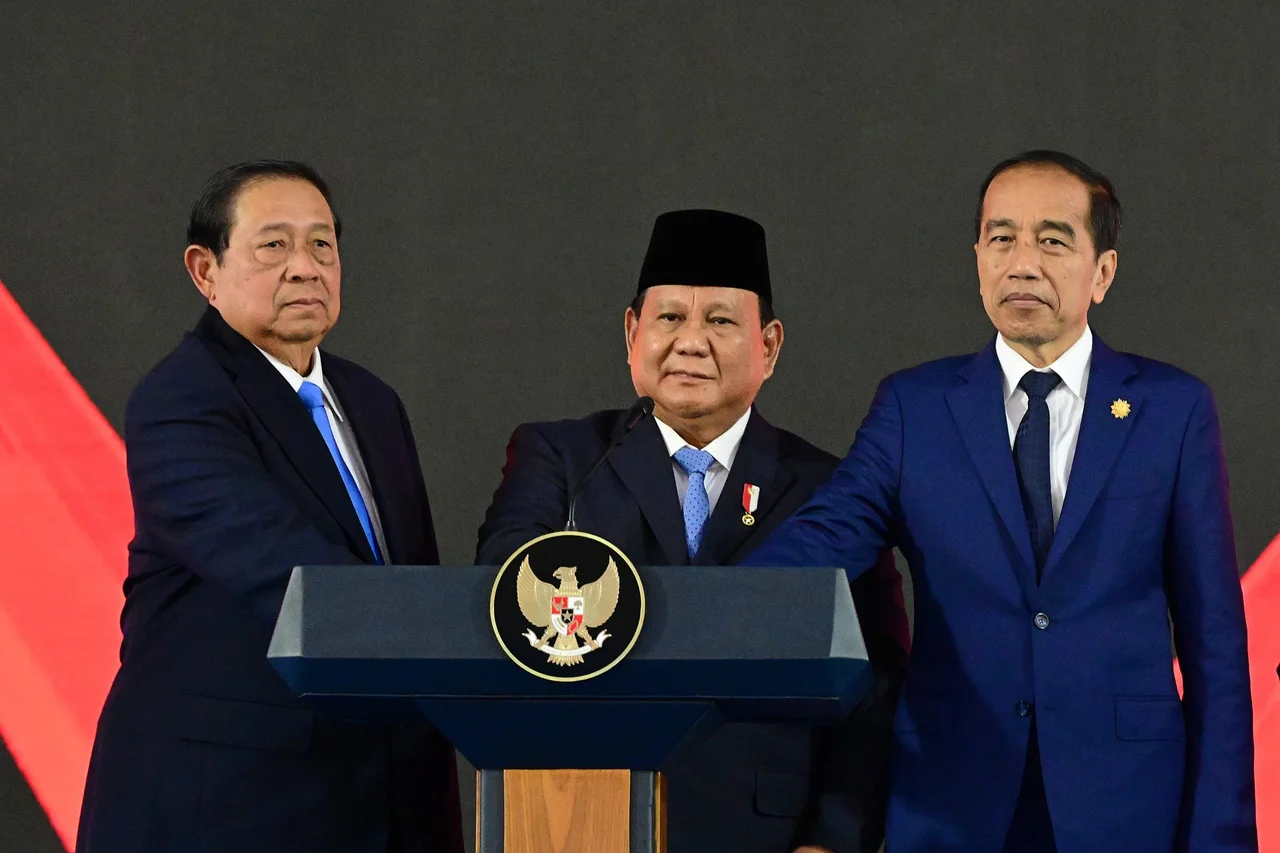
The name alone tells you what Indonesia is reaching for. Daya means strength in Indonesian, traced to Sanskrit roots. Anagata comes from Pali -- "not yet to come," or simply, the future. Nusantara is the ancient Javanese word for the archipelago itself, the chain of islands stretching from Sabang to Merauke. String them together and you get something like "the future strength of the islands" -- a name that is less a label than a declaration of intent. Danantara, launched on 24 February 2025 by President Prabowo Subianto, is Indonesia's second sovereign wealth fund, projected to manage 320 trillion rupiah -- roughly US$20 billion -- by consolidating seven of the nation's most important state-owned enterprises under a single investment holding. Whether it becomes Southeast Asia's next Temasek or its next 1MDB is the question that dominates every conversation about it.
The Architecture of Ambition
Danantara was born from a merger of functions between the existing Indonesia Investment Authority and the Ministry of State-Owned Enterprises. Seven major SOEs were pulled from the ministry's direct management and placed under the new entity. The organizational chart reads like a who's who of Indonesian political and economic power: President Prabowo serves as person in charge, former presidents Susilo Bambang Yudhoyono and Joko Widodo sit on the steering committee, and the advisory board initially listed American billionaire investor Ray Dalio -- who declined the role before it was formalized in May 2025 -- alongside economist Jeffrey Sachs and former Thai prime minister Thaksin Shinawatra. The CEO is Rosan Roeslani, a businessman with deep ties to Prabowo's political network. The structure is deliberately modeled on successful Asian sovereign wealth funds -- Singapore's Temasek and Malaysia's Khazanah Nasional, both of which transformed state assets into globally competitive investment portfolios.
The Patriot Bond Gambit
In August 2025, Danantara revealed its instinct for controversy with the "Patriot Bond" initiative, an attempt to raise 50 trillion rupiah to fund waste-to-energy projects. The bonds offered a 2 percent interest rate -- less than a third of the roughly 6 percent yield on comparable government debt. Financial analysts were blunt in their assessments: no rational investor would accept such terms on financial merits alone. Critics described the offering as a loyalty test for Indonesia's business elite, an instrument where the implicit return was political goodwill rather than interest payments. Several of the country's wealthiest businessmen reportedly agreed to invest 2 to 3 trillion rupiah each, reinforcing the perception that Danantara's fundraising relied on political pressure as much as market fundamentals. The episode crystallized the tension at the heart of the fund: it aspires to commercial independence while operating in a political ecosystem that makes true independence difficult to achieve.
Shadows of 1MDB
Indonesia's anti-corruption watchdogs raised alarms early. The Financial Audit Board, the Agency for Financial and Development Supervision, and the Corruption Eradication Commission all lack the authority to independently monitor Danantara's assets -- audits require a request from the House of Representatives. Indonesian media drew immediate parallels to 1Malaysia Development Berhad, the Malaysian sovereign wealth fund whose spectacular collapse in a corruption scandal cost billions and brought down a prime minister. Deni Friawan of the Centre for Strategic and International Studies argued that Danantara's success depends on independence, transparency, and professionalism -- the same qualities that Singapore's Temasek maintains despite its own close ties to government. Transparency International Indonesia added fuel by documenting widespread concurrent positions: deputy ministers serving simultaneously as commissioners of SOEs, a practice that Indonesia Corruption Watch reported violated both the SOEs Act and a Constitutional Court ruling. The fund's leadership is filled with political elites, and the line between governance and interference remains dangerously thin.
A Bet on Indonesia's Future
For all the controversy, Danantara reflects a genuine ambition. Indonesia is Southeast Asia's largest economy, home to more than 270 million people, and its state-owned enterprises -- from Pertamina in oil and gas to Bank Mandiri in finance -- represent enormous assets that have long been managed in fragmented, politically influenced silos. Consolidating them under a professional holding structure could, in theory, unlock efficiencies and attract foreign capital. In mid-June 2025, Danantara signed a 2-billion-euro agreement with Russia's Direct Investment Fund at the St. Petersburg International Economic Forum, signaling a willingness to engage with a wide range of international partners. Economist Eddy Junarsin of Gadjah Mada University has argued that the holding company model could make SOEs more agile in innovation and reduce wasteful layering in management. But he also acknowledged that Danantara was born during escalating socio-political tensions, from budget controversies to contentious policy debates. The fund's name promises the future strength of the archipelago. The archipelago is watching to see whether the promise holds.
From the Air
Danantara is headquartered in the Gedung Bapindo building in central Jakarta, at approximately 6.19S, 106.84E. The area sits in Jakarta's commercial core, surrounded by skyscrapers and government buildings. Nearest airports are Soekarno-Hatta International (WIII), roughly 25 km northwest, and Halim Perdanakusuma International (WIIH), about 12 km southeast. From altitude, the central Jakarta skyline is identifiable by the cluster of high-rises and the broad green rectangle of Merdeka Square to the north.
Nearby Stories
- The King's Footprints in the River 2.8 km away
- Rawagede Massacre 6.4 km away
- The Cruiser That Wouldn't Stop Fighting 14 km away
- Four Minutes Over the Java Sea 14 km away
- The Scholar's Mosque 21 km away
- Through the Cidepong Hills 37 km away
- Ujung Kulon National Park 97 km away
- The Islands That Vanished from Sight 352 km away