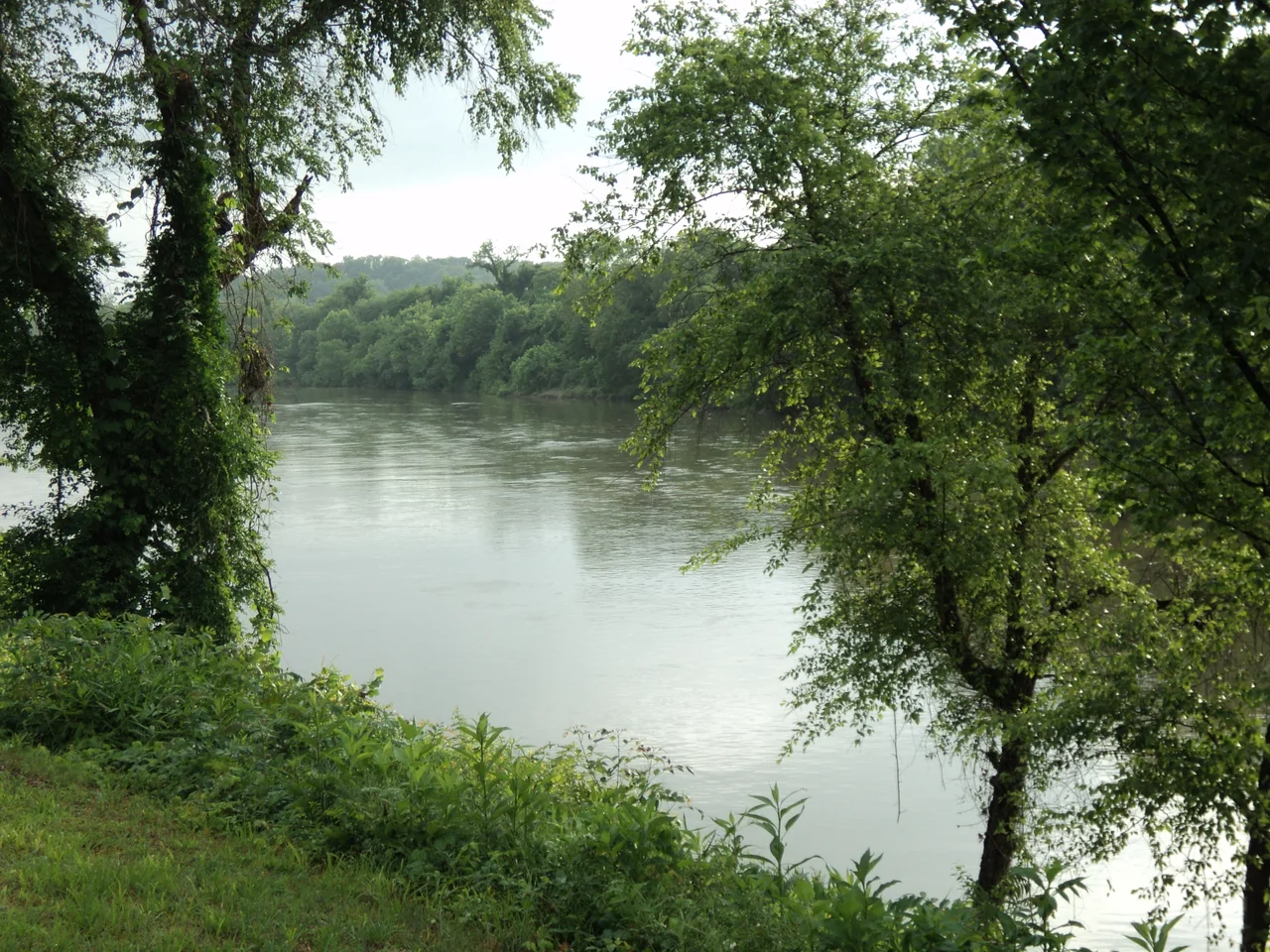

Danville, Virginia
William Byrd named the river. In 1728, the English colonist had been sent by Virginia to survey the boundary with North Carolina, and he camped one summer evening upstream of the spot that would later become Danville. He had felt, he wrote, that he had wandered from Dan to Beersheba — the biblical phrase for traversing the length of a country — and so he called the river the Dan. He also prophesied a future settlement nearby, where people would live, in his words, with much comfort and gaiety of Heart. Two hundred and ninety-eight years later, his prediction has held up, though the heart of Danville has been tested in ways Byrd could not have imagined.
Tobacco, Cotton, and the Confederacy's Last Week
The settlement that became Danville started in 1792 at a fordable stretch of the river, was called Wynne's Falls after its first settler, and was renamed Danville by the Virginia General Assembly in November 1793, the same year a state-authorized tobacco warehouse opened at the falls. By the mid-19th century, William T. Sutherlin had built the city's first water-powered tobacco press, and Danville called itself The World's Best Tobacco Market — the leading Virginia market for brightleaf. When the Civil War came, Danville's rail position made it strategically critical to the Confederacy. As Richmond fell in early April 1865, Jefferson Davis and his cabinet retreated south to Danville. They stayed at Sutherlin's mansion for one week, from April 3 to April 10, making Danville the third and final capital of the Confederacy. Davis issued his last presidential proclamation here. The cabinet held its final meeting at the Benedict House before fleeing south upon news of Lee's surrender at Appomattox. The Sutherlin Mansion is now the Danville Museum of Fine Arts and History.
The Danville Massacre and a Stolen Century
After Reconstruction, Danville had a majority African American population and was politically represented by African American members of the biracial Readjuster Party, which had taken control of the city council in 1882. White Democrats in the region perceived this arrangement as alarming. On November 3, 1883, three days before an election, a racially motivated street confrontation in downtown Danville turned into a shooting in which five men died — four of them Black. A local Danville commission found African Americans at fault; a US Senate investigation determined that white residents were to blame. No one was prosecuted. The Danville Massacre was used by Democrats to break the Readjuster coalition statewide. By the time Virginia passed its 1902 constitution with disenfranchising voter registration barriers, most Black Virginians — and many poor white Virginians who had been Readjusters — were excluded from the political system. Their schools and facilities were underfinanced for decades.
Bloody Monday, 1963
Eight decades later, the civil rights movement came to Danville. The Reverend Martin Luther King Jr. visited the city and spoke at High Street Baptist Church, saying the police brutality he had observed in Danville was the worst he had seen in the South. On June 10, 1963, a date that locals still call Bloody Monday, demonstrators were violently attacked during civil rights protests. The Student Nonviolent Coordinating Committee sent organizers to support the local movement, which targeted the segregated Howard Johnson hotel and restaurant on Lee Highway. A grand jury indicted 13 DCPA, SCLC, and SNCC activists under Virginia's so-called John Brown law — an 1830 statute, passed after a slave uprising, that made it a serious felony to incite the colored population to acts of violence against the white population. The law had been used in 1860 to convict and hang the abolitionist John Brown after Harpers Ferry. In 1963 Virginia, prosecutors reached for it again to charge civil rights activists in Danville.
From Wreck of the Old 97 to the River District
On September 27, 1903, the Southern Railway's fast mail train Old 97 ran behind schedule across a high trestle over the Dan River valley. The engineer gave her full throttle, the train jumped the tracks, and engine and five cars plunged into the ravine. Eleven people died. The wreck became a famous folk song and a downtown Danville mural. The 1899 passenger station designed by Frank Pierce Milburn still stands; renovated in the 1990s, it now hosts a satellite facility of the Science Museum of Virginia and remains in use by Amtrak. By the 2000s, the textile, tobacco, and railroad industries had all contracted sharply, and in 2007 Preservation Virginia named the entire city as one of the state's Most Endangered Historic Sites. The city has been rebuilding its economic base — the River District redevelopment of the historic downtown and Tobacco Warehouse blocks, the 2020 referendum that approved Caesars Virginia at the old Dan River Mill site, the slow reactivation of warehouses as lofts and restaurants. The 2020 census put the population at 42,590, still about half African American, still working out what comes next.
From the Air
Danville sits at 36.59°N, 79.41°W on the Dan River along the Virginia-North Carolina border. About 70 nm south of Lynchburg, 45 nm northeast of Greensboro, NC. Primary airport: Danville Regional Airport (KDAN), about 4 nm northeast of downtown. The Dan River, the rail lines, and U.S. 29/U.S. 58 are the most visible features at cruise altitudes of 4,000-6,000 ft AGL.
Nearby Stories
- Martinsville Speedway 4.6 km away
- Staunton River State Park 7.7 km away
- Franklin County, Virginia 11 km away
- Granville County, North Carolina 13 km away
- Smith Mountain Lake 27 km away
- Battle of Guilford Court House 29 km away
- Orange County Speedway 33 km away
- Appomattox-Buckingham State Forest 53 km away