
Death of Chan Yin-lam
Chan Yin-lam was fifteen years old. Born on 16 July 2004, she was a student in Hong Kong at a time when the city was caught in months of protest, teargas, and a profound breakdown of trust between the government and the public. On 19 September 2019, surveillance footage showed her leaving her school campus barefoot, walking toward the waterfront near Tseung Kwan O. She was not seen alive again. Her body was discovered floating in the sea near Yau Tong on 22 September. She had been missing for three days before anyone knew to look, and the cause of her death has never been conclusively established. What followed was a reckoning not just with her loss, but with the fractured state of a city in which almost nothing — not official accounts, not evidence, not grief itself — could be agreed upon.
A Girl in a Complicated City
Chan Yin-lam, also known as Christy Chan, had what the records describe as a 'complicated' family background. Her parents were separated. She had a history of running away from home and had been staying at a girls' home prior to her disappearance. She was also, according to those who knew her, an award-winning swimmer — a detail that would later become one of the focal points of public doubt about how she died. She had participated in protest activities in June 2019, distributing leaflets, and her mother later said she had become disillusioned with the protest movement by July. By September, she was a student at the Hong Kong Design Institute's Youth College in Tseung Kwan O, living a life that was visibly complicated and privately difficult, as fifteen-year-old lives often are, and trying to navigate it in a city that was itself unraveling.
What the Footage Shows
The last confirmed record of Chan alive is the surveillance footage from her school campus: she left barefoot on the afternoon of 19 September 2019, walking in the direction of the waterfront. She was reported missing two days later, on 21 September. On the morning of 22 September, a man fishing near Devil's Peak spotted a floating object about 100 meters from shore. Police boats were dispatched and found the body of a young woman. Initial police descriptions — a woman between 25 and 30 years old, with long blond hair — bore little resemblance to Chan. It was not until 9 October, responding to media inquiries, that police confirmed the body belonged to the fifteen-year-old student. Police initially sought a court warrant on grounds of murder on 27 September, then changed the classification to 'dead body found, not suspicious' days later. The sequence of these decisions drew sustained scrutiny.
What Could Not Be Determined
A preliminary autopsy led police to assert that no foul play was suspected and that Chan had likely killed herself, citing her documented history of mental health difficulties, psychosis, self-harm, and previous suicide attempts. Her mother, Ho Pui-yee, appeared on TVB News on 17 October and said that, after reviewing the CCTV footage, she believed her daughter had taken her own life. She described a daughter who had struggled deeply — with auditory hallucinations, sleeplessness, emotional instability. But the coroner's inquest concluded in September 2020 with the jury returning an open verdict. The magistrate ruled out both homicide and suicide as conclusions, finding insufficient evidence to support either. The cause of Chan's death remains legally and factually unresolved. Former forensic pathologist Philip Beh Swan-lip noted publicly that the discovery of a fully naked body in the sea is typically treated as suspicious, and that the relatively swift cremation of Chan's remains warranted further explanation — though police stated the coroner had authorized the process.
A City That Could Not Grieve Quietly
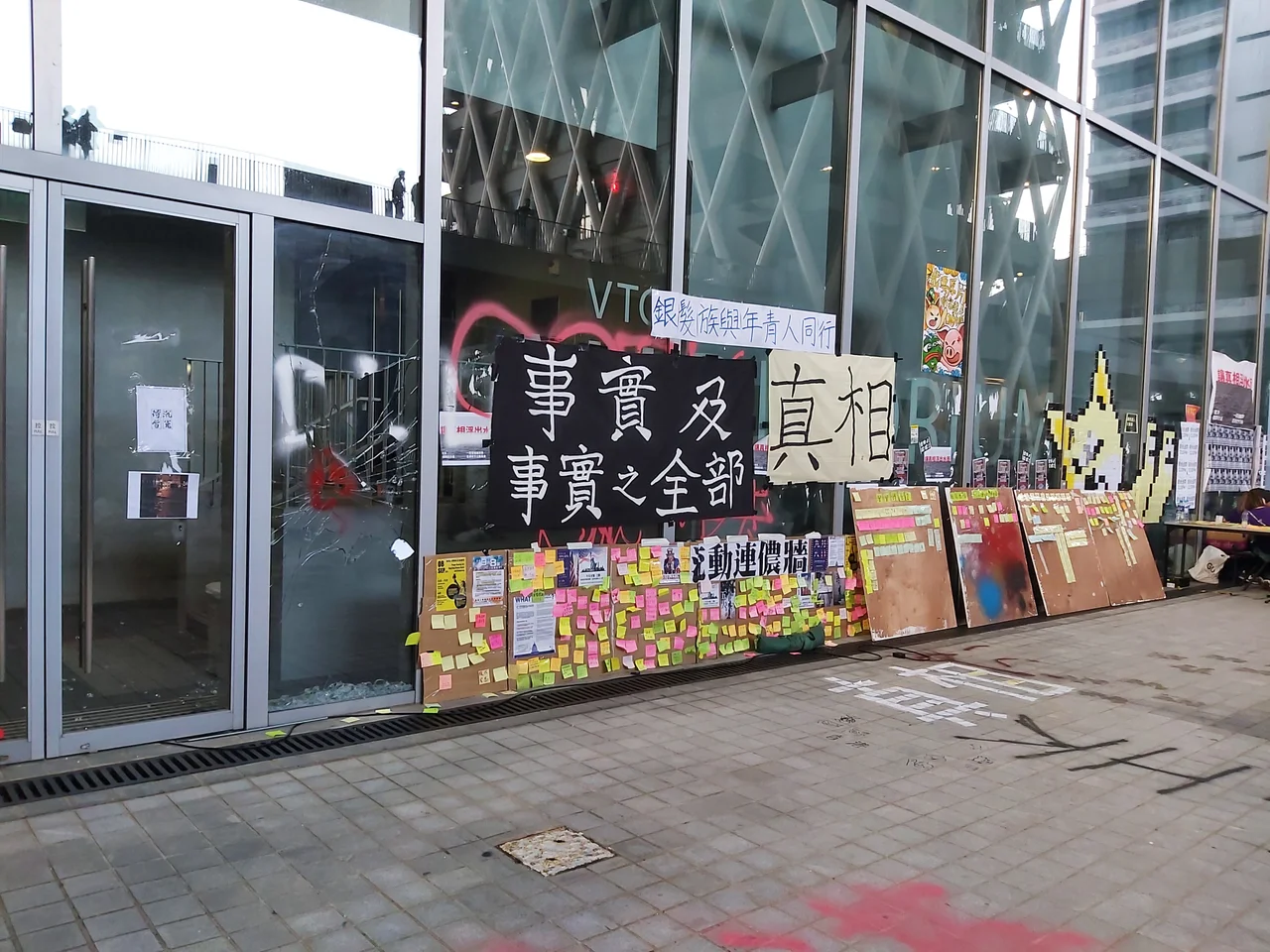
In the context of Hong Kong's 2019 protests — months of confrontations between demonstrators and police, a deep erosion of institutional trust, and an atmosphere in which official accounts were viewed by large parts of the public with profound skepticism — Chan's death became something it is almost impossible for a fifteen-year-old's death to be: contested political territory. Some protesters alleged she had been killed by authorities in connection with her protest participation. Chan's mother was harassed, her identity doubted online, and two people were arrested for public order offences after a crowd confronted her outside the Coroner's Court. Students at Chan's school vandalized campus facilities demanding access to surveillance footage. The school and police released additional footage in response. None of it resolved the central question. Singer-songwriter Charmaine Fong referenced the case in her 2019 Cantonese composition 'Explicit Comment' (人話): 'The truth has long since disappeared; write your ridiculous plots.' What the lyric captured was the tragedy underneath the controversy — a city so fractured that even grief could not be held in common. Chan Yin-lam deserved better than to become an emblem. She was a teenager who went for a walk one September evening and did not come home.
From the Air
The events surrounding Chan Yin-lam's death centered on the Tseung Kwan O area of Hong Kong, at approximately 22.302°N, 114.261°E. Her school, the Hong Kong Design Institute's Youth College, lies in Tseung Kwan O. Her body was recovered near Yau Tong and Devil's Peak, along the northeastern shore of Hong Kong's Kowloon Peninsula where it faces the inner harbor islands. Approaching from VHHH (Hong Kong International Airport), fly east across Kowloon. At 1,500–2,000 feet, Tseung Kwan O's dense residential towers are visible south of the hills, with the open harbor waters beyond. Devil's Peak rises to 231 m (758 ft) at the harbor's eastern edge.
Nearby Stories
- Shek Pik 1.7 km away
- Tung Ping Chau 4.8 km away
- Hong Kong 12 14 km away
- Wanshan Archipelago Campaign 16 km away
- Pearl River Delta 18 km away
- Battle of Penghu 478 km away
- Penghu Air Raids 487 km away
- Cape Maobitou 596 km away