.jpg)
Death of Chow Tsz-lok
Chow Tsz-lok was twenty-two years old and studying computer science in his second year at the Hong Kong University of Science and Technology. On the night of 3 November 2019, he left his family's flat at around 11:40 pm wearing a black top, grey shorts, black running shoes, a cap, and a dark backpack — the clothing that had become an informal uniform for Hong Kong protesters that year. He told his family nothing of where he was going. In online chat groups on Telegram, he wrote that he was going to the car park in Tseung Kwan O to watch the protests nearby, adding in a final message: 'I also went down to give something to others.' Around 1:02 am on 4 November, he fell from the third floor of the car park. He sustained multiple injuries, including a severe brain injury. He died on 8 November. He was twenty-two years old.
A Night in Tseung Kwan O
Tseung Kwan O on the night of 3–4 November 2019 was the scene of ongoing confrontations between anti-government protesters and police. Around 100 protesters had gathered at the junction of Tong Ming and Tong Chun streets, some setting up roadblocks. Police conducted a dispersal operation inside the car park — the same car park Chow entered — from 23:06 until 23:20. Chow's father, Chow Tak-ming, later told the inquest that his last exchange with his son was a WhatsApp message at 00:46, warning Chow that police had fired teargas; Chow replied two minutes later, telling his father to close the windows. Chow was last tracked by security cameras walking alone in the car park. The fall itself was not captured on footage, because of camera rotations and parked vehicles that obstructed the view. A local resident, Mung Wai-kit, looked down from the third floor moments later and saw Chow lying in a pool of blood below. He ran to call for first aid.
A Question the Evidence Could Not Settle
Police stated that officers had left the building before Chow's fall, and that no officers were present inside when he was walking there. Footage from over thirty cameras, obtained from the car park's building owner, was used to support this account. Expert witnesses at the subsequent inquest provided competing analyses. An orthopedic doctor noted bruising on both palms that could suggest Chow had gripped the edge of the wall; the layout of the third floor differed significantly from the second, with taller concrete walls and no pavement behind them — a difference that, experts suggested, could have led to a fatal misjudgment of depth in the dark. One expert concluded the most likely cause was an accidental fall. The jury returned an open verdict by a four-to-one majority — unable to determine the cause with certainty. But the inquest also heard that protesters had inadvertently blocked the road to the car park, delaying the arrival of fire engines by an estimated nineteen minutes. Chow's chance of survival, the court was told, had been approximately fifteen percent. An open verdict was recorded on 9 January 2021. The question of exactly how and why he fell remains without a definitive answer.
The Weight of His Name
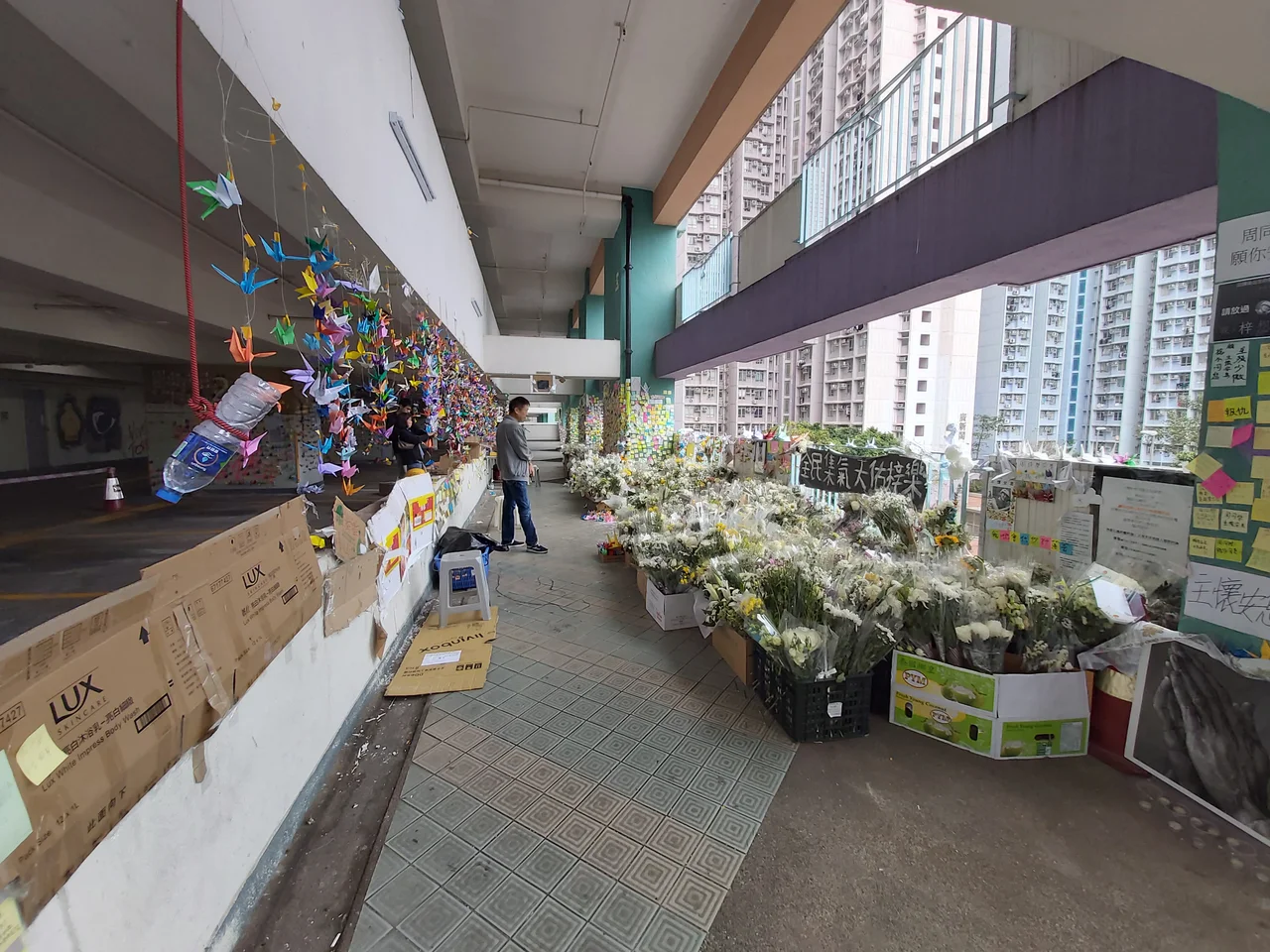
On 8 November, the place where Chow had fallen became a shrine. People queued to leave flowers, candles, and paper cranes. Thousands attended a public funeral service on the evening of 12 December. The HKUST campus, where he had been a student, became a site of student grief and protest that spilled into vandalism and cancellation of classes. Amnesty International Hong Kong called for an independent investigation. Activist Joshua Wong said Chow's death intensified the demand to reform the police force. The Hong Kong Human Rights Monitor urged the coroner to take additional measures to ensure credibility. These responses reflected a city in which institutional trust had eroded so completely that even a jury verdict — an open verdict, meaning the cause was simply not established — could not be received as a final word. What was certain was simpler and more painful than any verdict: a young man went out one night to watch history being made in his city, and he did not come home.
Remembered Together
In February 2020, the Sai Kung District Council considered a motion to rename two resting places in Tseung Kwan O as 'Chow Tsz-lok Memorial Park' and 'Chan Yin-lam Memorial Park' — linking Chow's name to that of the fifteen-year-old student whose death two months earlier had also gone unexplained. The motion was controversial, partly because neither family had been consulted. It did not pass without objection. But the impulse behind it pointed to something real: in the memory of that year's protests, Chow Tsz-lok and Chan Yin-lam had become connected — two young people whose deaths concentrated the grief and the anger and the unresolvedness of everything that was happening in Hong Kong, without providing any of the clarity that would have let that grief be put to rest.
From the Air
The car park where Chow Tsz-lok fell is located in Tseung Kwan O, at approximately 22.311°N, 114.262°E — a densely developed new town district in Hong Kong's Sai Kung District, southeast of Kowloon. Approaching from VHHH (Hong Kong International Airport, roughly 35 km to the west), fly east over Victoria Harbour and the Kowloon hills. Tseung Kwan O's residential towers are visible south of the ridge, built on reclaimed land around Junk Bay. The Hong Kong University of Science and Technology campus, where Chow was a student, lies a few kilometers to the south along Clear Water Bay Peninsula at approximately 22.336°N, 114.263°E. Viewing altitude 1,500–2,000 feet provides clear orientation across the district.
Nearby Stories
- Shek Pik 1.7 km away
- Tung Ping Chau 4.8 km away
- Hong Kong 12 14 km away
- Wanshan Archipelago Campaign 16 km away
- Pearl River Delta 18 km away
- Battle of Penghu 478 km away
- Penghu Air Raids 487 km away
- Cape Maobitou 596 km away