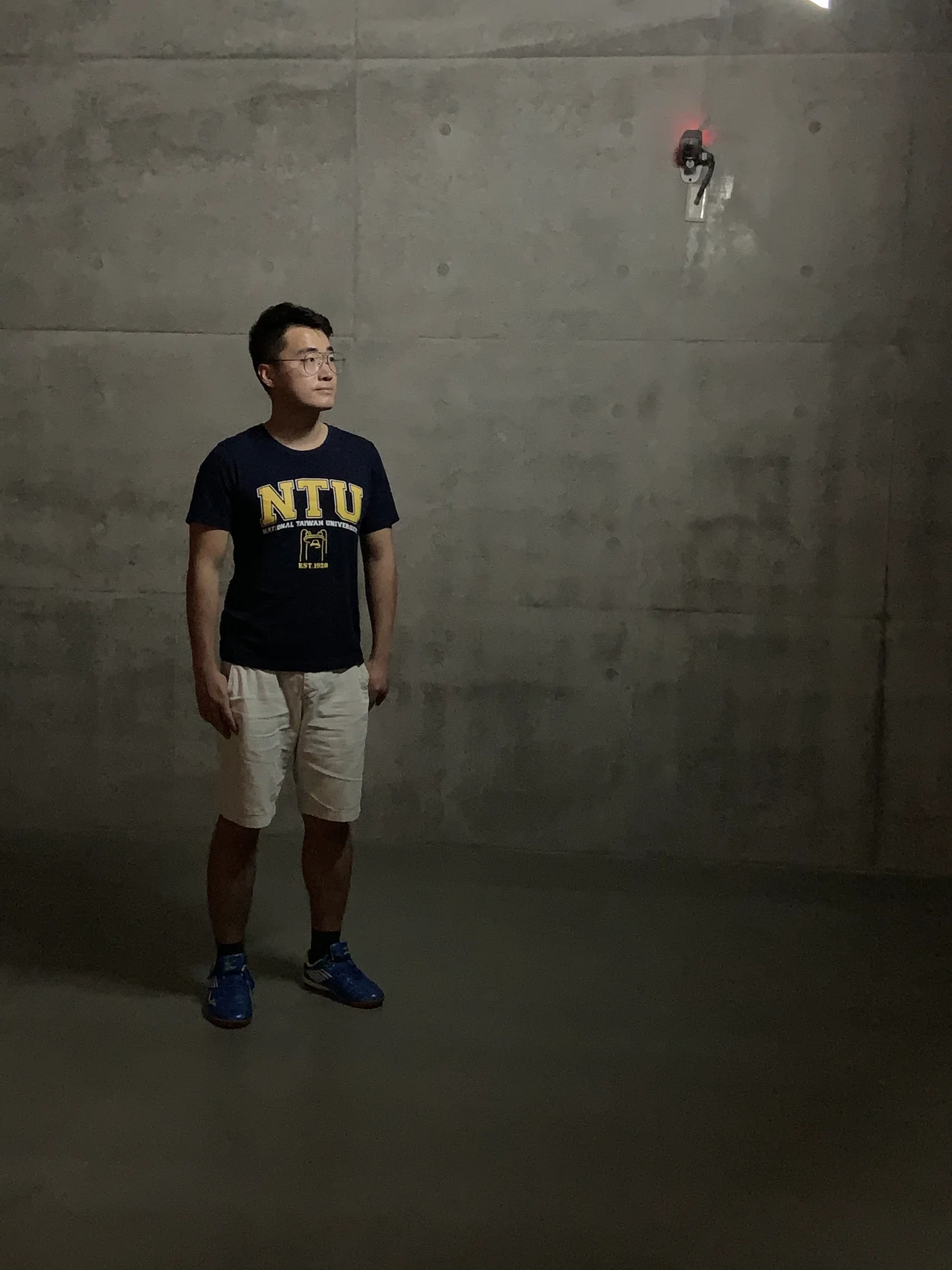

Disappearance of Simon Cheng
On the evening of August 8, 2019, Simon Cheng sent a WeChat message to his girlfriend saying he was taking the high-speed rail home. Then his family lost contact with him. Cheng was a Hong Kong resident who worked at the British Consulate General, and his disappearance — at a moment when Hong Kong's streets were filled with protesters against the extradition bill — drew immediate, anxious attention. Sixteen days later he reappeared in Hong Kong, having been held in Shenzhen. What happened to him in that interval is disputed. His account and the Chinese authorities' account differ in ways that cannot be reconciled by reading the documents alone.
The Man and the Moment
Simon Cheng was born in Hong Kong in 1990 and grew up in Tuen Mun. He studied political science at National Taiwan University from 2010 to 2014, spent exchange semesters at Peking University and the University of Tokyo, then completed a master's degree in European political economy at the London School of Economics in 2017. He joined the British Consulate General in Hong Kong as a trade and investment officer. By August 2019, Hong Kong was in the middle of the largest protest movement in its history, sparked by proposed legislation that would have allowed extradition to mainland China. The movement filled the city's streets each weekend. Cheng, by his own later account, was following the protests as a supporter and, with the consulate's knowledge, reporting what he observed to colleagues.
The Detention
At noon on August 8, 2019, Cheng crossed into Shenzhen for a business meeting. That evening he entered a club in Luohu District and left around 9 p.m. At 10 p.m. he messaged his girlfriend about taking the rail back. He did not arrive. According to Cheng's later BBC interview, he was stopped during the border inspection at the mainland port area of West Kowloon Station and handed over to plainclothes officers he identified as belonging to China's National Security Department. He was then transported to Shenzhen. On August 21, 2019, the Luohu Branch of the Shenzhen Public Security Bureau stated publicly that Cheng had been sentenced to fifteen days of administrative detention for violating Article 66 of the Public Security Administration Punishment Law — the provision that covers soliciting prostitution. He was released, as scheduled, on August 24.
Two Accounts
The central dispute concerns what occurred during those fifteen days. On November 20, 2019 — nearly three months after his release — Cheng published a detailed statement titled For the Record: An Enemy of the State, and gave interviews to the Wall Street Journal, the Daily Telegraph, and the BBC. In those accounts, Cheng said he was interrogated about Britain's role in the Hong Kong protests, held in solitary confinement, and subjected to treatment he described as torture by personnel who identified themselves as national security staff. He said he was coerced into recording video confessions — one about "betraying the motherland" and one about soliciting prostitution. He described the prostitution charge as a pretext. The Chinese authorities' position was equally clear: the Luohu police stated that the detention was a routine public security matter, that Cheng had confessed to his illegal conduct, that his legal rights were protected throughout, and that a doctor examined him upon release and found him in good health. In November 2019, state media outlet Global Times published footage it said was provided by the Luohu police, showing Cheng entering a club on three separate dates and, in a second clip, speaking in what the outlet described as a natural manner about his situation. Cheng disputed the characterization of that footage. Neither account can be independently verified.
Aftermath and Asylum
The British government's response was sharp. Foreign Secretary Dominic Raab summoned the Chinese ambassador to the UK in November 2019 and issued a public statement expressing shock and outrage at what he described as mistreatment and torture. The British Embassy in China posted the statement on Weibo; it was later apparently deleted. Ofcom, the UK broadcasting regulator, investigated CGTN — China's state international television channel — after Cheng complained that the network had aired footage of what he called a forced confession without proper context. In February 2021, Ofcom revoked CGTN's UK broadcasting license, citing violations of fairness, privacy, and impartiality rules. The regulator stated that "the facts and evidence pointed to the broadcaster as casting serious doubts on the reliability of its alleged confession." Canada, meanwhile, temporarily suspended the travel of Hong Kong-based consulate employees to mainland China. On June 26, 2020, Cheng became the first Hong Kong resident and British National (Overseas) passport holder to be granted political asylum in the United Kingdom. He moved to Britain with his fiancée. To protect his family in Hong Kong and mainland China from potential repercussions, he publicly cut off contact with them in January 2020.
A Human Story at the Border
The border that Simon Cheng crossed on August 8, 2019, was the same Shenzhen–Hong Kong boundary that millions of people crossed routinely every year. He had a meeting in Shenzhen and planned to be home by evening. What happened to him after that WeChat message remains, in its precise details, contested. What is not contested: a young man disappeared for sixteen days without his family knowing where he was or why. His mother could not find him. His girlfriend waited without word. When he came back, he carried an account of those weeks that changed the shape of his life permanently. Whether he was a consulate employee who ran into a routine enforcement action, a pro-democracy activist who was deliberately targeted, or something in between — people in Hong Kong, Britain, and China drew different conclusions, and those conclusions reflected the political moment as much as the facts. Simon Cheng himself, in exile, has continued to speak publicly about Hong Kong and the events of 2019. He was a real person in a real place, at a hinge point in history, and what happened to him has not been fully resolved.
From the Air
The events center on the Shenzhen–Hong Kong border zone. Simon Cheng's detention took place in Luohu District, Shenzhen, near the Luohu Port border crossing — coordinates approximately 22.546°N, 114.129°E. The Lo Wu / Luohu crossing is identifiable from the air as a dense cluster of immigration buildings spanning the Shenzhen River, with rail and pedestrian infrastructure converging on both the Hong Kong and Shenzhen sides. Shenzhen Bao'an International Airport (ZGSZ) is the nearest major airport, roughly 35 km to the northwest. Hong Kong International Airport (VHHH) lies approximately 45 km to the southwest. The West Kowloon High Speed Rail terminal — where Cheng states he was first stopped — is not visible from this position but lies on the Hong Kong side, approximately 20 km to the southwest.
Nearby Stories
- Hong Kong Disneyland 4.1 km away
- Mount Guanyin (Dongguan) 7 km away
- 2024 Lixinsha Bridge Collapse 7.4 km away
- Portas do Cerco 12 km away
- Lotus Hill 15 km away
- Nanxiong Formation 78 km away
- Heyuan 130 km away
- Checheng Fu'an Temple 629 km away