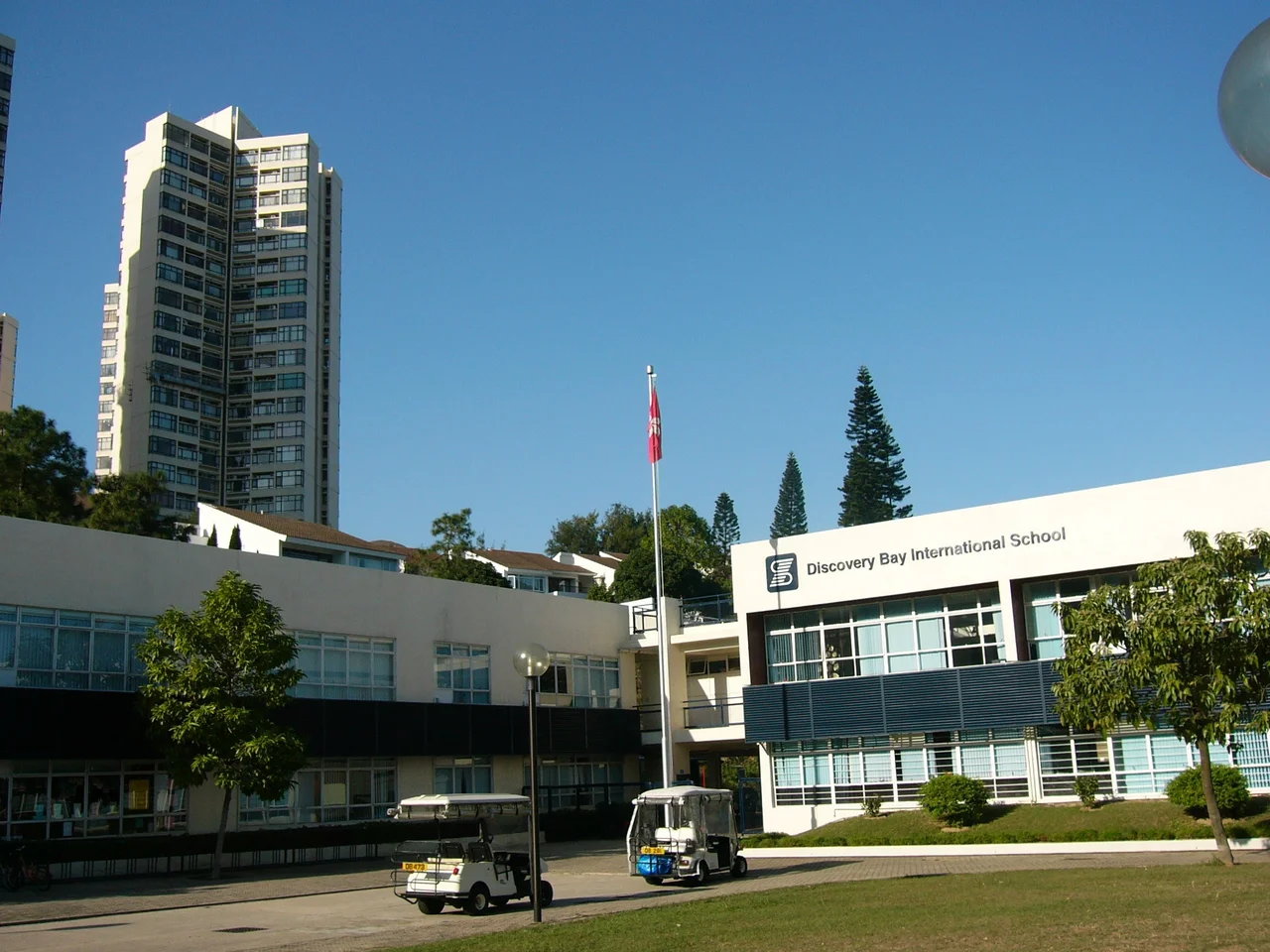

Discovery Bay
No private cars are allowed. Instead, residents buzz around on golf carts — up to 500 of them, some selling for more than HK$2 million apiece because demand so outstrips the capped supply. Discovery Bay, wedged between green hills and the Pearl River Estuary on Lantau Island's northeastern shore, was always meant to be different from the rest of Hong Kong. Developer HKR International began building the community in phases with a vision of eventually housing 25,000 residents, and the place that emerged feels less like a Hong Kong neighbourhood and more like a self-contained resort town that happens to be thirty minutes by ferry from Central.
The Slow Lane in Fast Hong Kong
The absence of private vehicles is what strikes first-time visitors most forcefully. Taxis are permitted only in the newer northern part of the development. Everywhere else, the golf cart reigns. Hong Kong's Transport Department caps the total number at 500, and that ceiling has turned the humble buggy into a sought-after commodity worth more than many cars on the mainland. Electric models are gradually replacing petrol-powered ones, but the essential character of the roads — quiet, slow, safe for children and dogs — remains unchanged. Motorised scooters have become popular among teenagers, adding a small note of speed to streets that otherwise operate at a leisurely pace. The contrast with Kowloon or Wan Chai, just across the water, is absolute.
Thirty Minutes to Central
Until the year 2000, the only way to reach Discovery Bay was by water. The opening of the 2.4-kilometre DB Tunnel connecting the community to the North Lantau Expressway changed that, adding bus routes to Tung Chung MTR station, Hong Kong International Airport at Chek Lap Kok, and Sunny Bay. But the ferry — running between DB Pier on Tai Pak Bay and Pier 3 in Central about every 15 to 30 minutes — remains the commute of choice for most residents. Monohull and catamaran waterjets built by Marinteknik in Singapore carry up to 300 and 500 passengers respectively. Since 2005, the boats have offered on-board Wi-Fi, a perk that put the service ahead of most transit systems anywhere in Asia at the time.
Schools, Villages, and the International Mosaic
Discovery Bay draws an unusually international population, and its educational options reflect that mix. Discovery Bay International School opened in 1983, built by the developer itself. Discovery College, a through-train school from primary to secondary under the government's Private Independent Schools scheme, followed when it opened for the 2008-2009 academic year. An accredited IB Montessori school, a French school offering programmes in French, English and Mandarin, and several kindergartens round out the options. The community is divided into named villages — Midvale, Parkvale, Caperidge, Capevale, La Serene, Seabee — each served by the internal shuttle bus network, with the DB Plaza Bus Terminus acting as the transfer hub for journeys between them.
The Marina That Divided a Community
On 31 August 2018, the Discovery Bay Marina Club gave its 200-plus boat owners notice to vacate the marina permanently by 31 December 2018, citing planned renovations. The boats were mostly live-aboards, homes for families rather than weekend toys. No timeline was offered for the renovations, and no promise was made that boats would be allowed to return. Many families found their houseboats had become worthless overnight. A public campaign urged HKR International to reverse the decision. The marina was subsequently rebranded as the Lantau Yacht Club and shifted toward an exclusive members-only model — a transformation that crystallised, for many longtime residents, a tension built into Discovery Bay from the beginning: between the open, community-minded vision of its founders and the commercial pressures that shape every property development in Hong Kong.
Green Ambitions on a Hillside
Discovery Bay won the Green Property Management Award in the private housing category in 2002. The management company DBSML has retrofitted common areas with energy-saving lighting and assessed and reduced unnecessary lights in building corridors. In one village, La Vista, a 30 per cent reduction in electricity charges was reportedly achieved. Regular flea markets and drives for old books, clothes, and household items supplement the recycling effort. The community once operated its own private water supply from a reservoir and treatment plant in the mountain valley above the estate; since the DB Tunnel opened in 2000, it has connected to the government's municipal supply sourced from reservoirs across Hong Kong and the Pearl River Delta.
From the Air
Discovery Bay sits at 22.296°N, 114.016°E on the northeastern coast of Lantau Island, roughly 8 nautical miles west-southwest of Victoria Harbour. At 3,000 feet, the crescent-shaped bay and its white sand beach are visible against the green hillside of Lantau. The community's grid of low-rise residential blocks contrasts with the denser development of Tung Chung to the west. Hong Kong International Airport (VHHH) is approximately 5 nautical miles to the southwest on Chek Lap Kok Island. The DB Tunnel portal on the North Lantau Expressway is a useful orientation point from above.
Nearby Stories
- Lok Ma Chau Loop 2.3 km away
- Portas do Cerco 2.3 km away
- Kweilin Incident 17 km away
- Wanshan Archipelago Campaign 34 km away
- Nanxiong Formation 115 km away
- Battle of Nanpeng Island 148 km away
- Heyuan 169 km away
- Cape Maobitou 632 km away