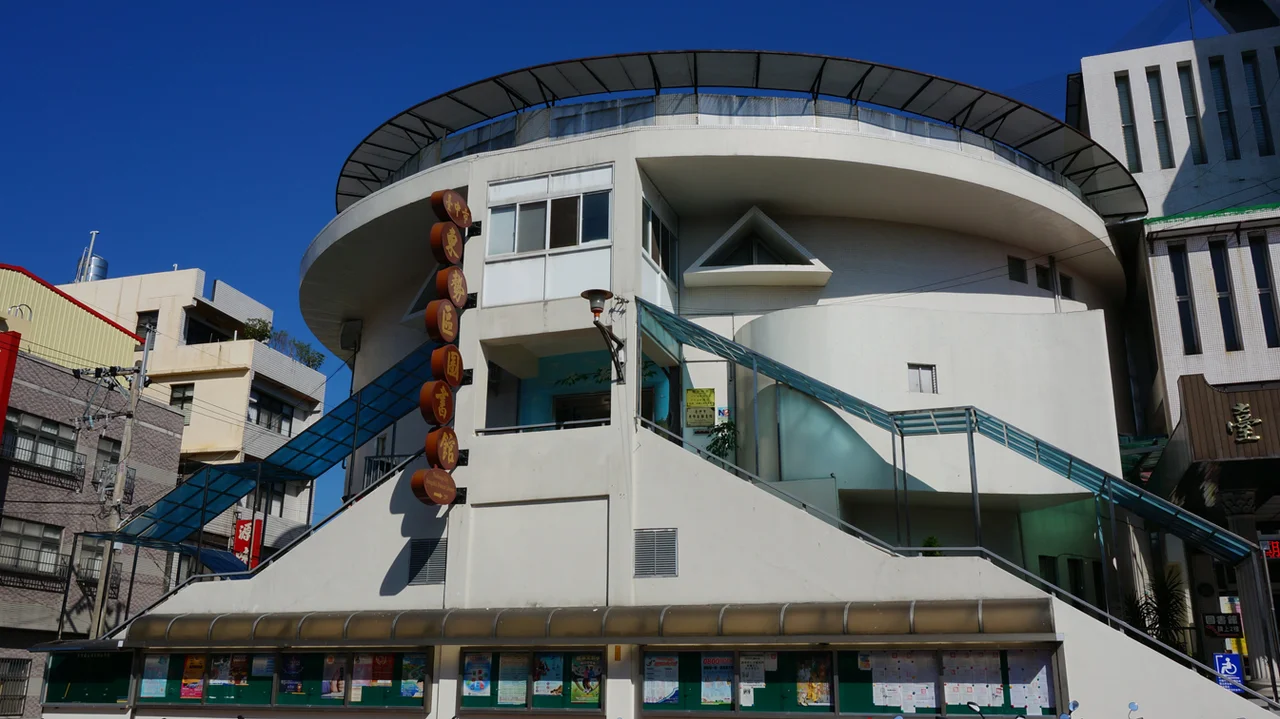

Dongshi District
The name Dongshi means 'eastern market,' and it earned that name honestly: this is the place where the lowland plain runs out of room. The Xueshan Range rises abruptly to the east, and the Dajia River cuts along the western edge, and between them lies a narrow, north-south strip of habitable land that has been home to Hakka families for generations. Dongshi is the point where central Taiwan's broad agricultural plain finally yields to the mountains — a fact that shaped not just the town's geography but its character.
Wedged Against the Mountains
Dongshi occupies one of the narrower residential corridors in Taichung City. The terrain drops from 1,201 meters in the foothills of the Central Mountain Range down to about 330 meters along the Dajia River — a dramatic gradient for a district that most visitors pass through rather than stop in. To the north lies Zhuolan; to the south, Sanyi. The Xueshan Range forms the eastern wall, and the highway that cuts through toward the mountains — Provincial Highway 8, the Central Cross-Island Highway — is the spine along which the town grew. That highway also connects Dongshi to the Daxueshan National Forest Recreation Area, drawing hikers and cyclists who use the district as their entry point into the high interior. The landscape itself is the draw: steep-sided valleys, forested ridges, and the Dajia River threading through it all.
The Hakka Enclave
Taichung City is predominantly Hoklo — the Minnan-speaking majority culture that dominates Taiwan's western plain. Dongshi is different. A majority of its residents are Hakka, descendants of a distinct Han Chinese group with their own dialect, cuisine, and customs, who settled these mountain-edge communities generations ago. The Hakka dialect spoken in Dongshi is considered particularly distinctive, carrying features that differ noticeably from Hakka dialects elsewhere in Taiwan. That distinctiveness is a point of local pride. The 1999 Chi-Chi earthquake, which registered magnitude 7.6 and devastated much of central Taiwan, caused severe damage to Dongshi's buildings — a rupture in the physical landscape that somehow intensified rather than diminished the community's attachment to its cultural identity. The old train station, rebuilt after the earthquake's damage and converted into the Dongshih Hakka Cultural Park, now holds historical artefacts alongside contemporary Hakka art.
Pears and Orchards
Ask a Taiwanese person what Dongshi is known for and there is a good chance they will say pears. The district's orchards produce a variety that has become something of a regional specialty: large, nearly spherical fruits with a thin, yellowish-brown skin that feels almost rough to the touch. The flavor in a good year is exceptional — crisp and juicy, with a sweetness that doesn't overwhelm. Growing them requires a particular kind of care. Each spring, farmers graft Japanese pear bud slips onto existing tree stock in a labor-intensive process called topworking, renewing the orchard one branch at a time. The Dajia River valley's combination of cool mountain air and well-drained soil creates the conditions these pears require. Persimmons are also grown here, adding orange-red color to the orchards in autumn. The two fruits together define Dongshi's agricultural identity as distinctly as the Hakka dialect defines its cultural one.
The Bicycle Greenway
The Dongshih-Fongyuan Bicycle Greenway is one of the more enjoyable artifacts of infrastructure repurposing in central Taiwan. The greenway follows the former route of a narrow-gauge railway that once carried goods and passengers between the mountain communities and the city. When the railway closed, the tracks came up and the corridor became a dedicated cycling path — flat, shaded, and running for roughly 12 kilometers from Dongshi westward to Fengyuan District. Cyclists make the trip to experience what was once an industrial corridor transformed into a quiet green lane through farmland and small towns. Dongshi's end of the greenway begins at the Dongshih Hakka Cultural Park, the converted station that now serves as both cultural museum and cycling hub. Two large forest parks in the mountainous eastern reaches — Dongshi Forest Park and the Sijiaolin forest area — offer further destinations for those willing to push into higher terrain.
A Third-Largest District, Quietly Its Own
By area, Dongshi ranks third among Taichung's districts, trailing only Heping and Taiping. That size is deceptive: the population is modest, around 65,000 people spread across 25 villages, and the pace of life is quieter than the city numbers suggest. The district was reorganized as part of Taichung City in December 2010, when Taichung County merged with Taichung City in a major administrative consolidation. Before that, it had been an urban township in its own right. Two of its most recognized exports have been athletes: Chan Hao-ching and Latisha Chan, siblings who both became professional tennis players and reached the top of the international doubles rankings. Their success gave this mountain-edge Hakka community a brief, specific kind of global visibility — proof that even a narrow plain between a river and a mountain range produces people worth knowing about.
From the Air
Dongshi District is centered at approximately 24.259°N, 120.828°E, in eastern Taichung. From the air at 5,000 feet, the transition from lowland plain to mountain terrain is immediately apparent: the flat patchwork of the central Taiwan plain ends abruptly as the Xueshan Range rises to the east, and Dongshi sits in the narrow corridor between. The Dajia River is visible as a gray-gravel braided channel to the west. Nearest major airport: RCMQ (Taichung International), approximately 30 km to the west-southwest. Provincial Highway 8 heading east into the mountains is a useful visual navigation reference.
Nearby Stories
- Wufeng Lin Family Mansion and Garden 6.5 km away
- Tapung Old Fort 9.4 km away
- 1991 Miaoli Train Collision 9.7 km away
- Taroko National Park 20 km away
- China Airlines Flight 204 21 km away
- Taiwan Strait 38 km away
- Taixi, Yunlin 43 km away
- China Airlines Flight 611 69 km away