
Dongshi Forestry Culture Park
The pond where logs once floated now blooms with lotus. In Dongshi District, on the eastern edge of Taichung where the coastal plain gives way to forested mountains, a 225-hectare park preserves the remnants of an industrial operation that shaped this corner of Taiwan for decades. The Dongshi Forestry Culture Park began its life in 1956 as a forest management area. Four years later, the Taiwan Daxueshan Forestry Corporation was established with funding from the United States government, transforming the site into a full-scale logging production center. At its peak, 275 workers processed timber across 28 hectares of production area, feeding Taiwan's postwar construction boom with lumber from the Daxueshan mountain range.
The Logging Years
The partnership between Taiwan and the United States during the Cold War extended into the forests. American funding helped mechanize the Daxueshan operation, which extracted timber from elevations between 500 and 700 meters above sea level. For over a decade, the site hummed with saws and heavy machinery. But by 1973, production was declining. The tools and machines in use proved unsuitable for the types of logs being processed, and efficiency dropped. In 1974, the operation was folded into the Daxueshan Forest District Demonstration Office of Taiwan's Forestry Bureau. The industrial era of the site was winding down, though the forest itself endured.
Fire and Renewal
In 1988, the landowner requested the return of the factory grounds, and the Forestry Bureau chose to preserve rather than develop the area. A plan to create the Dongshi Forestry Cultural Park was formally unveiled in 2004, envisioning a space where industrial heritage and natural beauty could coexist. Then, on May 13, 2006, wildfire swept through the forest and destroyed more than half of the park's area. The devastation forced a pause, but restoration work began soon after. The burned landscape was replanted, trails were rebuilt, and the plan adapted to incorporate the story of the fire itself into the park's narrative. On December 24, 2014, the Executive Yuan approved the development plan under the Act for Promotion of Private Participation in Infrastructure Projects, opening the door for private investment in the park's continued growth.
Where Industry Meets Ecology
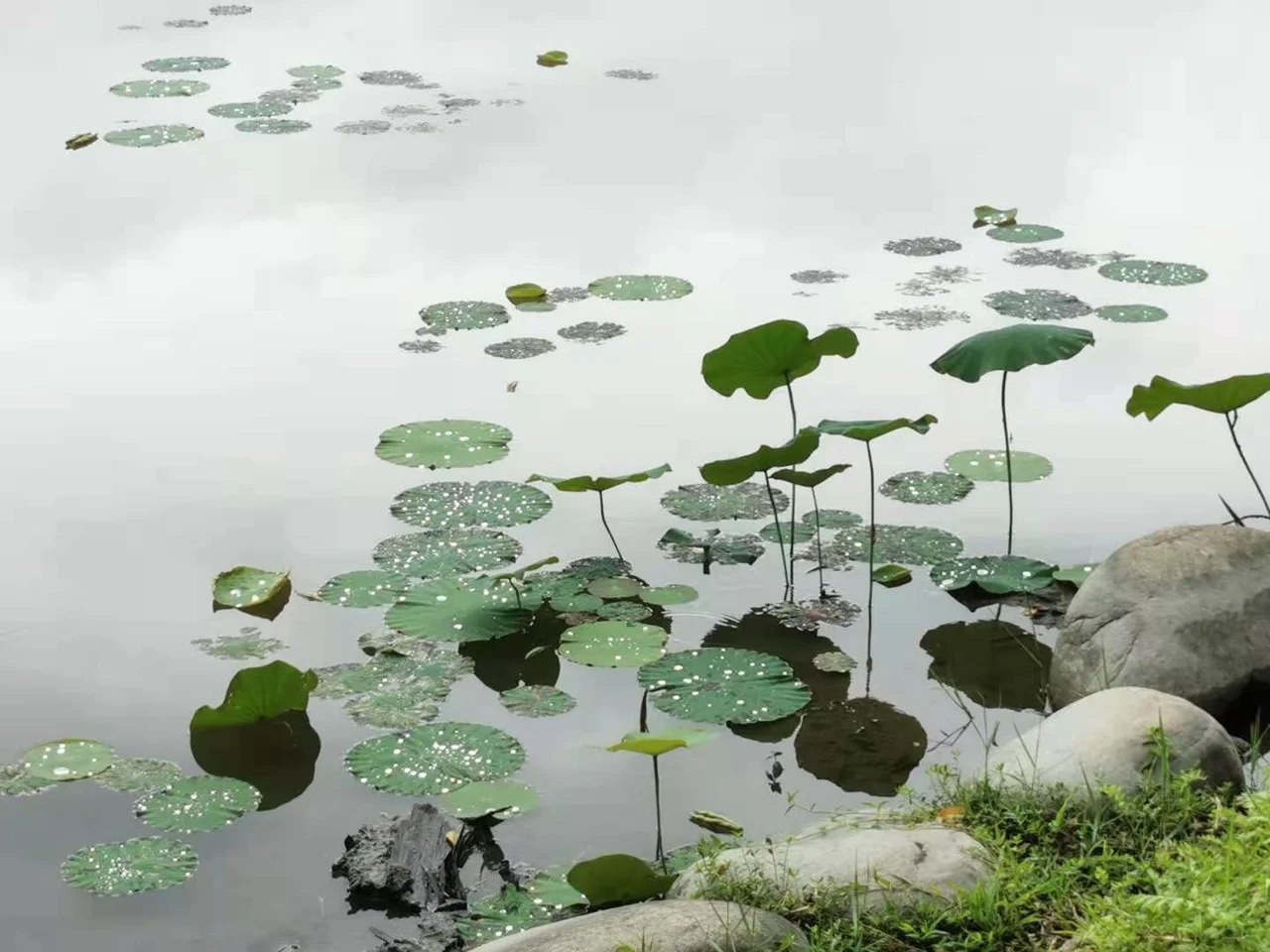
Today the park spreads across its full 225 hectares at elevations ranging from 500 to 700 meters. The old timber storage pond, once used to season freshly cut logs by submerging them in water, has become the park's most photographed feature: a 5-hectare basin now thick with lotus blossoms in summer. Hiking trails wind through recovering forest. Relics of the logging era remain scattered throughout: rusting machinery, the frames of old processing sheds, tools that once shaped the raw timber of the Daxueshan range. Log cabins, playgrounds, camping grounds, and barbecue areas now serve visitors where workers once labored. Fireflies, drawn to the park's clean waterways and recovering understory, provide year-round viewing opportunities, their presence a quiet indicator that the forest has healed.
Mountain Memory
Dongshi Forestry Culture Park occupies an interesting position in Taiwan's environmental story. It is neither pristine wilderness nor preserved factory; it is both, layered together. The American-funded logging operation that stripped these slopes during the Cold War is as much a part of the landscape as the lotus and the fireflies that have since reclaimed it. The park preserves that tension honestly, with industrial artifacts sitting alongside regenerating forest. For visitors ascending from the Taichung basin into the foothills of the Central Mountain Range, it offers a landscape where the work of extraction and the work of recovery are visible in the same glance.
From the Air
Located at 24.24N, 120.83E in the Dongshi District foothills, eastern Taichung, Taiwan. Elevation 500-700 meters above sea level. The park's 225-hectare footprint is visible as a large forested area with clearings and a prominent 5-hectare pond on the mountain slopes east of the Taichung basin. Nearest airport: Taichung Airport (RCLG/RMQ), approximately 35 km west-southwest. Approach over the Taichung urban area heading east into the foothills.
Nearby Stories
- Taroko National Park 4.5 km away
- Jiji, Nantou 9 km away
- Miaoli Ceramics Museum 9.2 km away
- Smangus 17 km away
- Taixi, Yunlin 23 km away
- Lintianshan Forestry Culture Park 24 km away
- Taiwan Strait 52 km away
- China Airlines Flight 611 60 km away