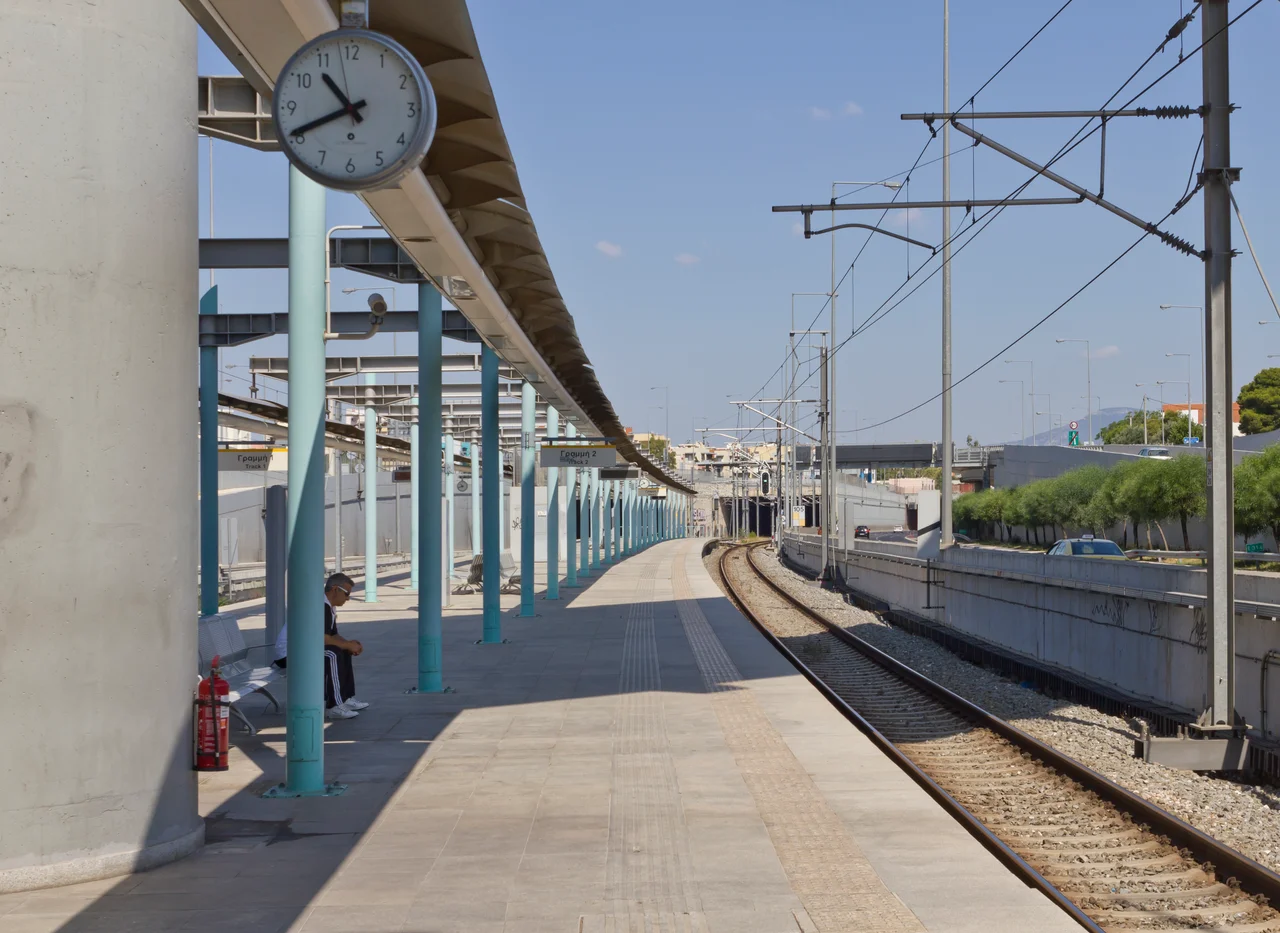

Doukissis Plakentias Station
Commuters changing trains here probably never wonder who Doukissis Plakentias was. The name belongs to a station, an avenue, a junction of motorways at the edge of north Athens. But behind it stands a real woman: an American heiress, born in Philadelphia, who became a French duchess, gave much of her fortune to the cause of Greek freedom, and bought up the very land where these platforms now sit. Doukissis Plakentias means "the Duchess of Plaisance," and her story is far stranger than the train timetable suggests.
The Duchess in the Name
Sophie de Marbois-Lebrun was born in Philadelphia in 1785, the daughter of a French statesman who served in the new United States. She married into Napoleon's empire and became Duchess of Plaisance, a title from the Italian city of Piacenza. But her heart turned to Greece. A passionate philhellene, she helped fund the Greek War of Independence and, once the modern Greek state was born, looked after the education of the daughters of fallen revolutionary fighters. In 1834 she settled in the new capital and bought vast tracts of farmland around Athens, especially toward Mount Pentelikon. The station's name preserves the memory of a foreign-born woman who chose Greece, and whose land once spread across the hills this line now climbs toward.
A Station With Two Names
The station almost got the wrong name. Through most of the construction of Metro Line 3, this stop was called "Stavros," and a different station up the line carried the name Doukissis Plakentias. The two were swapped late in the project. Planners reasoned that the other station sat nearer the true center of the suburb of Chalandri, while this one stands on the border of three municipalities, right on the route toward the duchess's old lands and her tower in Penteli. So the names traded places. The duchess's title moved to the junction that actually points toward her hills, a small act of geographic honesty buried in a transit authority's paperwork.
An Olympic Deadline
This was a station built against a clock. The metro platforms opened on 28 July 2004, and the suburban railway platforms two days later, on 30 July, just as Athens prepared to host the Summer Olympic Games. The whole project was part of the rush to modernize Greek transport before the world arrived. The first section of the Athens Airport line opened alongside it, finally stitching the new airport at Spata into the city's rail network. For a country that had waited generations to host the Games again, these gleaming platforms were a statement of arrival, finished only days before the Olympic flame was lit.
Where Two Railways Meet
Doukissis Plakentias is also a quiet feat of engineering. It is where two different railways shake hands. Most trains on metro Line 3 terminate here, but some keep going, all the way to the airport, by switching onto the suburban railway in a dual tunnel just past the station. The catch is that the two networks run on entirely different power: the metro draws 750 volts of direct current from a third rail, while the suburban line uses 25,000-volt alternating current from overhead wires. In the stretch beyond the platforms, the trains physically change electrical systems mid-journey. Above ground, the suburban platforms sit in an unlikely spot, the median strip of the Attiki Odos motorway, trains gliding between lanes of traffic. It is a fittingly modern monument to a duchess who once owned the open country here.
From the Air
Doukissis Plakentias station lies in Chalandri, in the northern suburbs of Athens, at roughly 38.02°N, 23.83°E, at the junction of the A6 (Attiki Odos) and A621 motorways. From the air the most useful landmark is the broad sweep of the Attiki Odos motorway, with the station's suburban platforms set into its median, and the bulk of Mount Pentelikon rising to the north. Nearest airport is Athens International (LGAV), about 18 km to the east-southeast along the same rail and motorway corridor. Clear, dry Attic weather gives the best views across the northern Athens basin toward Pentelikon and Hymettus.
Nearby Stories
- Great Sand Beach 5 km away
- Battle of Delium 7.7 km away
- Tower of Aliartos 9 km away
- HMHS Britannic 10 km away
- Saronic Gulf 15 km away
- Sousaki Volcano 17 km away
- Sanctuary of Apollo Maleatas 24 km away
- Skyros 66 km away