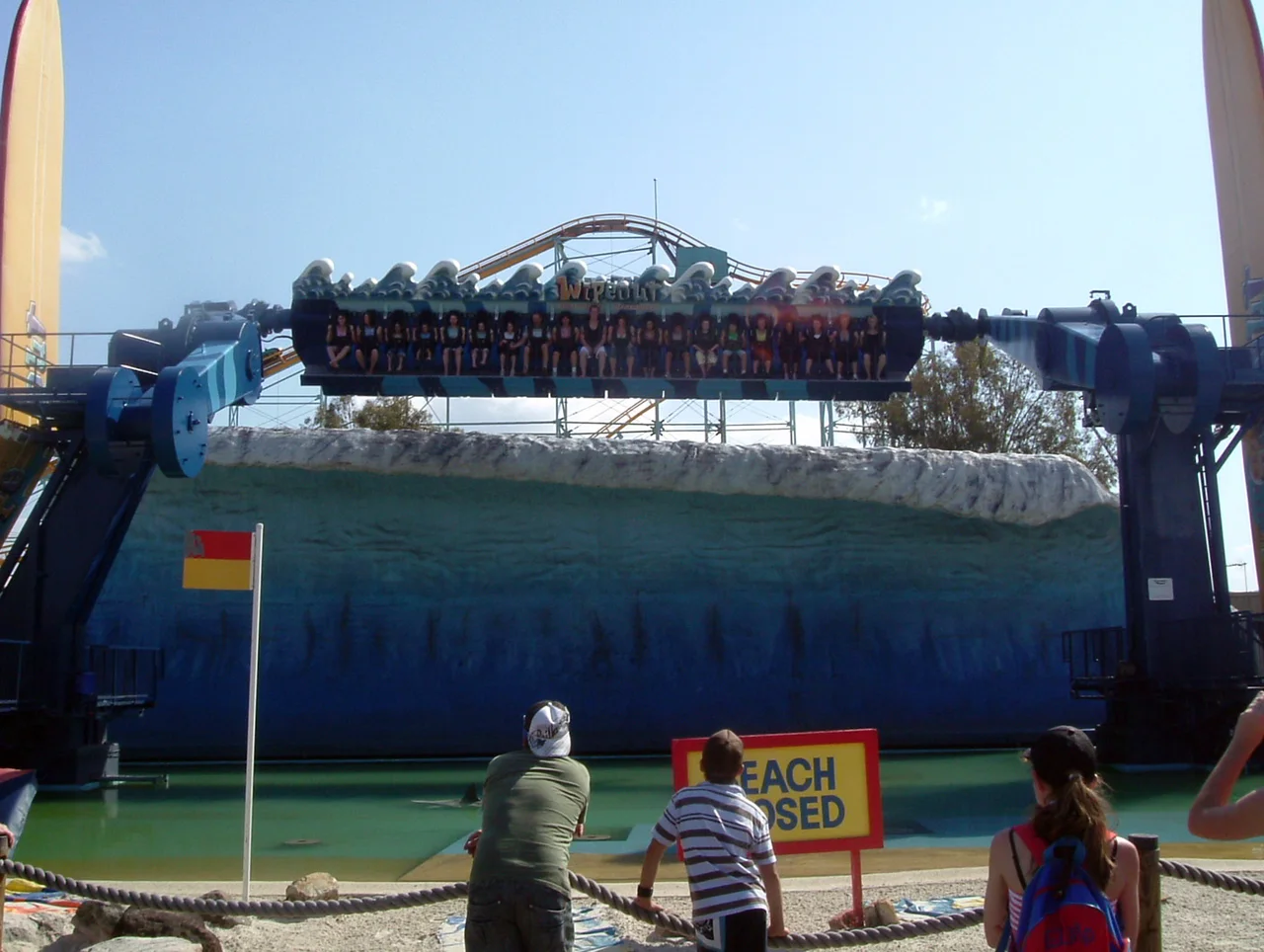

Dreamworld
John Longhurst dug a river by hand, more or less. For two years in the mid-1970s, working twelve-hour days, he excavated the waterway now called the Murrissippi from 85 hectares of scrub beside the Pacific Motorway at Coomera, determined to build a theme park where there had been only swamp and bush. He hired designers who had worked on Disneyland and had Australian architects mimic the timber storefronts of the colonial frontier. Dreamworld opened on 15 December 1981. More than four decades on it remains Australia's largest theme park, a place of more than forty rides, of tigers and koalas and screaming drop towers, and of a memory the whole country shares.
The Tower and the Drop
For thrill-seekers, the heart of Dreamworld has long been a single steel tower clawing at the sky. In 1997 the park opened the Tower of Terror, then billed as the world's tallest and fastest roller coaster; the following year it added the Giant Drop, a free-fall ride that hauls riders 119 metres up the same structure before letting gravity take them at speeds approaching 135 kilometres an hour. Around it the park kept reinventing itself, decade after decade, cycling through dozens of rides. Today the Steel Taipan, a launched coaster that fires riders forward, then backward up a vertical spike, then forward again, carries the torch, opening in December 2021 on ground that holds a far heavier history.
Tigers and a House Full of Strangers
In 1995 the park opened Tiger Island, one of only two interactive tiger exhibits of its kind in the world, where Bengal and later Sumatran tigers were raised, swam, and were shown to crowds at close quarters. Generations of cubs were born here, named and followed by visitors. Just as defining was a low-slung compound near the studios: from 2001, Dreamworld was home to the Australian Big Brother house, where contestants lived under constant cameras while the nation watched. The series ran in stretches across two decades. In 2019 the original house was destroyed by arson, but the show would later return to the place where it began, the strange gravity of Coomera pulling it home again.
The Twenty-Fifth of October
On 25 October 2016, a malfunction on the Thunder River Rapids Ride killed four people: Kate Goodchild, her brother Luke Dorsett, his partner Roozbeh Araghi, and Cindy Low. They were riders enjoying an ordinary afternoon at a family park, and they did not come home. The grief reached far beyond the Gold Coast. A coronial inquest heard from dozens of witnesses and found that the ride's safety systems had been, in the coroner's words, frighteningly unsophisticated, and that a serious accident had been only a matter of time. The ride was closed forever and demolished. In 2020 the park's operator, Ardent Leisure, was fined 3.6 million dollars for breaches of work health and safety law. The tragedy reshaped how amusement rides are regulated across Australia.
Carrying On
A park built on joy had to find a way to hold sorrow as well, and Dreamworld's recovery has been deliberate and slow. The land where Thunder River Rapids once ran became the site of the Steel Taipan, opened in 2021. In December 2024 the park unveiled Rivertown, a 55-million-dollar precinct described as its most heavily themed and most expensive addition since opening day, complete with a retired air force Caribou aircraft, custom music, and a refreshed home for its wedge-tailed eagle. Through it all the older rhythms continue: the koalas in their gum trees, the tigers behind the glass, the Giant Drop hauling another carload skyward against the Coomera sky. The Big Brother house, too, has returned to the place where it began, the cameras switched on once more. Across more than four decades, the park founded on John Longhurst's stubborn vision endures, changed, carrying both the laughter and the loss.
From the Air
Dreamworld occupies a large site beside the Pacific Motorway (M1) at Coomera, inland on the northern Gold Coast, at 27.86 degrees south, 153.32 degrees east. From the air, look for the cluster of ride towers, the prominent Dreamworld Tower, and the adjacent WhiteWater World water park, set against the motorway and the Coomera River. Recommended viewing altitude is 2,500 to 4,500 feet. Coomera railway station sits nearby as a navigation aid. Gold Coast Airport (YBCG) lies roughly 20 nautical miles to the south-southeast; Brisbane Airport (YBBN) is about 35 nautical miles to the north. Visibility is usually good, with summer afternoons prone to coastal cloud and storms.
Nearby Stories
- North Stradbroke Island 1.9 km away
- Tweed River (New South Wales) 11 km away
- Purga Aboriginal Cemetery 24 km away
- 2010-2011 Queensland Floods 72 km away
- Bald Rock National Park 118 km away
- HMS Porpoise (1799) 617 km away
- Wreck Reefs 646 km away
- SS Elingamite: Gold, Fog, and a Captain Wrongly Blamed 1842 km away