
Dulan Site
Stone does not lie. On the hillside above the Pacific village of Dulan, rectangular slabs of rock have rested in the red earth for three thousand years, arranged by human hands long before anyone kept written records of this coast. The Dulan Site is one of Taiwan's most significant prehistoric archaeological sites — a place where the deep past of the island's indigenous Amis people surfaces, literally, from the ground.
What the Ground Gave Up
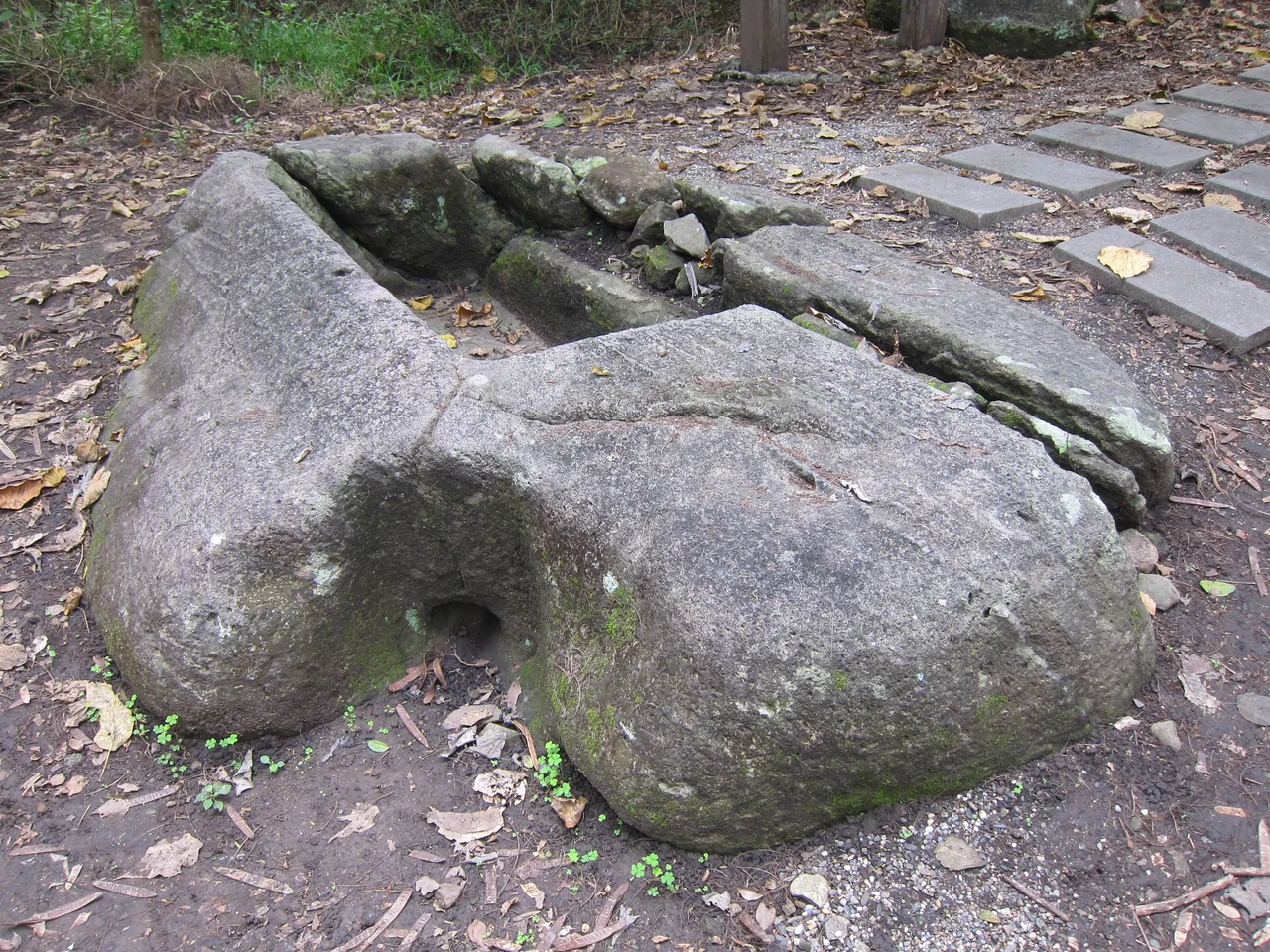
It was during the Japanese colonial period that excavators first uncovered a rectangular stone coffin at Dulan. The discovery was not accidental — local knowledge had long pointed to unusual rock formations in the area — but the excavation transformed what had been a curiosity into a subject of serious study. Academia Sinica, Taiwan's premier research institution, took up the investigation and found far more than one burial: beneath the soil lay extensive stone piles, the remnants of structures built by people who inhabited this stretch of coastline some 3,000 years ago. The site now carries official recognition as a third-grade cultural heritage site under Taiwan's preservation framework.
Two Zones, One Ancient Place
Visitors today move between two distinct areas. The stony coffin zone is where the burial remains were found — slab-lined rectangular chambers set into the hillside, their proportions deliberate and precise. These are not rough pits but carefully constructed resting places, speaking to a community with defined beliefs about death and the afterlife. The stony wall zone preserves the outlines of ancient structures, their purposes still debated: habitation walls, ceremonial enclosures, or both. Footpaths thread between the formations, and explanatory signs offer context in multiple languages, turning what might otherwise seem like an overgrown hillside into a legible landscape of the past.
A Shoreline With Memory
The Dulan Site sits just inland from one of Taiwan's most storied stretches of coast, a narrow corridor between the Pacific and the forested slopes of Dulan Mountain. The Amis people — whose oral tradition holds that Dulan itself was one of their ancestral homelands, a place they called A'tolan — have lived along this coast for millennia. The archaeological record at this site aligns with those traditions: 3,000 years of continuous human presence is not myth, it is stratigraphy. Standing among the stone coffins, with the sea breeze carrying salt from the Pacific a few hundred meters away, that continuity becomes palpable. The stones are still here. So are the people descended from those who placed them.
Prehistory in Living Context
What makes the Dulan Site unusual among Taiwan's archaeological sites is its location within a still-inhabited Amis community. This is not a remote ruin sealed off from contemporary life — it is a piece of the village's own biography, accessible from the same roads that lead to the surfing beach and the old sugar factory turned art space. Visitors who walk the site in the morning and then stop for lunch at a local restaurant operated by Amis families are experiencing the long arc of that history compressed into a single day. The prehistoric and the present share the same hillside, the same air, the same ancestral connection to this particular bend in the Pacific coast.
From the Air
The Dulan Site sits at approximately 22.885°N, 121.219°E, on a hillside above the coastal village of Dulan in Donghe Township, Taitung County. Approach from the west over the Central Mountain Range or from the south along the coast. Taitung Airport (RCFN) is located roughly 30 kilometers to the southwest, making it the nearest commercial airfield. At low altitude, the site is concealed by forest cover, but the narrow coastal plain between Dulan Mountain and the Pacific is clearly visible — a terrain that has channeled human settlement here for three millennia. Fly at around 1,500 to 2,000 feet to appreciate the compressed geography: mountains to the west, blue Pacific to the east, and the ribbon of road and village between them.
Nearby Stories
- Liudui Hakka Cultural Park 3.3 km away
- 2025 Tainan–Chiayi Earthquake 3.4 km away
- Meinong Hakka Culture Museum 4.3 km away
- Chiaming Lake 13 km away
- Taimali 13 km away
- 1951 East Rift Valley Earthquakes 78 km away
- 2021 Hualien Train Derailment 142 km away
- Mavulis Island 176 km away